-

- ツイート
- 2022年3月2日
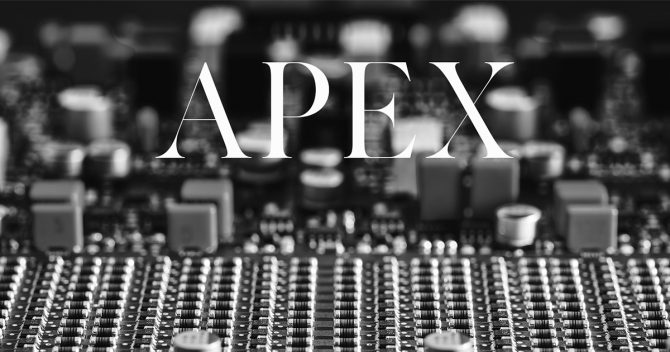
dCS 新DAC APEX についてのイントロダクションを公開!!
*非常に長文なので要約すると
・Ring DACの回路基板に供給するリファレンス電源の改善 出力インピーダンスを低く保つことで、電圧の変動を最小限に抑え、出力に余計なものが出ないようにする
・サミングステージの対称性を向上 サミングステージを外界から隔離し、サミングステージの性能を最適化し、ケーブルとアンプの組み合わせがもたらす非常に不確実な負荷を駆動できるようにする
・Ring DAC回路基板上の個々のトランジスタを複合ペアに置き換える
・Ring DAC 回路基板上の部品のレイアウトを調整
・従来の基板よりもさらに静粛性を高め、リニアリティも12dB以上向上
・試聴では、解像度、ダイナミクス、リズム、タイミングが向上し、より自然で安心感がある、声質がより正確で音色が解像している、弦楽器の音色がよりリアルになったなど、非常に高い評価
APEX: A Closer Look
With the launch of our new Ring DAC APEX hardware, we’ve been able to enhance the performance of the dCS Ring DAC and the musical expression of our Rossini and Vivaldi systems. Here, we take a look at the development of APEX, and the various benefits it delivers for listeners
TAGS: NEWS, TECHNOLOGY & INNOVATION
The Ring DAC has been an integral part of dCS products for over 30 years. In the 1980s – when dCS was best known for its work in radar and telecommunications – our engineers developed a novel digital-to-analogue conversion system that could be used to process audio signals at 24-bit resolution.
At the time, 24-bit audio was unheard of. This technological breakthrough led us to develop a succession of pioneering high-resolution DACs, ADCs and master clocks for some of the world’s top recording studios and later, to specialise in creating high-end digital playback systems for music lovers, professionals and audiophiles around the world. Over three decades on, the Ring DAC remains a world-leading technological approach to converting 1s and 0s into music. A core part of all dCS DACs, it has earned global acclaim for its technical and sonic performance.
This formidable reputation is the result of constant innovation and development: throughout the Ring DAC’s life, our engineers have continued to refine and augment its design, working on ambitious upgrades and additions in their quest to ensure its performance remains unrivalled. While the fundamental principles that underpin its design haven’t changed, the Ring DAC has become faster, more intelligent, more sophisticated and more advanced with each new generation. As a result, the musical performance of our products has continued to evolve and improve with each upgrade we make.
In 2017, we released a major update to the software that controls the Ring DAC, providing additional mapping algorithms that allowed listeners to tailor the performance of their dCS system to best suit their listening preferences, setup and musical tastes.
Since the release of this update, we’ve continued to explore how we can push the Ring DAC’s design and capabilities even further. Around 12 months ago, our Director of Product Development Chris Hales decided to turn his focus to the Ring DAC hardware – in particular, the Ring DAC circuit board and analogue output stage.
“We regularly review the performance [of our products] and look very closely at how things are working and where we might be able to improve them”
A thorough investigation
“At dCS, we regularly review the performance [of our products] and look very closely at how things are working and where we might be able to improve them,” explains Chris. “We took some time last year to look very carefully at how [the Ring DAC hardware] was performing, and we found that the performance of the existing analogue board is beyond the capability of most test equipment.”
This is a familiar issue for dCS engineers: as our products often exceed the capabilities of conventional test equipment, we’ve had to devise a range of bespoke tools and equipment that allow us to measure each aspect of a system’s performance with absolute precision. If we cannot measure something as accurately or as comprehensively as we’d like, then we often invest in building a new platform or measurement tool from scratch.
“Audio measurement systems [can] introduce noise, or distortion, or limit the frequency response, just like the thing they’re trying to measure, and there can come a point where, even if they’re not dominating what you’re measuring, these artefacts are affecting it one way or another,” explains Chris. “A good example is when measuring harmonics, where the second harmonic inherent in the test equipment can cancel with the one in the item you’re trying to measure. This can result in a measurement that is much lower than it should be and one which tends to behave unexpectedly as the performance of the item under test is adjusted.”
In the case of the Ring DAC’s analogue performance, we used a method that allowed us to reduce internally generated artefacts. This, in turn, allowed Chris to identify some potential areas for further improvement. The Ring DAC circuit and analogue output stage already delivered an outstanding measured performance, but there were some aspects he felt could perhaps be further refined or reconfigured. After a period of investigation, and an intensive few months experimenting with circuit boards during national lockdowns, he developed some prototype boards to test out his theories.
Once the dCS R&D team had analysed the measured impact of Chris’s proposed revisions, and confirmed that these delivered quantifiable gains (an essential requirement for any dCS software or hardware upgrade), the modified boards were auditioned in a series of listening tests, where our golden-eared music and audio experts reported audible improvements in a range of key areas.
Based on this feedback, the next stage was to commission to several rounds of prototype boards for further listening and measurement tests. The feedback and results from these tests confirmed that this new technology was suitable for an enhanced version of the dCS Ring DAC – the Ring DAC APEX – and that we could make it available to both new and existing customers.
An ambitious redesign
The new Ring DAC APEX hardware features several modifications. One of the first areas that Chris looked at during the research and development phase was the reference supply that feeds the Ring DAC circuit board, and this investigation led him to make some significant adjustments. “[The reference supply] has a direct effect on the audio performance and particularly the output impedance of [the Ring DAC] – in effect, how stiff it is…. We found some ways of improving that, and so we applied that, which makes quite a noticeable difference to the performance,” he explains.
In an electrical system, there are external signals that can interfere with our reference voltage, so the lower impedance that reference is, the harder it is for the interference signals to be coupled in.
As Chris points out, the Ring DAC is essentially a multiplying DAC – that is, it multiplies the reference voltage by the DAC code value. Consequently, anything on that reference (such as noise or periodic signals) is coupled directly to the output. For optimum performance, the reference would be a pure DC voltage with no AC components and no noise.
“Imagine, for example, a ruler clamped to a desk,” he explains. “If it’s a thin, metal ruler you can easily move the free end. If it’s a thick wooden ruler, it’s much harder. In this analogy, a stiff ruler equates to low output impedance (it’s hard to change the voltage) and the flexible one to a high output impedance (it’s easy to change the voltage).”
“The load represented by the Ring DAC changes with the signal – this is analogous to changing how hard you press the end of the ruler – and as a result, the reference voltage will change in response to the signal in proportion to the reference’s impedance,” he adds. “This couples to the output one way or another (in some cases as additional harmonics), so keeping the output impedance low minimises the voltage variation and thereby the extra stuff on the output.”
Chris also carried out a thorough examination of all subsequent stages of the Ring DAC, including the summing and filter stages. “There were a few enhancements we were able to identify there and put in – for example, to improve the symmetry of the summing stages – and finally, we had a good look at the output stage,” he adds.
“The purpose of the output stage is primarily to interface us to what is unknown territory once we leave the dCS realm”
The Ring DAC output stage is responsible for buffering the analogue signals generated by the Ring DAC. As Chris explains, the analogue board of the Ring DAC is made up of both digital stages and analogue stages. The digital stage takes the data that’s fed from the dCS Digital Processing Platform, and subjects it to a mapping function. This drives the 48 latches which form the heart of the Ring DAC. The output of those latches is then summed by an operational amplifier summing stage, where it’s filtered to get rid of very high frequency components, before being buffered by an output stage.
“The purpose of the output stage is primarily to interface us to what is unknown territory once we leave the dCS realm,” says Chris. “We really don’t have much control over what cables people are going to connect, what external equipment people are going to connect, and these can have very different input characteristics, so it’s important to have an output stage which is capable of driving lots of current, that’s not sensitive to stability problems that these may cause.”
In most audio setups, dCS DACs are connected to a cable, and then an amplifier or preamplifier. The cable will have capacitance, resistance, and inductance. Different cables will have different amounts of each and may have additional ‘matching networks’.
“It was a very worthwhile improvement, although we [were] already looking at harmonics which are 110, 120dB below the fundamental”
“The input of the amplifier/preamplifier will have capacitance and resistance, but may also require a DC bias current,” says Chris. “Additionally, balanced input stages vary enormously (not being balanced at all in some extreme cases). If we were to connect these directly to the DAC summing stage, we would have to design it in such a way that it would no longer be optimised as a DAC summing stage. The solution, then, is to isolate the summing stage from the outside world so that we can optimise the performance of the summing stage and drive the enormously uncertain loads that cable and amplifier combinations can present.”
“Capacitance constitutes a load on the output stage and that equates to a current draw and one that increases at high frequencies,” Chris adds. “If we want to reduce the high frequency roll-off that can cause, we need to present a low output resistance but also have enough current available to drive that capacitance without distortion. Likewise, amplifier input resistance can vary a lot and if it is unusually low, will require high current to drive it, and will benefit from being driven from a low impedance. In this way, our output stage makes the overall DAC performance much more consistent (ie stable) when used in different systems.”
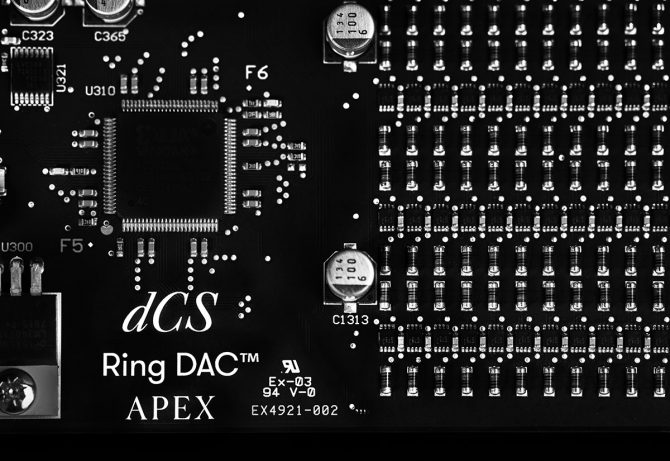
Other changes made to the Ring DAC’s hardware include replacing individual transistors on the Ring DAC circuit board with a compound pair, and adjusting the layout of components on the Ring DAC circuit board. The result of these various adaptations is a new, enhanced board that is even quieter than previous iterations, and over 12dB more linear.
“It was a very worthwhile improvement, although we [were] already looking at harmonics which are 110, 120dB below the fundamental – so a large improvement, but performance was extremely good to start with,” adds Chris.
“Great audio should draw you in, engage with you and excite you, and I think APEX does that in spades. It has everything we think is synonymous with dCS”
Setting a new standard
For listeners, this enhanced technical performance has resulted in a range of sonic improvements, as evidenced in our subjective listening tests.
The feedback from listening sessions with our Ring DAC APEX prototypes was hugely positive, with listeners noting enhanced resolution, dynamics, rhythm and timing, an even greater sense of ease and naturalness, more precise and tonally resolved voices, and more realistic timbral quality of strings, among other benefits. Whilst each listener’s experience is unique, and depends on their audio setup, chosen music and the wider environment in which they listen, the consensus from several rounds of testing was that APEX allowed us to deliver an even more compelling and absorbing musical experience.
“I think it just felt right – when we got to that final board, and we’d been through all those final rounds of testing, there was just something about it,” says David Steven, MD at dCS. “Great audio should draw you in, engage with you and excite you, and I think APEX does that in spades. It has everything that we think is synonymous with dCS: there’s detail, there’s resolution, but it’s also just emotionally involving…. It’s an amazing achievement from the team to take what was already state-of-the-art and not just improve it on the measured performance level, but to bring something that you can feel and hear.”
“I think it’s very much [part of] our philosophy to realise improvements when we can…. Continual improvement is something we take very seriously”
Constant evolution
Improving a hardware platform that already delivers a class-leading performance is no easy feat, but the latest Ring DAC APEX hardware is testament to what can be achieved through rigorous analysis, creative thinking and continual product development. “I think it’s very much [part of] our philosophy to realise improvements when we can,” adds Chris.
“Continual improvement is [something] we take very seriously – I think we feel that we owe it to our customers to do the best we can, and I think that those of us who are working on the technical side of things, are also just of that personality where we just want to improve things all the time…. For whatever reason, there’s a huge philosophy of, ‘if we can make it better then let’s do that – it’s worth the effort’.”
This continual development is driven not just by our engineers’ innate curiosity and desire to constantly improve, but our wider ambition to ensure that dCS products deliver the finest possible performance. As David and Chris both note, it’s not a case of innovating for innovation’s sake but rather, making improvements and gains that will enhance our customers’ experience of listening to their favourite artists and recordings.
To achieve this, our engineers must draw on a range of measurement techniques, experience and data, as well as subjective feedback. As dCS Technical Director Andy McHarg points out, “One of the great challenges in hi-fi is correlating certain measurements to certain sonic characteristics” – and it’s not a straightforward case of enhancing one aspect of a product’s technical performance in order to improve the sound in a particular area.
While our engineers know that improving certain technical dimensions should lead to an improvement in sound, they also know that making technical improvements can sometimes have an unexpected or unintended impact on the overall performance of a product. It’s for this reason that subjective listening tests play such an important role in product development at dCS.
Using their extensive experience, the dCS engineering team is able to interpret the subjective feedback we receive from each round of listening tests, and understand where or how their work might need to be adapted in order to deliver an outstanding experience for dCS customers (and a class-leading technical performance).
Through conducting several rounds of listening tests and performance reviews, with further development after each round, we are able to ensure that an upgrade such as APEX delivers an actual, notable benefit for listeners, and avoid the pitfalls of improving performance in one area at the expense of another.
This process can take several months and sometimes years, but in the case of APEX, it has allowed us to further improve a renowned dCS innovation and, in turn, enhance the musical abilities of two much-loved dCS systems, the Vivaldi and Rossini.
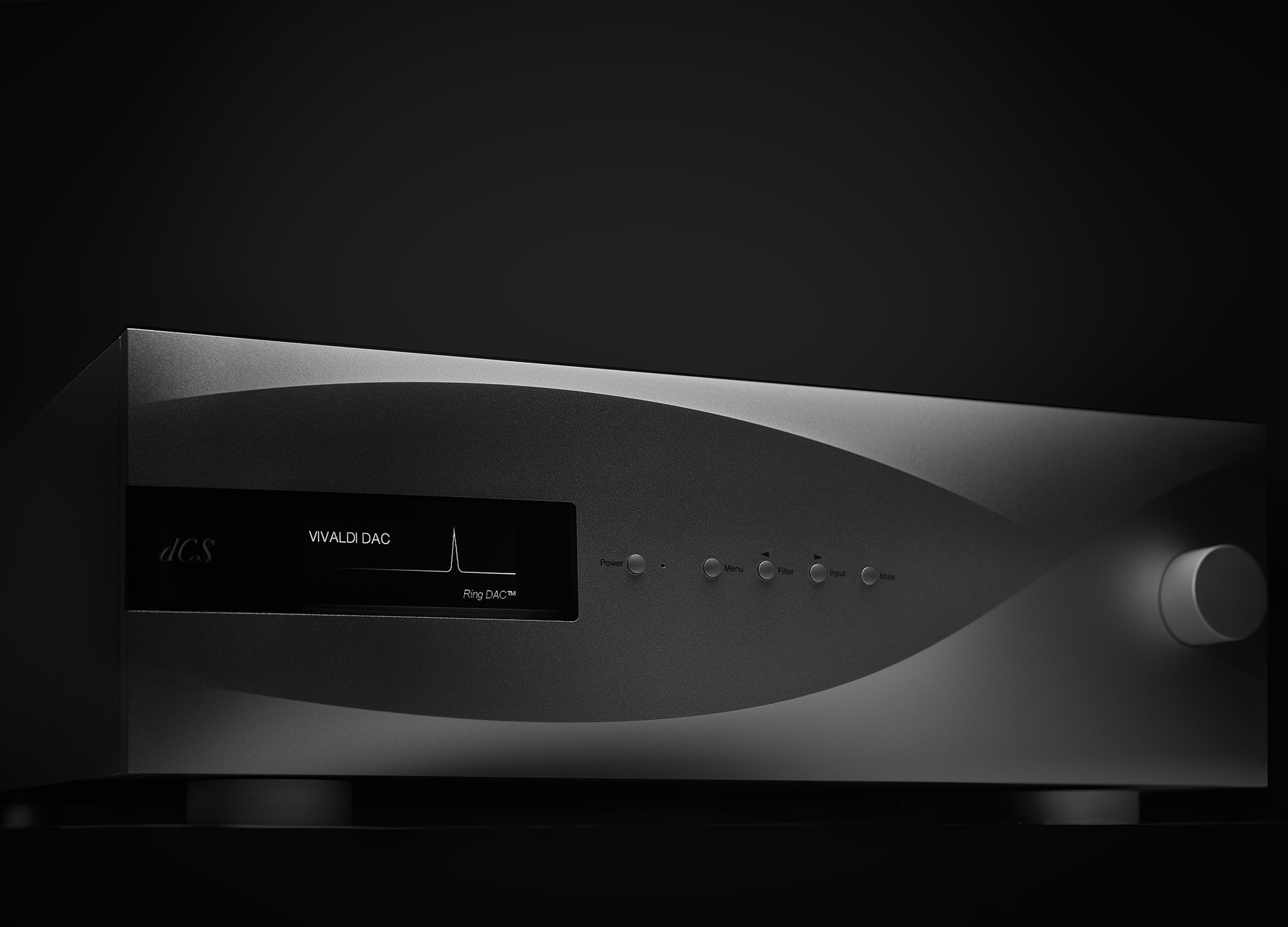
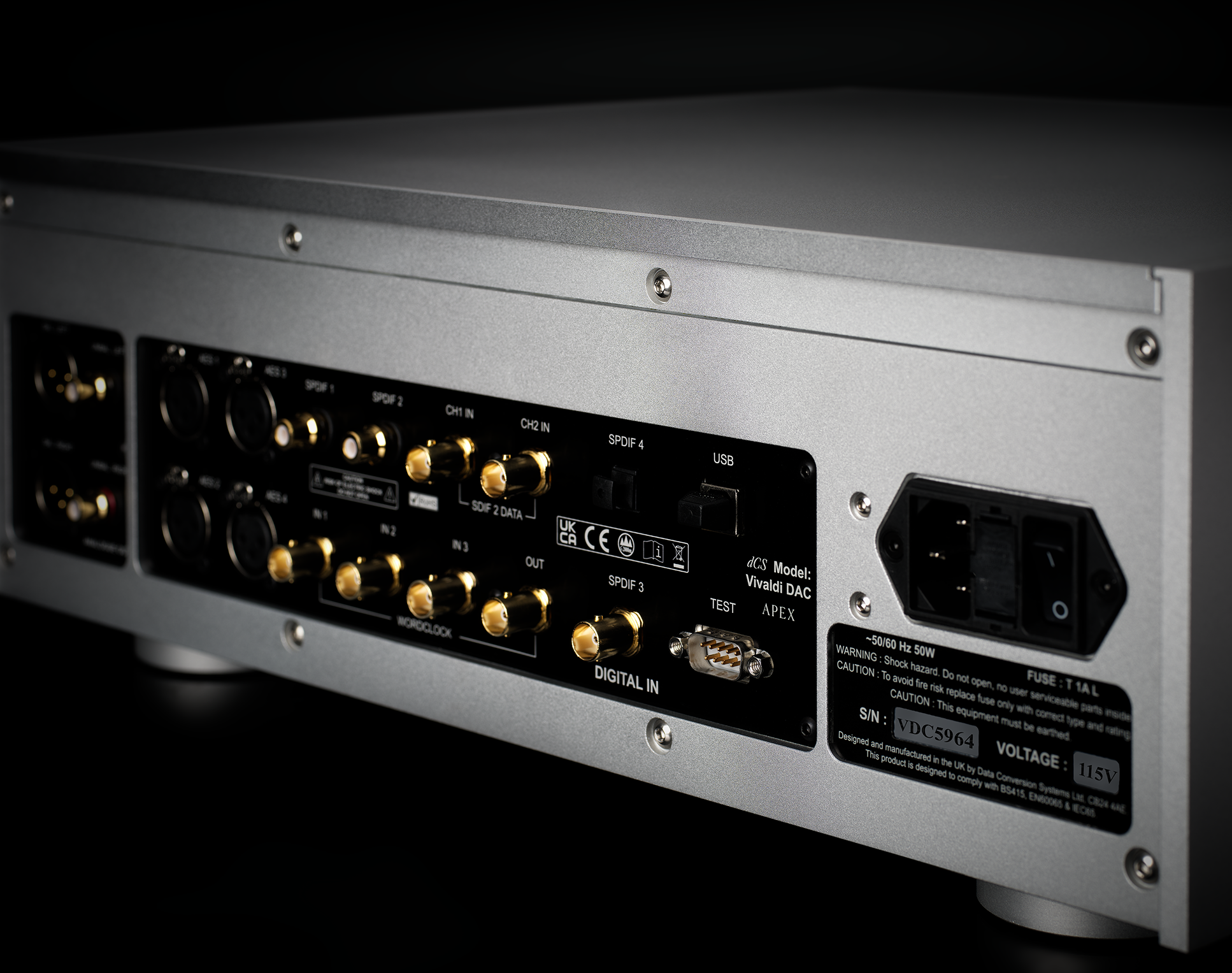
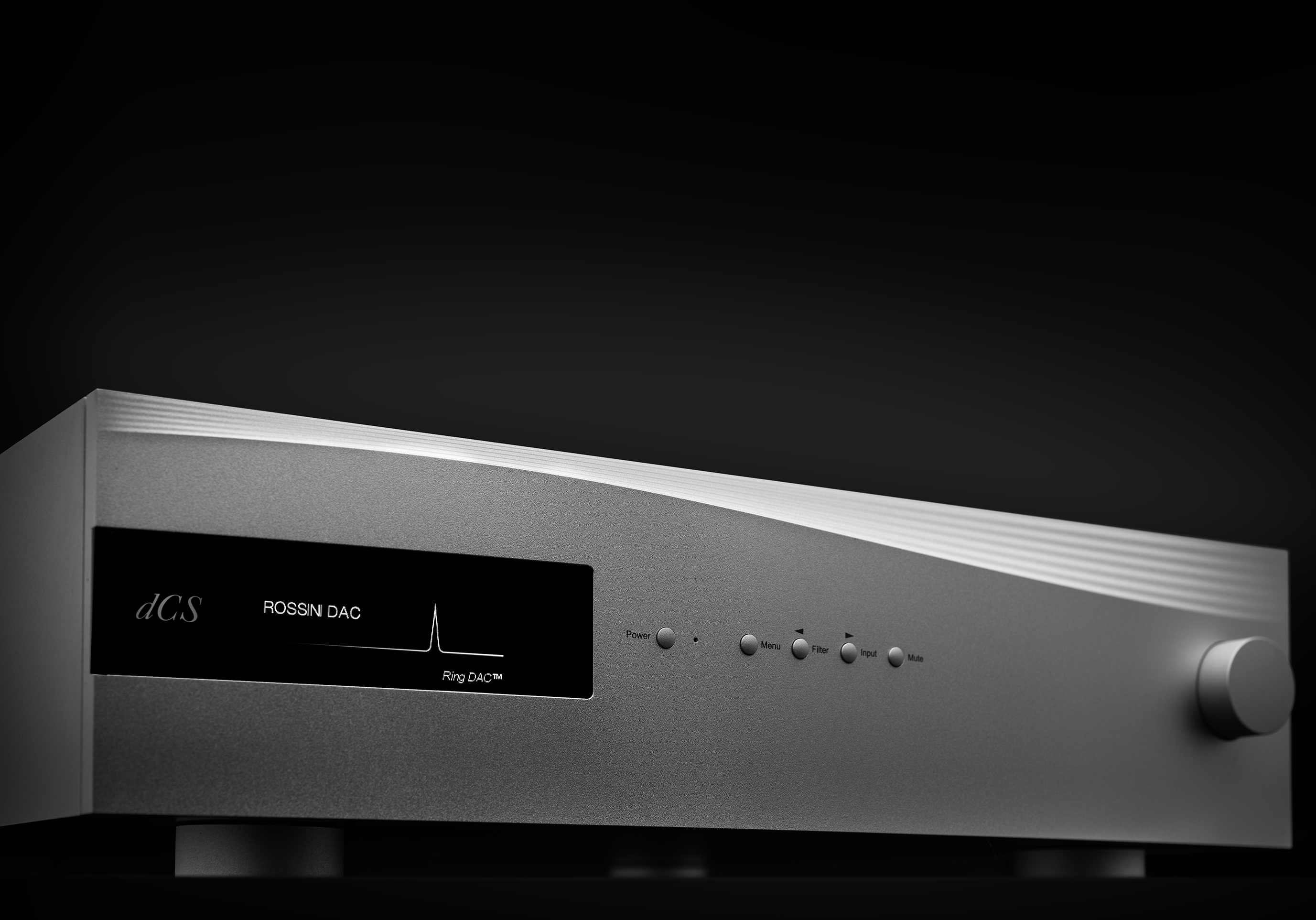
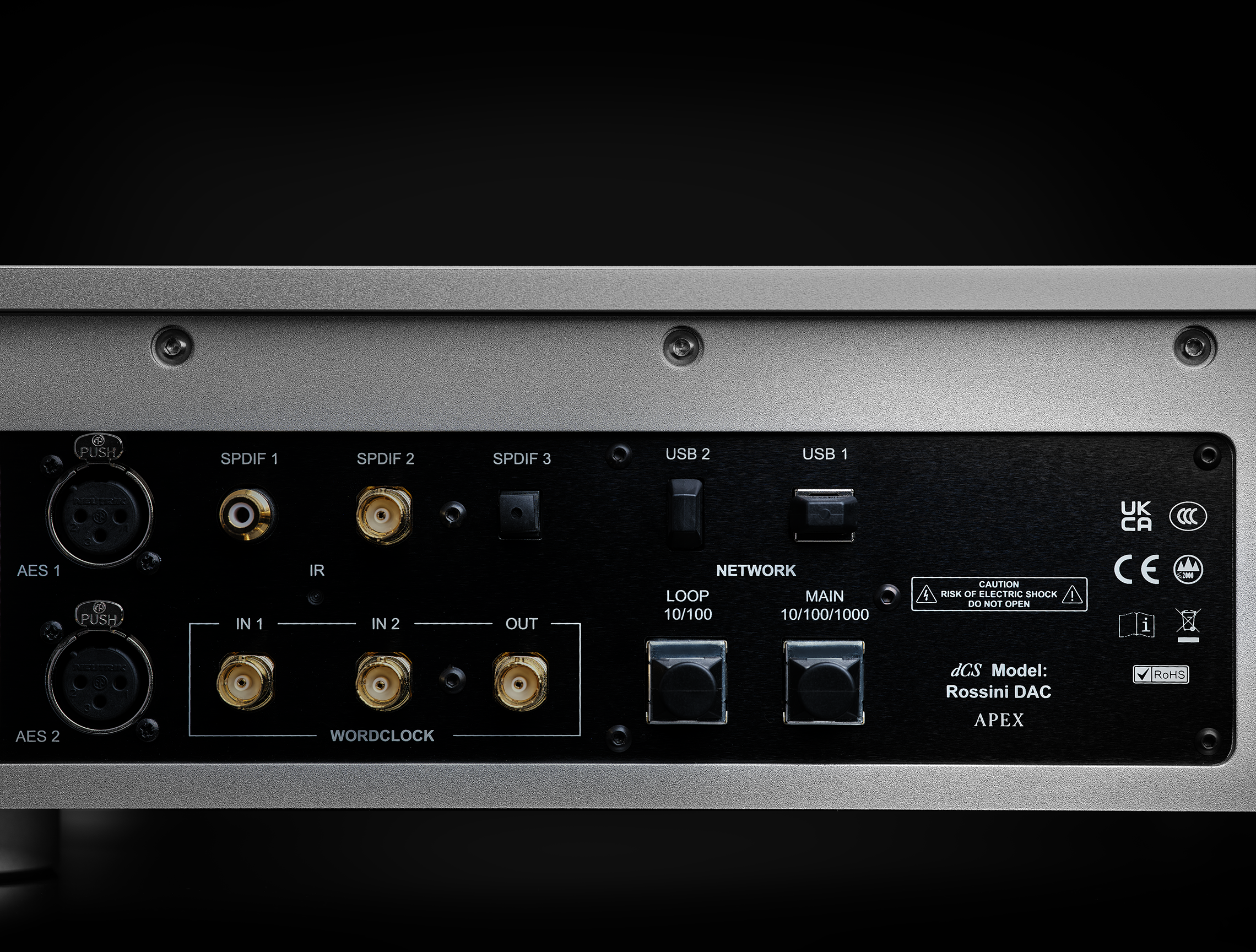
The new Ring DAC APEX hardware will be made available to both future and existing dCS customers. New APEX editions of the dCS Vivaldi DAC, Rossini DAC and Rossini Player, available to order from March 4, will feature the new Ring DAC APEX hardware as standard. Existing owners of the dCS Vivaldi DAC, Vivaldi One, Rossini DAC, and Rossini Player will also be able to upgrade their system through a global programme run in partnership with our network of expert distributors and retailers.
The launch of the upgrade programme reflects our longstanding commitment to ensuring that dCS products deliver a state-of-the-art experience throughout their lifespan, and that our customers are able to benefit from our latest innovations and advancements. We know that dCS products are an investment, and we strive to reward that investment through sharing new features and platforms as and when these are released, whether it’s a bespoke software platform that enhances headphone optimisation, a major update to the dCS Ring DAC’s mapping algorithm, or a new, improved circuit board. This is something we’ve done throughout our time in audio, from the days of the dCS Elgar, through to the Paganini and Puccini years, and it’s something we’ll continue to do.
“In terms of who we are, and what we’re about as a company, the fact that we can spin out a new Ring DAC and offer it as a hardware upgrade to existing customers is something we feel quite strongly about: we believe our products should have a long lifecycle, they should improve through the life of the products, and I think APEX is a fantastic example of that,” David explains.
Audio and entertainment is a fast-moving industry, with products often becoming obsolete, or decreasing in quality and relevance as they age. By constantly exploring how we can enhance the performance of our systems, however, and releasing upgrades whenever we make a new development or breakthrough, we aim to create world-leading products that improve with time. As David notes, one of the most rewarding aspects of our work is being able to deliver enhancements that exceed people’s expectations, and give them an even deeper appreciation for the music they love. And this is what we set out to achieve with APEX.
“What really spurs us on is real customer feedback,” he adds. “We saw when we did the mapper update, that was a game changer for some people. [In terms of] what their system revealed and how they connected with their music, it was another level, and I believe APEX will do the same again.”APEX: A Closer Look
With the launch of our new Ring DAC APEX hardware, we’ve been able to enhance the performance of the dCS Ring DAC and the musical expression of our Rossini and Vivaldi systems. Here, we take a look at the development of APEX, and the various benefits it delivers for listeners
TAGS: NEWS, TECHNOLOGY & INNOVATION
The Ring DAC has been an integral part of dCS products for over 30 years. In the 1980s – when dCS was best known for its work in radar and telecommunications – our engineers developed a novel digital-to-analogue conversion system that could be used to process audio signals at 24-bit resolution.
At the time, 24-bit audio was unheard of. This technological breakthrough led us to develop a succession of pioneering high-resolution DACs, ADCs and master clocks for some of the world’s top recording studios and later, to specialise in creating high-end digital playback systems for music lovers, professionals and audiophiles around the world. Over three decades on, the Ring DAC remains a world-leading technological approach to converting 1s and 0s into music. A core part of all dCS DACs, it has earned global acclaim for its technical and sonic performance.
This formidable reputation is the result of constant innovation and development: throughout the Ring DAC’s life, our engineers have continued to refine and augment its design, working on ambitious upgrades and additions in their quest to ensure its performance remains unrivalled. While the fundamental principles that underpin its design haven’t changed, the Ring DAC has become faster, more intelligent, more sophisticated and more advanced with each new generation. As a result, the musical performance of our products has continued to evolve and improve with each upgrade we make.
In 2017, we released a major update to the software that controls the Ring DAC, providing additional mapping algorithms that allowed listeners to tailor the performance of their dCS system to best suit their listening preferences, setup and musical tastes.
Since the release of this update, we’ve continued to explore how we can push the Ring DAC’s design and capabilities even further. Around 12 months ago, our Director of Product Development Chris Hales decided to turn his focus to the Ring DAC hardware – in particular, the Ring DAC circuit board and analogue output stage.
“We regularly review the performance [of our products] and look very closely at how things are working and where we might be able to improve them”
A thorough investigation
“At dCS, we regularly review the performance [of our products] and look very closely at how things are working and where we might be able to improve them,” explains Chris. “We took some time last year to look very carefully at how [the Ring DAC hardware] was performing, and we found that the performance of the existing analogue board is beyond the capability of most test equipment.”
This is a familiar issue for dCS engineers: as our products often exceed the capabilities of conventional test equipment, we’ve had to devise a range of bespoke tools and equipment that allow us to measure each aspect of a system’s performance with absolute precision. If we cannot measure something as accurately or as comprehensively as we’d like, then we often invest in building a new platform or measurement tool from scratch.
“Audio measurement systems [can] introduce noise, or distortion, or limit the frequency response, just like the thing they’re trying to measure, and there can come a point where, even if they’re not dominating what you’re measuring, these artefacts are affecting it one way or another,” explains Chris. “A good example is when measuring harmonics, where the second harmonic inherent in the test equipment can cancel with the one in the item you’re trying to measure. This can result in a measurement that is much lower than it should be and one which tends to behave unexpectedly as the performance of the item under test is adjusted.”
In the case of the Ring DAC’s analogue performance, we used a method that allowed us to reduce internally generated artefacts. This, in turn, allowed Chris to identify some potential areas for further improvement. The Ring DAC circuit and analogue output stage already delivered an outstanding measured performance, but there were some aspects he felt could perhaps be further refined or reconfigured. After a period of investigation, and an intensive few months experimenting with circuit boards during national lockdowns, he developed some prototype boards to test out his theories.
Once the dCS R&D team had analysed the measured impact of Chris’s proposed revisions, and confirmed that these delivered quantifiable gains (an essential requirement for any dCS software or hardware upgrade), the modified boards were auditioned in a series of listening tests, where our golden-eared music and audio experts reported audible improvements in a range of key areas.
Based on this feedback, the next stage was to commission to several rounds of prototype boards for further listening and measurement tests. The feedback and results from these tests confirmed that this new technology was suitable for an enhanced version of the dCS Ring DAC – the Ring DAC APEX – and that we could make it available to both new and existing customers.
An ambitious redesign
The new Ring DAC APEX hardware features several modifications. One of the first areas that Chris looked at during the research and development phase was the reference supply that feeds the Ring DAC circuit board, and this investigation led him to make some significant adjustments. “[The reference supply] has a direct effect on the audio performance and particularly the output impedance of [the Ring DAC] – in effect, how stiff it is…. We found some ways of improving that, and so we applied that, which makes quite a noticeable difference to the performance,” he explains.
In an electrical system, there are external signals that can interfere with our reference voltage, so the lower impedance that reference is, the harder it is for the interference signals to be coupled in.
As Chris points out, the Ring DAC is essentially a multiplying DAC – that is, it multiplies the reference voltage by the DAC code value. Consequently, anything on that reference (such as noise or periodic signals) is coupled directly to the output. For optimum performance, the reference would be a pure DC voltage with no AC components and no noise.
“Imagine, for example, a ruler clamped to a desk,” he explains. “If it’s a thin, metal ruler you can easily move the free end. If it’s a thick wooden ruler, it’s much harder. In this analogy, a stiff ruler equates to low output impedance (it’s hard to change the voltage) and the flexible one to a high output impedance (it’s easy to change the voltage).”
“The load represented by the Ring DAC changes with the signal – this is analogous to changing how hard you press the end of the ruler – and as a result, the reference voltage will change in response to the signal in proportion to the reference’s impedance,” he adds. “This couples to the output one way or another (in some cases as additional harmonics), so keeping the output impedance low minimises the voltage variation and thereby the extra stuff on the output.”
Chris also carried out a thorough examination of all subsequent stages of the Ring DAC, including the summing and filter stages. “There were a few enhancements we were able to identify there and put in – for example, to improve the symmetry of the summing stages – and finally, we had a good look at the output stage,” he adds.
“The purpose of the output stage is primarily to interface us to what is unknown territory once we leave the dCS realm”
The Ring DAC output stage is responsible for buffering the analogue signals generated by the Ring DAC. As Chris explains, the analogue board of the Ring DAC is made up of both digital stages and analogue stages. The digital stage takes the data that’s fed from the dCS Digital Processing Platform, and subjects it to a mapping function. This drives the 48 latches which form the heart of the Ring DAC. The output of those latches is then summed by an operational amplifier summing stage, where it’s filtered to get rid of very high frequency components, before being buffered by an output stage.
“The purpose of the output stage is primarily to interface us to what is unknown territory once we leave the dCS realm,” says Chris. “We really don’t have much control over what cables people are going to connect, what external equipment people are going to connect, and these can have very different input characteristics, so it’s important to have an output stage which is capable of driving lots of current, that’s not sensitive to stability problems that these may cause.”
In most audio setups, dCS DACs are connected to a cable, and then an amplifier or preamplifier. The cable will have capacitance, resistance, and inductance. Different cables will have different amounts of each and may have additional ‘matching networks’.
“It was a very worthwhile improvement, although we [were] already looking at harmonics which are 110, 120dB below the fundamental”
“The input of the amplifier/preamplifier will have capacitance and resistance, but may also require a DC bias current,” says Chris. “Additionally, balanced input stages vary enormously (not being balanced at all in some extreme cases). If we were to connect these directly to the DAC summing stage, we would have to design it in such a way that it would no longer be optimised as a DAC summing stage. The solution, then, is to isolate the summing stage from the outside world so that we can optimise the performance of the summing stage and drive the enormously uncertain loads that cable and amplifier combinations can present.”
“Capacitance constitutes a load on the output stage and that equates to a current draw and one that increases at high frequencies,” Chris adds. “If we want to reduce the high frequency roll-off that can cause, we need to present a low output resistance but also have enough current available to drive that capacitance without distortion. Likewise, amplifier input resistance can vary a lot and if it is unusually low, will require high current to drive it, and will benefit from being driven from a low impedance. In this way, our output stage makes the overall DAC performance much more consistent (ie stable) when used in different systems.”
Other changes made to the Ring DAC’s hardware include replacing individual transistors on the Ring DAC circuit board with a compound pair, and adjusting the layout of components on the Ring DAC circuit board. The result of these various adaptations is a new, enhanced board that is even quieter than previous iterations, and over 12dB more linear.
“It was a very worthwhile improvement, although we [were] already looking at harmonics which are 110, 120dB below the fundamental – so a large improvement, but performance was extremely good to start with,” adds Chris.
“Great audio should draw you in, engage with you and excite you, and I think APEX does that in spades. It has everything we think is synonymous with dCS”
Setting a new standard
For listeners, this enhanced technical performance has resulted in a range of sonic improvements, as evidenced in our subjective listening tests.
The feedback from listening sessions with our Ring DAC APEX prototypes was hugely positive, with listeners noting enhanced resolution, dynamics, rhythm and timing, an even greater sense of ease and naturalness, more precise and tonally resolved voices, and more realistic timbral quality of strings, among other benefits. Whilst each listener’s experience is unique, and depends on their audio setup, chosen music and the wider environment in which they listen, the consensus from several rounds of testing was that APEX allowed us to deliver an even more compelling and absorbing musical experience.
“I think it just felt right – when we got to that final board, and we’d been through all those final rounds of testing, there was just something about it,” says David Steven, MD at dCS. “Great audio should draw you in, engage with you and excite you, and I think APEX does that in spades. It has everything that we think is synonymous with dCS: there’s detail, there’s resolution, but it’s also just emotionally involving…. It’s an amazing achievement from the team to take what was already state-of-the-art and not just improve it on the measured performance level, but to bring something that you can feel and hear.”
“I think it’s very much [part of] our philosophy to realise improvements when we can…. Continual improvement is something we take very seriously”
Constant evolution
Improving a hardware platform that already delivers a class-leading performance is no easy feat, but the latest Ring DAC APEX hardware is testament to what can be achieved through rigorous analysis, creative thinking and continual product development. “I think it’s very much [part of] our philosophy to realise improvements when we can,” adds Chris.
“Continual improvement is [something] we take very seriously – I think we feel that we owe it to our customers to do the best we can, and I think that those of us who are working on the technical side of things, are also just of that personality where we just want to improve things all the time…. For whatever reason, there’s a huge philosophy of, ‘if we can make it better then let’s do that – it’s worth the effort’.”
This continual development is driven not just by our engineers’ innate curiosity and desire to constantly improve, but our wider ambition to ensure that dCS products deliver the finest possible performance. As David and Chris both note, it’s not a case of innovating for innovation’s sake but rather, making improvements and gains that will enhance our customers’ experience of listening to their favourite artists and recordings.
To achieve this, our engineers must draw on a range of measurement techniques, experience and data, as well as subjective feedback. As dCS Technical Director Andy McHarg points out, “One of the great challenges in hi-fi is correlating certain measurements to certain sonic characteristics” – and it’s not a straightforward case of enhancing one aspect of a product’s technical performance in order to improve the sound in a particular area.
While our engineers know that improving certain technical dimensions should lead to an improvement in sound, they also know that making technical improvements can sometimes have an unexpected or unintended impact on the overall performance of a product. It’s for this reason that subjective listening tests play such an important role in product development at dCS.
Using their extensive experience, the dCS engineering team is able to interpret the subjective feedback we receive from each round of listening tests, and understand where or how their work might need to be adapted in order to deliver an outstanding experience for dCS customers (and a class-leading technical performance).
Through conducting several rounds of listening tests and performance reviews, with further development after each round, we are able to ensure that an upgrade such as APEX delivers an actual, notable benefit for listeners, and avoid the pitfalls of improving performance in one area at the expense of another.
This process can take several months and sometimes years, but in the case of APEX, it has allowed us to further improve a renowned dCS innovation and, in turn, enhance the musical abilities of two much-loved dCS systems, the Vivaldi and Rossini.
The new Ring DAC APEX hardware will be made available to both future and existing dCS customers. New APEX editions of the dCS Vivaldi DAC, Rossini DAC and Rossini Player, available to order from March 4, will feature the new Ring DAC APEX hardware as standard. Existing owners of the dCS Vivaldi DAC, Vivaldi One, Rossini DAC, and Rossini Player will also be able to upgrade their system through a global programme run in partnership with our network of expert distributors and retailers.
The launch of the upgrade programme reflects our longstanding commitment to ensuring that dCS products deliver a state-of-the-art experience throughout their lifespan, and that our customers are able to benefit from our latest innovations and advancements. We know that dCS products are an investment, and we strive to reward that investment through sharing new features and platforms as and when these are released, whether it’s a bespoke software platform that enhances headphone optimisation, a major update to the dCS Ring DAC’s mapping algorithm, or a new, improved circuit board. This is something we’ve done throughout our time in audio, from the days of the dCS Elgar, through to the Paganini and Puccini years, and it’s something we’ll continue to do.
“In terms of who we are, and what we’re about as a company, the fact that we can spin out a new Ring DAC and offer it as a hardware upgrade to existing customers is something we feel quite strongly about: we believe our products should have a long lifecycle, they should improve through the life of the products, and I think APEX is a fantastic example of that,” David explains.
Audio and entertainment is a fast-moving industry, with products often becoming obsolete, or decreasing in quality and relevance as they age. By constantly exploring how we can enhance the performance of our systems, however, and releasing upgrades whenever we make a new development or breakthrough, we aim to create world-leading products that improve with time. As David notes, one of the most rewarding aspects of our work is being able to deliver enhancements that exceed people’s expectations, and give them an even deeper appreciation for the music they love. And this is what we set out to achieve with APEX.
“What really spurs us on is real customer feedback,” he adds. “We saw when we did the mapper update, that was a game changer for some people. [In terms of] what their system revealed and how they connected with their music, it was another level, and I believe APEX will do the same again.”
APEX: クローズアップ
新しいRing DAC APEXハードウェアの発売により、dCS Ring DACの性能とRossiniおよびVivaldiシステムの音楽表現力を向上させることができました。ここでは、APEXの開発経緯と、それがリスナーにもたらす様々なメリットについてご紹介します。
TAGS: ニュース, テクノロジー&イノベーション
リングDACは、30年以上にわたってdCS製品に欠かせない存在となっています。1980年代、dCSがレーダーと通信の分野で最もよく知られていた頃、当社のエンジニアは、24ビットの解像度でオーディオ信号を処理するために使用できる斬新なデジタル・アナログ変換システムを開発しました。
当時、24ビットオーディオは前代未聞でした。この技術的なブレークスルーにより、私たちは世界有数のレコーディングスタジオ向けに先駆的な高解像度DAC、ADC、マスタークロックを次々と開発し、その後、世界中の音楽ファン、プロ、オーディオマニア向けにハイエンドデジタル再生システムを専門的に開発することになりました。30年以上経った今でも、Ring DACは「1」と「0」を音楽に変換する技術として、世界をリードしています。すべてのdCS DACの中核をなすこのDACは、その技術的・音響的性能において世界的に高い評価を獲得しています。
Ring DACの誕生から現在に至るまで、当社のエンジニアはその設計を改良・増強し続け、野心的なアップグレードや追加を行い、その性能が他の追随を許さないものであることを確信しています。その設計を支える基本原理は変わっていませんが、Ring DACは世代を重ねるごとに、より速く、より賢く、より洗練され、より高度になってきました。その結果、製品の音楽的性能は、アップグレードするたびに進化し、向上し続けてきました。
2017年、私たちはRing DACを制御するソフトウェアのメジャーアップデートをリリースし、リスナーのリスニングの好み、セットアップ、音楽のテイストに最適なdCSシステムのパフォーマンスを調整できるように、マッピングアルゴリズムを追加提供しました。
このアップデートのリリース以来、私たちはRing DACの設計と機能をさらに押し上げる方法を模索し続けてきました。12ヶ月ほど前、製品開発ディレクターのクリス・ヘイルズは、Ring DACのハードウェア、特にRing DACの回路基板とアナログ出力段に焦点を当てることにしました。
「私たちは定期的に(製品の)性能を見直し、どのように動作しているか、どこを改善できるかを注意深く観察しています」。
徹底的な調査
「dCSでは、定期的に(製品の)性能を見直し、どのように機能しているか、どこを改善できるかを綿密に調査しています」とクリスは説明します。「そして、既存のアナログボードの性能は、ほとんどのテスト機器の能力を超えていることがわかりました。
これは、dCSのエンジニアにとって身近な問題です。私たちの製品はしばしば従来のテスト機器の能力を超えるため、システムの性能の各側面を絶対的な精度で測定できる特注のツールや機器を幅広く考案する必要がありました。もし、思うような精度や包括的な測定ができない場合は、新しいプラットフォームや測定ツールをゼロから構築するために投資することもあります。
「オーディオ測定システムは、測定対象物と同じようにノイズや歪みを発生させたり、周波数特性を制限したりすることがあります。「例えば、高調波を測定する場合、試験装置に内在する第2高調波が、測定対象物に内在する第2高調波と相殺される可能性があります。その結果、測定値は本来あるべき値よりもはるかに低くなり、被測定物の性能を調整すると予期せぬ挙動を示す傾向があるのです」。
Ring DACのアナログ性能の場合、内部で発生するアーティファクトを低減できる方法を用いました。これにより、クリスはさらなる改善の余地がある領域を特定することができました。Ring DACの回路とアナログ出力段は、すでに測定上では優れた性能を発揮していますが、さらに改良したり、再構成したりすることが可能だと思われる部分がいくつかあったのです。そして、数カ月間の集中的な調査と、国の閉鎖期間中の回路基板での実験を経て、理論を検証するためのプロトタイプ基板をいくつか開発しました。
このフィードバックに基づき、次の段階として、数回にわたる試作基板による試聴・測定テストを実施しました。その結果、この新技術はdCS Ring DACの強化版であるRing DAC APEXに適しており、新規および既存のお客様に提供できることが確認されました。
意欲的な再設計
新しいRing DAC APEXのハードウェアには、いくつかの改良が加えられています。研究開発の段階でクリスが最初に注目したのは、Ring DACの回路基板に供給するリファレンス電源で、この調査によっていくつかの大幅な調整が行われました。「リファレンス電源はオーディオ性能に直接影響を与え、特にRing DACの出力インピーダンスに大きな影響を与えます。それを改善する方法を見つけたので、それを適用したところ、性能にかなり顕著な違いが出ました」と説明します。
電気システムでは、基準電圧に干渉する外部信号が存在するため、基準電圧のインピーダンスが低ければ低いほど、干渉信号が結合されにくくなるのです。
クリスが指摘するように、リングDACは本質的に乗算型DACです。つまり、リファレンス電圧にDACコード値を乗算します。その結果、そのリファレンス上にあるもの(ノイズや周期的な信号など)は、そのまま出力に結合される。最適なパフォーマンスを得るためには、リファレンスはAC成分やノイズのない純粋なDC電圧でなければならない。
「例えば、机の上に定規が固定されていると想像してください」と彼は説明する。「薄い金属製の定規であれば、簡単に自由端を動かすことができます。例えば、机に固定された定規を想像してください。この例えの場合、硬い定規は出力インピーダンスが低い(電圧を変えにくい)、柔軟な定規は出力インピーダンスが高い(電圧を変えやすい)ことに相当します」。
“リングDACが表す負荷は信号によって変化し、これは定規の先を押す強さを変えることと類似しており、その結果、基準電圧は基準のインピーダンスに比例して信号に応じて変化します “と彼は付け加えます。「出力インピーダンスを低く保つことで、電圧の変動を最小限に抑え、出力に余計なものが出ないようにするのです」。
クリスは、サミングやフィルターステージを含むRing DACの後続ステージすべてについても徹底的な検証を実施しました。「例えば、サミングステージの対称性を向上させるなど、いくつかの改良を加えることができました。
「出力段の目的は、主にdCSの領域を離れると、未知の領域へのインターフェースとなることです。
リングDACの出力段は、リングDACが生成するアナログ信号をバッファリングする役割を担っています。クリスが説明するように、Ring DACのアナログ基板は、デジタルステージとアナログステージの両方で構成されています。デジタルステージは、dCSデジタル処理プラットフォームから供給されるデータを受け取り、それをマッピング関数にかけます。これにより、Ring DACの心臓部である48個のラッチが駆動されます。ラッチの出力は、オペアンプのサミングステージで合計され、非常に高い周波数成分を取り除くためのフィルターがかけられ、出力ステージでバッファリングされます。
「出力段の目的は、dCSの領域を離れると、未知の領域へのインターフェイスになることです」とクリスは言う。「そのため、大電流駆動が可能で、これらの機器が引き起こす可能性のある安定性の問題に影響されない出力段が重要なのです」。
ほとんどのオーディオセットアップでは、DCS DACはケーブルに接続され、次にアンプまたはプリアンプに接続されます。ケーブルには、キャパシタンス、抵抗、インダクタンスがあります。ケーブルによってそれぞれの量は異なり、さらに「マッチングネットワーク」を持っている場合もあります。
「基本波より110、120dB低い高調波をすでに見ていたにもかかわらず、非常に価値のある改善でした。
「アンプ/プリアンプの入力には、キャパシタンスと抵抗がありますが、DCバイアス電流が必要な場合もあります」とクリスは言います。「さらに、バランス入力段は非常に多様です(極端な例では全くバランスが取れていない場合もあります)。これらをDACサミングステージに直接接続するとなると、もはやDACサミングステージとして最適化されないような設計をしなければならないでしょう。そこで解決策として、サミングステージを外界から隔離し、サミングステージの性能を最適化し、ケーブルとアンプの組み合わせがもたらす非常に不確実な負荷を駆動できるようにするのです。”
「静電容量は出力段の負荷であり、それは電流を消費することに等しく、高周波数では増加する」とクリスは付け加えます。「もし、高域のロールオフを抑えたいのであれば、出力抵抗を低くする必要がありますが、同時に、歪みなくキャパシタンスを駆動するのに十分な電流を確保する必要があります。同様に、アンプの入力抵抗は大きく変動するため、異常に低い場合は駆動に大電流が必要となり、低インピーダンスから駆動させることが有利となります。このように、私たちの出力段は、異なるシステムで使用された場合、DAC全体の性能をより一貫したもの(つまり安定したもの)にしてくれます。”
Ring DACのハードウェアに加えられたその他の変更には、Ring DAC回路基板上の個々のトランジスタを複合ペアに置き換えることや、Ring DAC回路基板上の部品のレイアウトを調整することが含まれます。これらの様々な工夫の結果、従来の基板よりもさらに静粛性を高め、リニアリティも12dB以上向上させることができました。
「私たちはすでに基本波より110〜120dB低い高調波を見ていたので、大きな改善ですが、性能はもともと非常に優れていました」とクリスは付け加えます。
「素晴らしいオーディオは、あなたを引き付け、あなたを魅了し、あなたを興奮させるはずです。APEXは、私たちが考えるdCSの代名詞をすべて備えているのです」。
新たなスタンダードの確立
リスナーにとっては、このような技術的性能の向上が、主観的なリスニングテストでも明らかなように、さまざまな音の向上をもたらしています。
Ring DAC APEXのプロトタイプを用いた試聴では、解像度、ダイナミクス、リズム、タイミングが向上し、より自然で安心感がある、声質がより正確で音色が解像している、弦楽器の音色がよりリアルになったなど、非常に高い評価を受けています。リスナーの体験は人それぞれであり、オーディオセットアップや選択した音楽、リスニング環境によっても異なりますが、数回にわたるテストの結果、APEXによってより魅力的で吸収力のある音楽体験を提供できるようになったというのが共通の認識です。
「最終的なボードにたどり着いたとき、そして最終ラウンドのテストをすべて終えたとき、何かしっくりくるものがあったのだと思います」とdCSのMD、David Stevenは言います。「そして、APEXはそれを見事に実現していると思います。ディテール、解像度、そして感情移入……dCSの代名詞ともいえる要素をすべて備えています。すでに最先端だったものを、測定された性能レベルで改善するだけでなく、感じたり聞いたりできるものをもたらしたのは、チームの驚くべき成果です。”
「私たちの哲学は、可能な限り改善を実現することです。継続的な改善は、私たちがとても大切にしていることです。
絶え間ない進化
すでにクラス最高の性能を発揮しているハードウェア・プラットフォームを改良することは容易ではありませんが、最新のRing DAC APEXハードウェアは、厳密な分析、創造的思考、継続的な製品開発によって達成できることの証しです。「できる限り改良を重ねることは、私たちの哲学の一部だと思います。
「私たちは、お客様に対してベストを尽くす義務があると感じていますし、技術に携わる私たちも、常に改善したいと思う性格なのだと思います。どんな理由であれ、”より良くできるのであれば、それをやろう、努力する価値はある “という大きな哲学があるのです」。
こうした継続的な開発は、エンジニアの好奇心や向上心だけでなく、dCSの製品が最高のパフォーマンスを発揮できるようにという、より大きな野心によって推進されているのです。デイビッドとクリスが言うように、イノベーションのためのイノベーションではなく、お客様がお気に入りのアーティストやレコーディングを聴く体験をより豊かにするための改善や改良を行うことが重要なのです。
そのために、エンジニアはさまざまな測定技術、経験、データ、そして主観的なフィードバックを活用しなければなりません。dCSのテクニカルディレクターであるアンディ・マクハーグが指摘するように、「ハイファイにおける大きな課題の一つは、ある測定値とある音質特性の関連付け」であり、製品の技術性能のある側面を強化すれば、特定の領域の音が良くなるという単純なものではありません。
エンジニアは、ある技術的な側面を改善すれば音が良くなることを知っていますが、技術的な改善を行うことで、時として製品全体の性能に予期せぬ、あるいは意図しない影響を与えることがあることも知っているのです。dCSの製品開発において、主観的な試聴が重要な役割を果たすのは、このような理由からです。
dCSのエンジニアリングチームは、豊富な経験をもとに、試聴のたびに寄せられる主観的なフィードバックを解釈し、dCSのお客様に優れた体験(およびクラス最高の技術性能)を提供するために、自分たちの作業のどこをどのように修正する必要があるかを理解することができるのです。
試聴と性能評価を何度も行い、そのたびに開発を進めることで、APEXのようなアップグレードがリスナーに実際に顕著なメリットをもたらすことを確認し、ある分野の性能向上が他の分野を犠牲にするという落とし穴を避けることができるのです。
このプロセスは数ヶ月、時には数年かかることもありますが、APEXの場合、有名なdCSの技術革新をさらに改善することができ、その結果、VivaldiとRossiniという多くの人に愛されるdCSシステムの音楽能力を向上させることができたのです。
新しいRing DAC APEXハードウェアは、将来および既存のdCSのお客様の両方に提供される予定です。3月4日より受注を開始するdCS Vivaldi DAC、Rossini DAC、Rossini Playerの新しいAPEXエディションは、新しいRing DAC APEXハードウェアを標準装備しています。また、dCS Vivaldi DAC、Vivaldi One、Rossini DAC、Rossini Playerの既存ユーザーは、当社の専門ディストリビューターおよび小売店のネットワークと提携して実施するグローバルプログラムを通じて、システムのアップグレードが可能になります。
アップグレードプログラムの開始は、dCS製品がその寿命を通じて最先端の体験を提供し、お客様が当社の最新の技術革新と進歩の恩恵を受けることができるようにするという当社の長年のコミットメントを反映したものです。dCS製品は投資であると認識しており、ヘッドホン最適化を強化する特注ソフトウェアプラットフォーム、dCS Ring DACのマッピングアルゴリズムのメジャーアップデート、または新しい改良型回路基板など、新しい機能やプラットフォームがリリースされたときに、それを共有することで投資に報いるよう努力しています。これは、dCSエルガーの時代からパガニーニやプッチーニの時代まで、私たちがオーディオの世界でずっと行ってきたことであり、これからも続けていくことです。
「私たちの製品が長いライフサイクルを持つべきであり、製品の寿命を通じて改善されるべきであると私たちは信じていますし、APEXはその素晴らしい例だと思います」とDavidは説明します。
オーディオとエンターテインメントは変化の激しい業界であり、製品が古くなったり、品質や関連性が低下したりすることがよくあります。しかし、私たちは常にシステムの性能を高める方法を模索し、新しい開発やブレークスルーがあるたびにアップグレードをリリースすることで、時間とともに向上する世界有数の製品を生み出すことを目指しています。デイビッドが言うように、私たちの仕事で最もやりがいを感じるのは、人々の期待を超える機能拡張を実現し、彼らが愛する音楽をより深く鑑賞できるようになることです。これこそ、私たちがAPEXで目指したものです。
さらに、「私たちの原動力は、お客様の生の声です」とも語ります。「マッパーのアップデートを行ったとき、ある人たちはそれがゲームチェンジャーになったことを知りました。[APEXはまた同じことをやってくれると信じています。