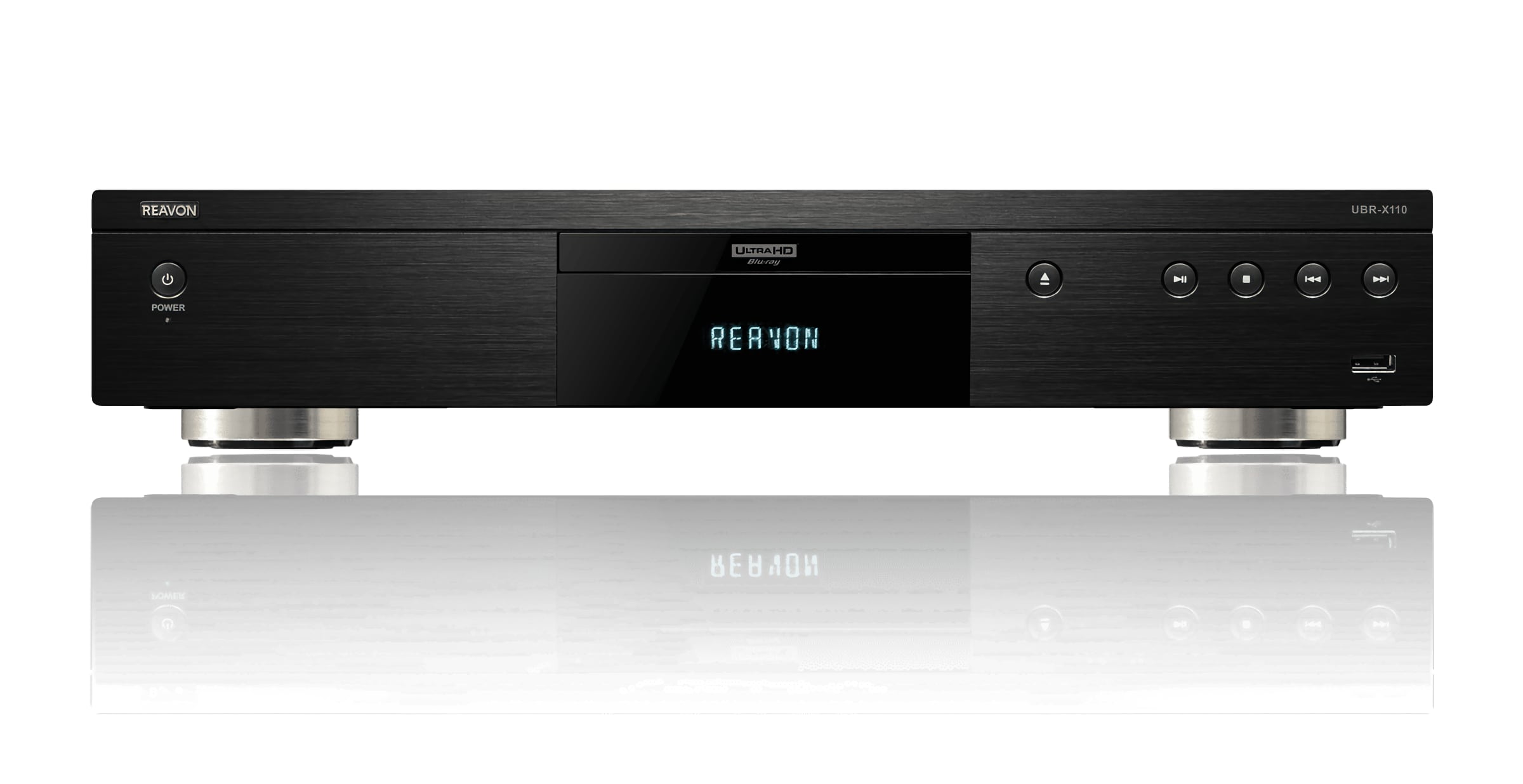
Main features
Universal Disc Player – Ultra HD Blu-ray, Blu-ray, Blu-ray 3D, DVD, DVD Audio, SACD, CD
BD-Live/BONUSVIEW
HDR10
Dolby Vision
36-bit Deep Colour/”x.v.Colour”
Dual HDMI Output
Video Adjust
Backlite Remote Control
Fast boot
Multimedia playback (MKV, FLAC, AIFF, MP3, JPG)
Video features
4K Upscaling – Enhance the home cinema experience by quadrupling Full HD 1080p resolution with 4K (3840 x 2160) upscaling of all video sources.
True 24p Cinema – Many Blu-ray and 4K Ultra HD Blu-ray discs are encoded at 24 frames per second, the same frequency as the original film screened in theaters. The UBR-X110 maintains the original 24-fps rate straight through to the screen with progressive scanning.
Dolby Vision® – This stunning HDR imaging technology brings extraordinary color, contrast, and brightness to the screen.
Video Adjust – Set the brightness, contrast, color saturation, hue, sharpness and noise reduction.
Audio features
HDMI Audio Only the get the best audio digital experience
Ultra-Rigid Construction
3 mm Steel Plate Rigid Under Base for Low Noise and Low Centre of Gravity
Rigid Optical Drive
Music File Playback: FLAC (2.0/5.1), M4A, AIF, AIFF, DSF (2.0/5.1), DFF (2.0/5.1), MP3, OGG, APE
Home Theater Audio: Dolby Digital, Dolby Digital Plus, Dolby TrueHD, Dolby Atmos, DTS, DTS-HD MA, DTS-HD HRA, DTS:X
Terminals
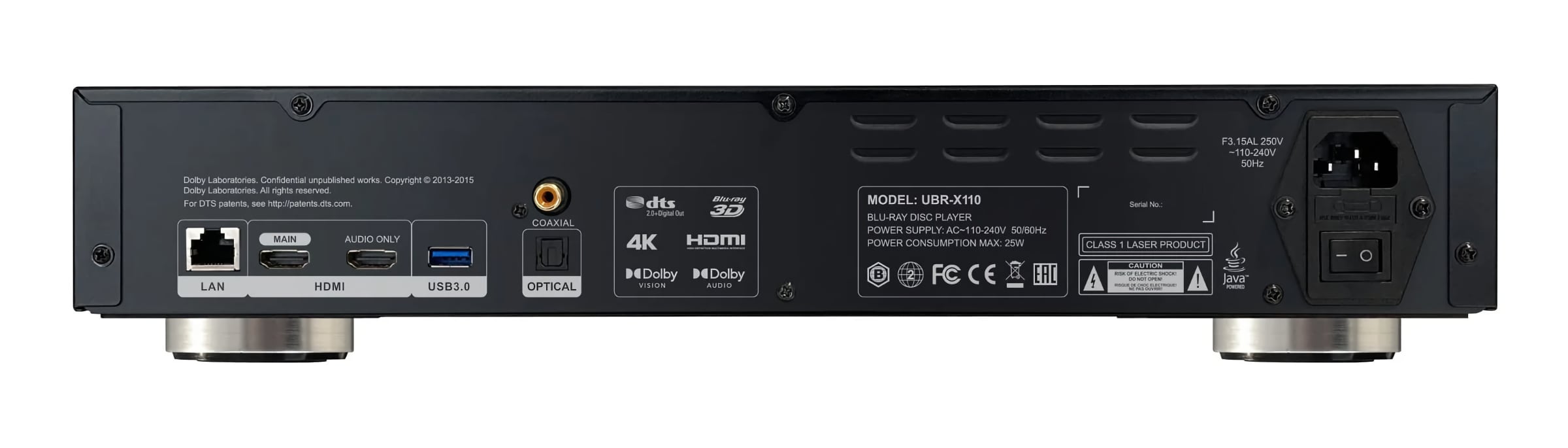
HDMI 1 Out for Audio/Video
HDMI 2 for Audio Only
Digital Coaxial Out
Digital Optical Out
USB In (1 USB 2.0 Front, 1 USB 3.0 Rear)
Ethernet
Technical Specifications
Mediatek MTK8581 SoC
Quad-core ARM Cortex-A53 CPU cluster
ARM Mali-T860 MP2 GPU
General Specifications Power: AC 220-240 V, 50/60 Hz Power Consumption: 32 W Power Consumption During Standby: 0.45 W Dimensions (W x H x D): 430 x 85 x 300 mm Weight: 6.3 Kg / 13.9 lbs
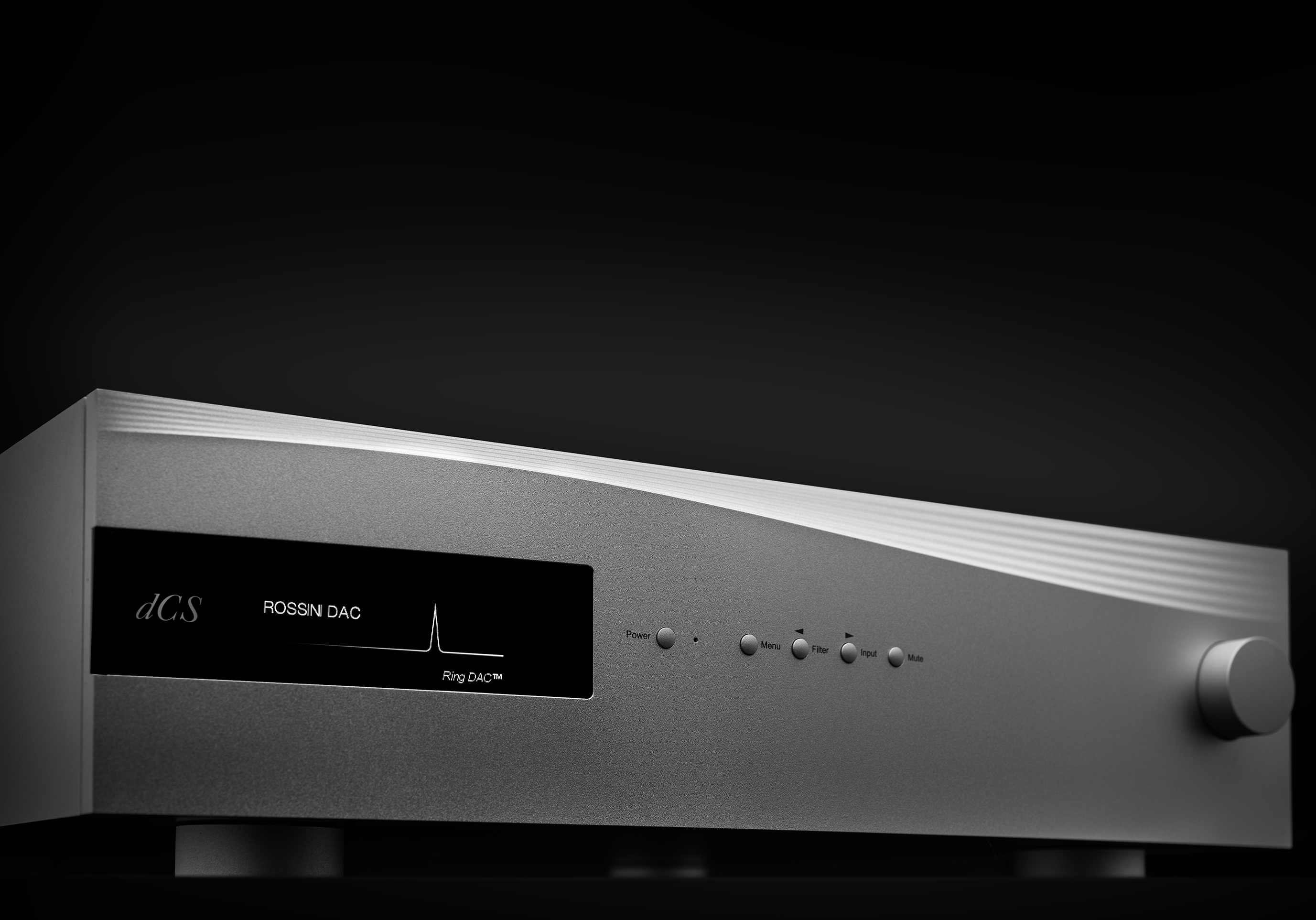
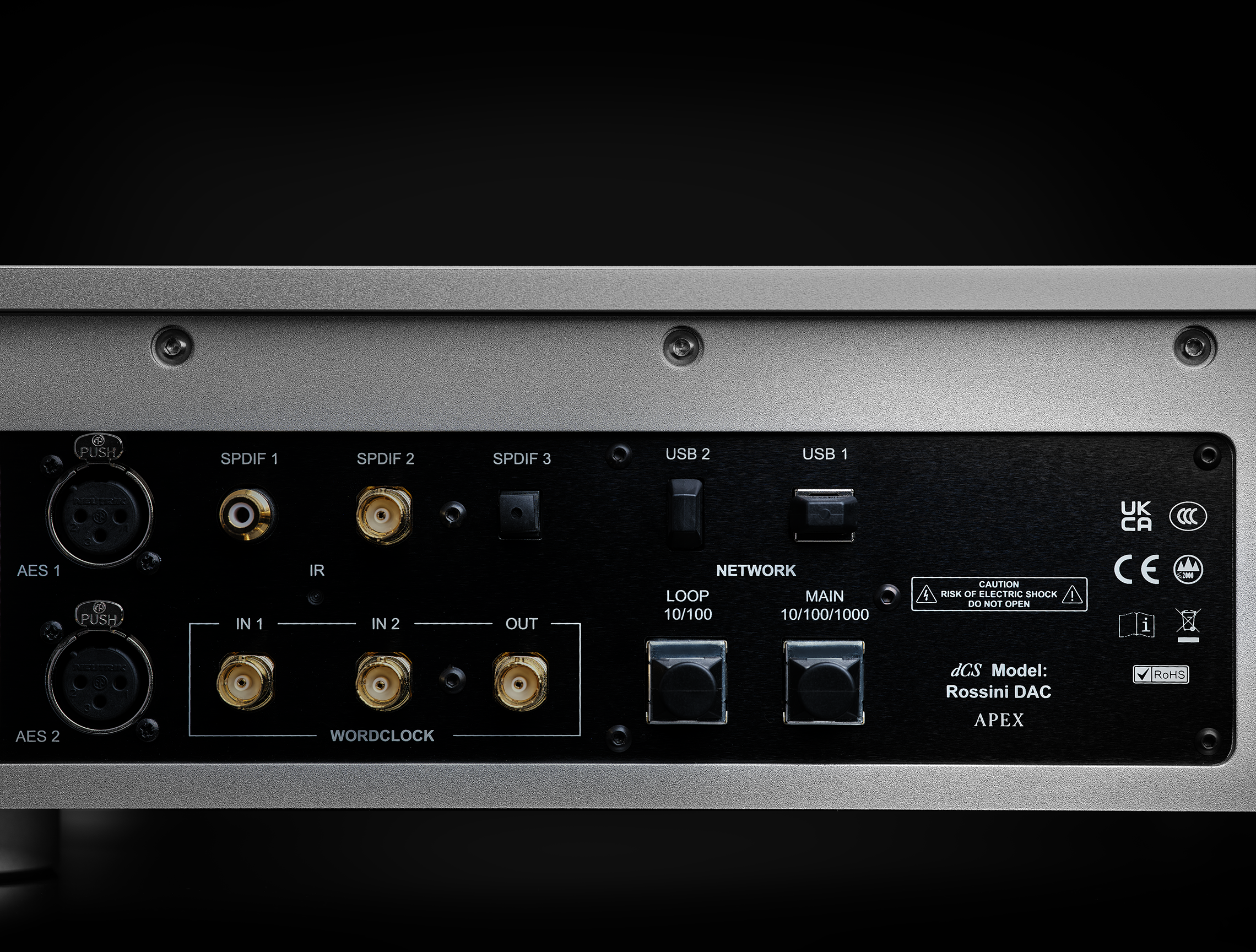
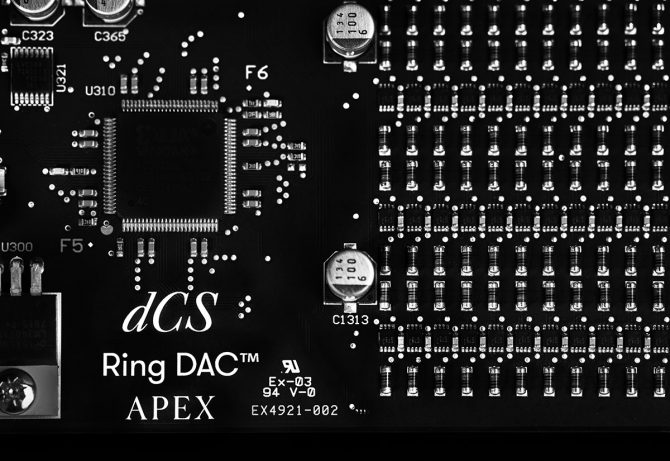
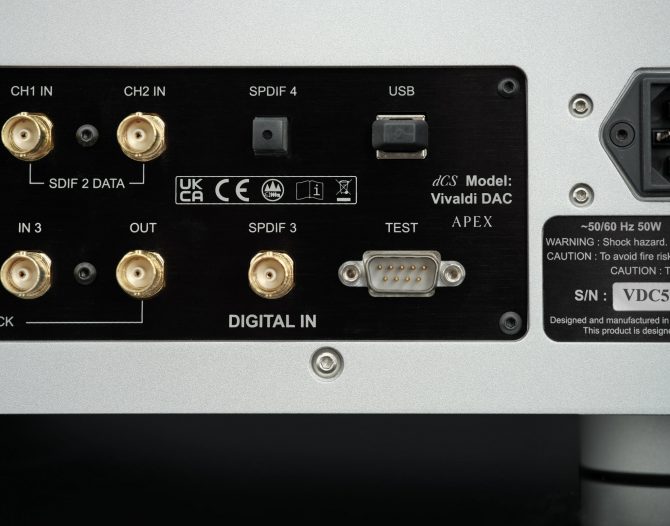
APEX: A Closer Look With the launch of our new Ring DAC APEX hardware, we’ve been able to enhance the performance of the dCS Ring DAC and the musical expression of our Rossini and Vivaldi systems. Here, we take a look at the development of APEX, and the various benefits it delivers for listeners
TAGS: NEWS, TECHNOLOGY & INNOVATION
The Ring DAC has been an integral part of dCS products for over 30 years. In the 1980s – when dCS was best known for its work in radar and telecommunications – our engineers developed a novel digital-to-analogue conversion system that could be used to process audio signals at 24-bit resolution.
At the time, 24-bit audio was unheard of. This technological breakthrough led us to develop a succession of pioneering high-resolution DACs, ADCs and master clocks for some of the world’s top recording studios and later, to specialise in creating high-end digital playback systems for music lovers, professionals and audiophiles around the world. Over three decades on, the Ring DAC remains a world-leading technological approach to converting 1s and 0s into music. A core part of all dCS DACs, it has earned global acclaim for its technical and sonic performance.
This formidable reputation is the result of constant innovation and development: throughout the Ring DAC’s life, our engineers have continued to refine and augment its design, working on ambitious upgrades and additions in their quest to ensure its performance remains unrivalled. While the fundamental principles that underpin its design haven’t changed, the Ring DAC has become faster, more intelligent, more sophisticated and more advanced with each new generation. As a result, the musical performance of our products has continued to evolve and improve with each upgrade we make.
In 2017, we released a major update to the software that controls the Ring DAC, providing additional mapping algorithms that allowed listeners to tailor the performance of their dCS system to best suit their listening preferences, setup and musical tastes.
Since the release of this update, we’ve continued to explore how we can push the Ring DAC’s design and capabilities even further. Around 12 months ago, our Director of Product Development Chris Hales decided to turn his focus to the Ring DAC hardware – in particular, the Ring DAC circuit board and analogue output stage.
“We regularly review the performance [of our products] and look very closely at how things are working and where we might be able to improve them”
A thorough investigation
“At dCS, we regularly review the performance [of our products] and look very closely at how things are working and where we might be able to improve them,” explains Chris. “We took some time last year to look very carefully at how [the Ring DAC hardware] was performing, and we found that the performance of the existing analogue board is beyond the capability of most test equipment.”
This is a familiar issue for dCS engineers: as our products often exceed the capabilities of conventional test equipment, we’ve had to devise a range of bespoke tools and equipment that allow us to measure each aspect of a system’s performance with absolute precision. If we cannot measure something as accurately or as comprehensively as we’d like, then we often invest in building a new platform or measurement tool from scratch.
“Audio measurement systems [can] introduce noise, or distortion, or limit the frequency response, just like the thing they’re trying to measure, and there can come a point where, even if they’re not dominating what you’re measuring, these artefacts are affecting it one way or another,” explains Chris. “A good example is when measuring harmonics, where the second harmonic inherent in the test equipment can cancel with the one in the item you’re trying to measure. This can result in a measurement that is much lower than it should be and one which tends to behave unexpectedly as the performance of the item under test is adjusted.”
In the case of the Ring DAC’s analogue performance, we used a method that allowed us to reduce internally generated artefacts. This, in turn, allowed Chris to identify some potential areas for further improvement. The Ring DAC circuit and analogue output stage already delivered an outstanding measured performance, but there were some aspects he felt could perhaps be further refined or reconfigured. After a period of investigation, and an intensive few months experimenting with circuit boards during national lockdowns, he developed some prototype boards to test out his theories.
Once the dCS R&D team had analysed the measured impact of Chris’s proposed revisions, and confirmed that these delivered quantifiable gains (an essential requirement for any dCS software or hardware upgrade), the modified boards were auditioned in a series of listening tests, where our golden-eared music and audio experts reported audible improvements in a range of key areas.
Based on this feedback, the next stage was to commission to several rounds of prototype boards for further listening and measurement tests. The feedback and results from these tests confirmed that this new technology was suitable for an enhanced version of the dCS Ring DAC – the Ring DAC APEX – and that we could make it available to both new and existing customers.
An ambitious redesign
The new Ring DAC APEX hardware features several modifications. One of the first areas that Chris looked at during the research and development phase was the reference supply that feeds the Ring DAC circuit board, and this investigation led him to make some significant adjustments. “[The reference supply] has a direct effect on the audio performance and particularly the output impedance of [the Ring DAC] – in effect, how stiff it is…. We found some ways of improving that, and so we applied that, which makes quite a noticeable difference to the performance,” he explains.
In an electrical system, there are external signals that can interfere with our reference voltage, so the lower impedance that reference is, the harder it is for the interference signals to be coupled in.
As Chris points out, the Ring DAC is essentially a multiplying DAC – that is, it multiplies the reference voltage by the DAC code value. Consequently, anything on that reference (such as noise or periodic signals) is coupled directly to the output. For optimum performance, the reference would be a pure DC voltage with no AC components and no noise.
“Imagine, for example, a ruler clamped to a desk,” he explains. “If it’s a thin, metal ruler you can easily move the free end. If it’s a thick wooden ruler, it’s much harder. In this analogy, a stiff ruler equates to low output impedance (it’s hard to change the voltage) and the flexible one to a high output impedance (it’s easy to change the voltage).”
“The load represented by the Ring DAC changes with the signal – this is analogous to changing how hard you press the end of the ruler – and as a result, the reference voltage will change in response to the signal in proportion to the reference’s impedance,” he adds. “This couples to the output one way or another (in some cases as additional harmonics), so keeping the output impedance low minimises the voltage variation and thereby the extra stuff on the output.”
Chris also carried out a thorough examination of all subsequent stages of the Ring DAC, including the summing and filter stages. “There were a few enhancements we were able to identify there and put in – for example, to improve the symmetry of the summing stages – and finally, we had a good look at the output stage,” he adds.
“The purpose of the output stage is primarily to interface us to what is unknown territory once we leave the dCS realm”
The Ring DAC output stage is responsible for buffering the analogue signals generated by the Ring DAC. As Chris explains, the analogue board of the Ring DAC is made up of both digital stages and analogue stages. The digital stage takes the data that’s fed from the dCS Digital Processing Platform, and subjects it to a mapping function. This drives the 48 latches which form the heart of the Ring DAC. The output of those latches is then summed by an operational amplifier summing stage, where it’s filtered to get rid of very high frequency components, before being buffered by an output stage.
“The purpose of the output stage is primarily to interface us to what is unknown territory once we leave the dCS realm,” says Chris. “We really don’t have much control over what cables people are going to connect, what external equipment people are going to connect, and these can have very different input characteristics, so it’s important to have an output stage which is capable of driving lots of current, that’s not sensitive to stability problems that these may cause.”
In most audio setups, dCS DACs are connected to a cable, and then an amplifier or preamplifier. The cable will have capacitance, resistance, and inductance. Different cables will have different amounts of each and may have additional ‘matching networks’.
“It was a very worthwhile improvement, although we [were] already looking at harmonics which are 110, 120dB below the fundamental”
“The input of the amplifier/preamplifier will have capacitance and resistance, but may also require a DC bias current,” says Chris. “Additionally, balanced input stages vary enormously (not being balanced at all in some extreme cases). If we were to connect these directly to the DAC summing stage, we would have to design it in such a way that it would no longer be optimised as a DAC summing stage. The solution, then, is to isolate the summing stage from the outside world so that we can optimise the performance of the summing stage and drive the enormously uncertain loads that cable and amplifier combinations can present.”
“Capacitance constitutes a load on the output stage and that equates to a current draw and one that increases at high frequencies,” Chris adds. “If we want to reduce the high frequency roll-off that can cause, we need to present a low output resistance but also have enough current available to drive that capacitance without distortion. Likewise, amplifier input resistance can vary a lot and if it is unusually low, will require high current to drive it, and will benefit from being driven from a low impedance. In this way, our output stage makes the overall DAC performance much more consistent (ie stable) when used in different systems.”
Other changes made to the Ring DAC’s hardware include replacing individual transistors on the Ring DAC circuit board with a compound pair, and adjusting the layout of components on the Ring DAC circuit board. The result of these various adaptations is a new, enhanced board that is even quieter than previous iterations, and over 12dB more linear.
“It was a very worthwhile improvement, although we [were] already looking at harmonics which are 110, 120dB below the fundamental – so a large improvement, but performance was extremely good to start with,” adds Chris.
“Great audio should draw you in, engage with you and excite you, and I think APEX does that in spades. It has everything we think is synonymous with dCS”
Setting a new standard
For listeners, this enhanced technical performance has resulted in a range of sonic improvements, as evidenced in our subjective listening tests.
The feedback from listening sessions with our Ring DAC APEX prototypes was hugely positive, with listeners noting enhanced resolution, dynamics, rhythm and timing, an even greater sense of ease and naturalness, more precise and tonally resolved voices, and more realistic timbral quality of strings, among other benefits. Whilst each listener’s experience is unique, and depends on their audio setup, chosen music and the wider environment in which they listen, the consensus from several rounds of testing was that APEX allowed us to deliver an even more compelling and absorbing musical experience.
“I think it just felt right – when we got to that final board, and we’d been through all those final rounds of testing, there was just something about it,” says David Steven, MD at dCS. “Great audio should draw you in, engage with you and excite you, and I think APEX does that in spades. It has everything that we think is synonymous with dCS: there’s detail, there’s resolution, but it’s also just emotionally involving…. It’s an amazing achievement from the team to take what was already state-of-the-art and not just improve it on the measured performance level, but to bring something that you can feel and hear.”
“I think it’s very much [part of] our philosophy to realise improvements when we can…. Continual improvement is something we take very seriously”
Constant evolution
Improving a hardware platform that already delivers a class-leading performance is no easy feat, but the latest Ring DAC APEX hardware is testament to what can be achieved through rigorous analysis, creative thinking and continual product development. “I think it’s very much [part of] our philosophy to realise improvements when we can,” adds Chris.
“Continual improvement is [something] we take very seriously – I think we feel that we owe it to our customers to do the best we can, and I think that those of us who are working on the technical side of things, are also just of that personality where we just want to improve things all the time…. For whatever reason, there’s a huge philosophy of, ‘if we can make it better then let’s do that – it’s worth the effort’.”
This continual development is driven not just by our engineers’ innate curiosity and desire to constantly improve, but our wider ambition to ensure that dCS products deliver the finest possible performance. As David and Chris both note, it’s not a case of innovating for innovation’s sake but rather, making improvements and gains that will enhance our customers’ experience of listening to their favourite artists and recordings.
To achieve this, our engineers must draw on a range of measurement techniques, experience and data, as well as subjective feedback. As dCS Technical Director Andy McHarg points out, “One of the great challenges in hi-fi is correlating certain measurements to certain sonic characteristics” – and it’s not a straightforward case of enhancing one aspect of a product’s technical performance in order to improve the sound in a particular area.
While our engineers know that improving certain technical dimensions should lead to an improvement in sound, they also know that making technical improvements can sometimes have an unexpected or unintended impact on the overall performance of a product. It’s for this reason that subjective listening tests play such an important role in product development at dCS.
Using their extensive experience, the dCS engineering team is able to interpret the subjective feedback we receive from each round of listening tests, and understand where or how their work might need to be adapted in order to deliver an outstanding experience for dCS customers (and a class-leading technical performance).
Through conducting several rounds of listening tests and performance reviews, with further development after each round, we are able to ensure that an upgrade such as APEX delivers an actual, notable benefit for listeners, and avoid the pitfalls of improving performance in one area at the expense of another.
This process can take several months and sometimes years, but in the case of APEX, it has allowed us to further improve a renowned dCS innovation and, in turn, enhance the musical abilities of two much-loved dCS systems, the Vivaldi and Rossini.
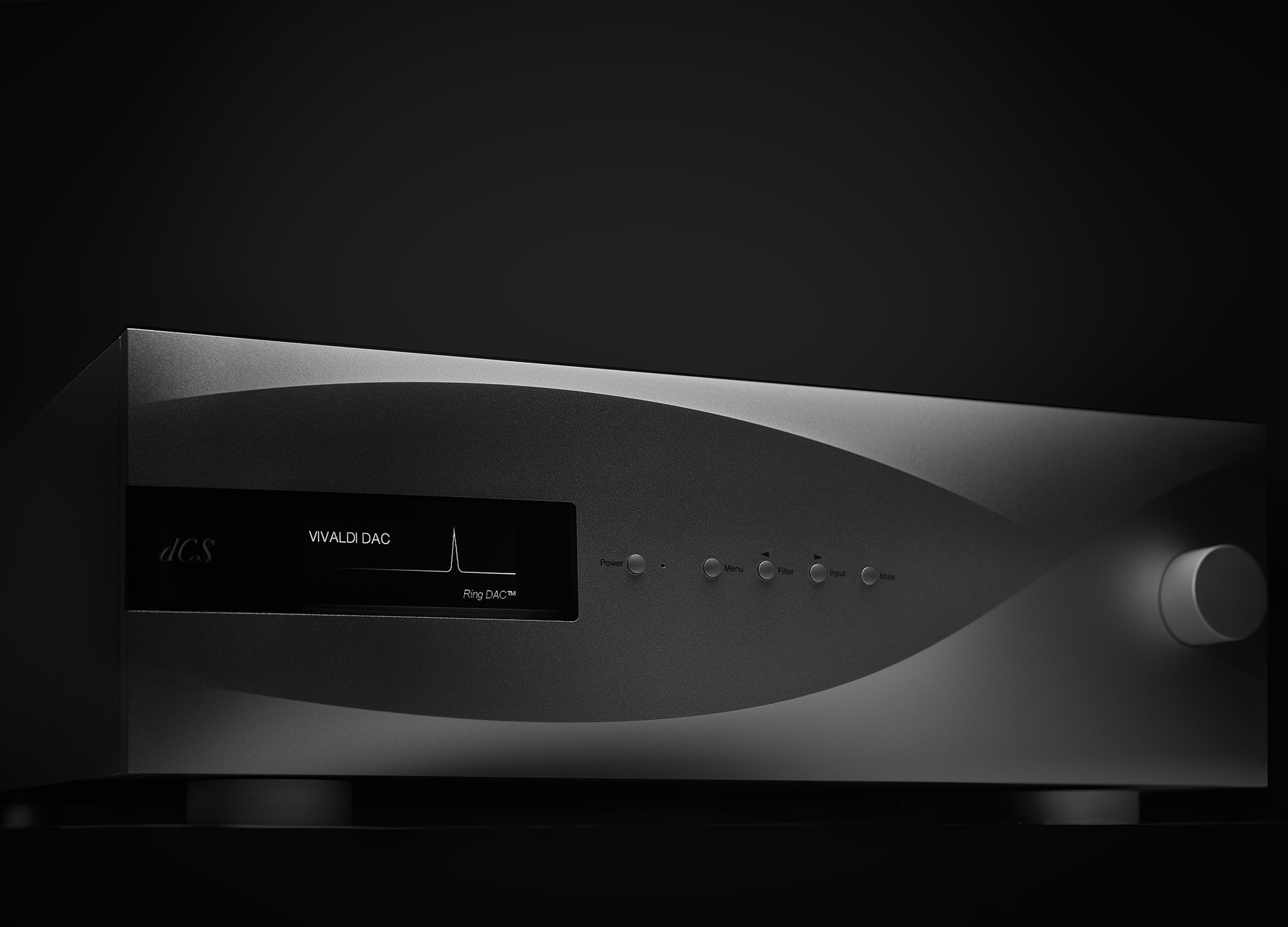
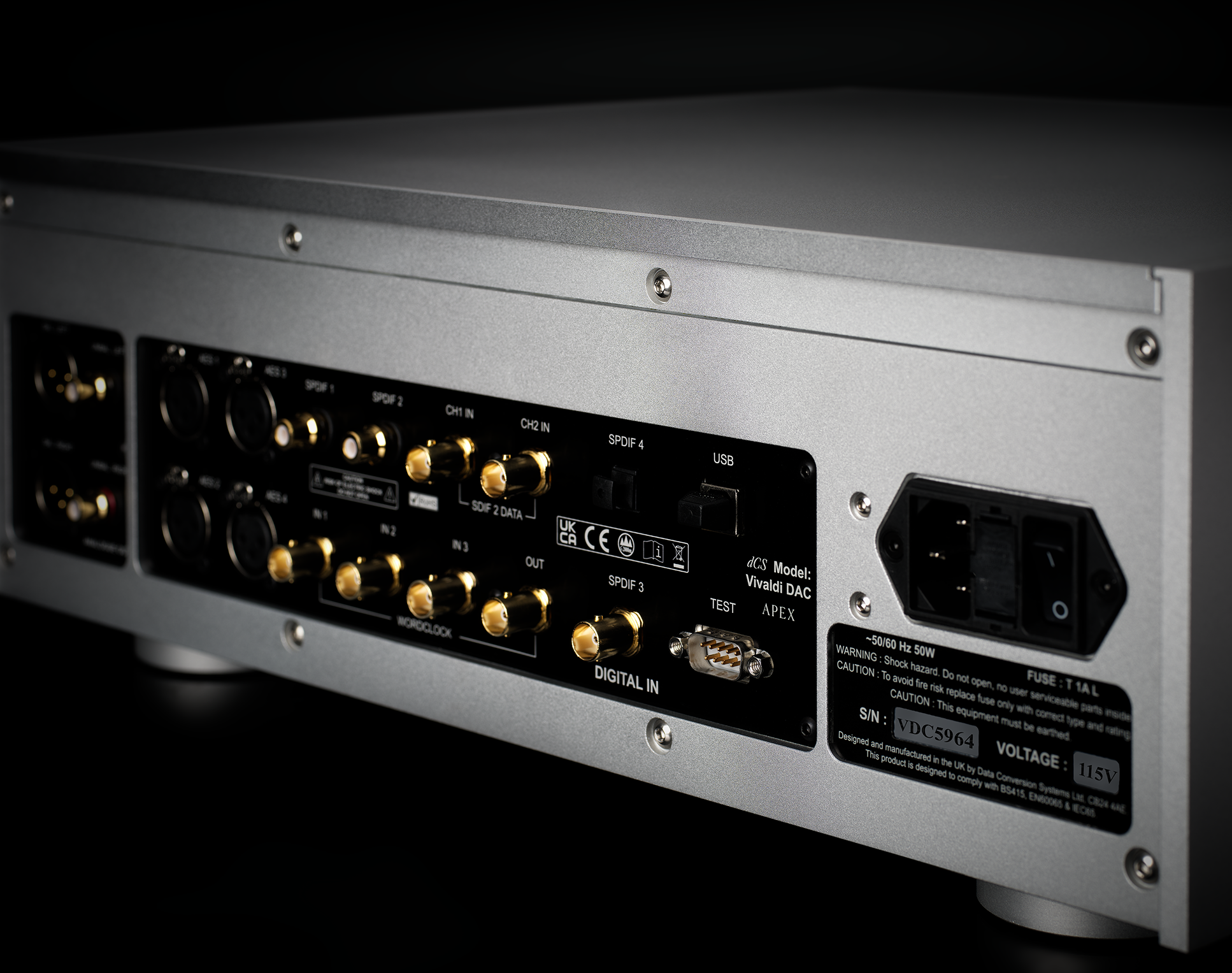
The new Ring DAC APEX hardware will be made available to both future and existing dCS customers. New APEX editions of the dCS Vivaldi DAC, Rossini DAC and Rossini Player, available to order from March 4, will feature the new Ring DAC APEX hardware as standard. Existing owners of the dCS Vivaldi DAC, Vivaldi One, Rossini DAC, and Rossini Player will also be able to upgrade their system through a global programme run in partnership with our network of expert distributors and retailers.
The launch of the upgrade programme reflects our longstanding commitment to ensuring that dCS products deliver a state-of-the-art experience throughout their lifespan, and that our customers are able to benefit from our latest innovations and advancements. We know that dCS products are an investment, and we strive to reward that investment through sharing new features and platforms as and when these are released, whether it’s a bespoke software platform that enhances headphone optimisation, a major update to the dCS Ring DAC’s mapping algorithm, or a new, improved circuit board. This is something we’ve done throughout our time in audio, from the days of the dCS Elgar, through to the Paganini and Puccini years, and it’s something we’ll continue to do.
“In terms of who we are, and what we’re about as a company, the fact that we can spin out a new Ring DAC and offer it as a hardware upgrade to existing customers is something we feel quite strongly about: we believe our products should have a long lifecycle, they should improve through the life of the products, and I think APEX is a fantastic example of that,” David explains.
Audio and entertainment is a fast-moving industry, with products often becoming obsolete, or decreasing in quality and relevance as they age. By constantly exploring how we can enhance the performance of our systems, however, and releasing upgrades whenever we make a new development or breakthrough, we aim to create world-leading products that improve with time. As David notes, one of the most rewarding aspects of our work is being able to deliver enhancements that exceed people’s expectations, and give them an even deeper appreciation for the music they love. And this is what we set out to achieve with APEX.
“What really spurs us on is real customer feedback,” he adds. “We saw when we did the mapper update, that was a game changer for some people. [In terms of] what their system revealed and how they connected with their music, it was another level, and I believe APEX will do the same again.”APEX: A Closer Look
With the launch of our new Ring DAC APEX hardware, we’ve been able to enhance the performance of the dCS Ring DAC and the musical expression of our Rossini and Vivaldi systems. Here, we take a look at the development of APEX, and the various benefits it delivers for listeners
TAGS: NEWS, TECHNOLOGY & INNOVATION
The Ring DAC has been an integral part of dCS products for over 30 years. In the 1980s – when dCS was best known for its work in radar and telecommunications – our engineers developed a novel digital-to-analogue conversion system that could be used to process audio signals at 24-bit resolution.
At the time, 24-bit audio was unheard of. This technological breakthrough led us to develop a succession of pioneering high-resolution DACs, ADCs and master clocks for some of the world’s top recording studios and later, to specialise in creating high-end digital playback systems for music lovers, professionals and audiophiles around the world. Over three decades on, the Ring DAC remains a world-leading technological approach to converting 1s and 0s into music. A core part of all dCS DACs, it has earned global acclaim for its technical and sonic performance.
This formidable reputation is the result of constant innovation and development: throughout the Ring DAC’s life, our engineers have continued to refine and augment its design, working on ambitious upgrades and additions in their quest to ensure its performance remains unrivalled. While the fundamental principles that underpin its design haven’t changed, the Ring DAC has become faster, more intelligent, more sophisticated and more advanced with each new generation. As a result, the musical performance of our products has continued to evolve and improve with each upgrade we make.
In 2017, we released a major update to the software that controls the Ring DAC, providing additional mapping algorithms that allowed listeners to tailor the performance of their dCS system to best suit their listening preferences, setup and musical tastes.
Since the release of this update, we’ve continued to explore how we can push the Ring DAC’s design and capabilities even further. Around 12 months ago, our Director of Product Development Chris Hales decided to turn his focus to the Ring DAC hardware – in particular, the Ring DAC circuit board and analogue output stage.
“We regularly review the performance [of our products] and look very closely at how things are working and where we might be able to improve them”
A thorough investigation
“At dCS, we regularly review the performance [of our products] and look very closely at how things are working and where we might be able to improve them,” explains Chris. “We took some time last year to look very carefully at how [the Ring DAC hardware] was performing, and we found that the performance of the existing analogue board is beyond the capability of most test equipment.”
This is a familiar issue for dCS engineers: as our products often exceed the capabilities of conventional test equipment, we’ve had to devise a range of bespoke tools and equipment that allow us to measure each aspect of a system’s performance with absolute precision. If we cannot measure something as accurately or as comprehensively as we’d like, then we often invest in building a new platform or measurement tool from scratch.
“Audio measurement systems [can] introduce noise, or distortion, or limit the frequency response, just like the thing they’re trying to measure, and there can come a point where, even if they’re not dominating what you’re measuring, these artefacts are affecting it one way or another,” explains Chris. “A good example is when measuring harmonics, where the second harmonic inherent in the test equipment can cancel with the one in the item you’re trying to measure. This can result in a measurement that is much lower than it should be and one which tends to behave unexpectedly as the performance of the item under test is adjusted.”
In the case of the Ring DAC’s analogue performance, we used a method that allowed us to reduce internally generated artefacts. This, in turn, allowed Chris to identify some potential areas for further improvement. The Ring DAC circuit and analogue output stage already delivered an outstanding measured performance, but there were some aspects he felt could perhaps be further refined or reconfigured. After a period of investigation, and an intensive few months experimenting with circuit boards during national lockdowns, he developed some prototype boards to test out his theories.
Once the dCS R&D team had analysed the measured impact of Chris’s proposed revisions, and confirmed that these delivered quantifiable gains (an essential requirement for any dCS software or hardware upgrade), the modified boards were auditioned in a series of listening tests, where our golden-eared music and audio experts reported audible improvements in a range of key areas.
Based on this feedback, the next stage was to commission to several rounds of prototype boards for further listening and measurement tests. The feedback and results from these tests confirmed that this new technology was suitable for an enhanced version of the dCS Ring DAC – the Ring DAC APEX – and that we could make it available to both new and existing customers.
An ambitious redesign
The new Ring DAC APEX hardware features several modifications. One of the first areas that Chris looked at during the research and development phase was the reference supply that feeds the Ring DAC circuit board, and this investigation led him to make some significant adjustments. “[The reference supply] has a direct effect on the audio performance and particularly the output impedance of [the Ring DAC] – in effect, how stiff it is…. We found some ways of improving that, and so we applied that, which makes quite a noticeable difference to the performance,” he explains.
In an electrical system, there are external signals that can interfere with our reference voltage, so the lower impedance that reference is, the harder it is for the interference signals to be coupled in.
As Chris points out, the Ring DAC is essentially a multiplying DAC – that is, it multiplies the reference voltage by the DAC code value. Consequently, anything on that reference (such as noise or periodic signals) is coupled directly to the output. For optimum performance, the reference would be a pure DC voltage with no AC components and no noise.
“Imagine, for example, a ruler clamped to a desk,” he explains. “If it’s a thin, metal ruler you can easily move the free end. If it’s a thick wooden ruler, it’s much harder. In this analogy, a stiff ruler equates to low output impedance (it’s hard to change the voltage) and the flexible one to a high output impedance (it’s easy to change the voltage).”
“The load represented by the Ring DAC changes with the signal – this is analogous to changing how hard you press the end of the ruler – and as a result, the reference voltage will change in response to the signal in proportion to the reference’s impedance,” he adds. “This couples to the output one way or another (in some cases as additional harmonics), so keeping the output impedance low minimises the voltage variation and thereby the extra stuff on the output.”
Chris also carried out a thorough examination of all subsequent stages of the Ring DAC, including the summing and filter stages. “There were a few enhancements we were able to identify there and put in – for example, to improve the symmetry of the summing stages – and finally, we had a good look at the output stage,” he adds.
“The purpose of the output stage is primarily to interface us to what is unknown territory once we leave the dCS realm”
The Ring DAC output stage is responsible for buffering the analogue signals generated by the Ring DAC. As Chris explains, the analogue board of the Ring DAC is made up of both digital stages and analogue stages. The digital stage takes the data that’s fed from the dCS Digital Processing Platform, and subjects it to a mapping function. This drives the 48 latches which form the heart of the Ring DAC. The output of those latches is then summed by an operational amplifier summing stage, where it’s filtered to get rid of very high frequency components, before being buffered by an output stage.
“The purpose of the output stage is primarily to interface us to what is unknown territory once we leave the dCS realm,” says Chris. “We really don’t have much control over what cables people are going to connect, what external equipment people are going to connect, and these can have very different input characteristics, so it’s important to have an output stage which is capable of driving lots of current, that’s not sensitive to stability problems that these may cause.”
In most audio setups, dCS DACs are connected to a cable, and then an amplifier or preamplifier. The cable will have capacitance, resistance, and inductance. Different cables will have different amounts of each and may have additional ‘matching networks’.
“It was a very worthwhile improvement, although we [were] already looking at harmonics which are 110, 120dB below the fundamental”
“The input of the amplifier/preamplifier will have capacitance and resistance, but may also require a DC bias current,” says Chris. “Additionally, balanced input stages vary enormously (not being balanced at all in some extreme cases). If we were to connect these directly to the DAC summing stage, we would have to design it in such a way that it would no longer be optimised as a DAC summing stage. The solution, then, is to isolate the summing stage from the outside world so that we can optimise the performance of the summing stage and drive the enormously uncertain loads that cable and amplifier combinations can present.”
“Capacitance constitutes a load on the output stage and that equates to a current draw and one that increases at high frequencies,” Chris adds. “If we want to reduce the high frequency roll-off that can cause, we need to present a low output resistance but also have enough current available to drive that capacitance without distortion. Likewise, amplifier input resistance can vary a lot and if it is unusually low, will require high current to drive it, and will benefit from being driven from a low impedance. In this way, our output stage makes the overall DAC performance much more consistent (ie stable) when used in different systems.”
Other changes made to the Ring DAC’s hardware include replacing individual transistors on the Ring DAC circuit board with a compound pair, and adjusting the layout of components on the Ring DAC circuit board. The result of these various adaptations is a new, enhanced board that is even quieter than previous iterations, and over 12dB more linear.
“It was a very worthwhile improvement, although we [were] already looking at harmonics which are 110, 120dB below the fundamental – so a large improvement, but performance was extremely good to start with,” adds Chris.
“Great audio should draw you in, engage with you and excite you, and I think APEX does that in spades. It has everything we think is synonymous with dCS”
Setting a new standard
For listeners, this enhanced technical performance has resulted in a range of sonic improvements, as evidenced in our subjective listening tests.
The feedback from listening sessions with our Ring DAC APEX prototypes was hugely positive, with listeners noting enhanced resolution, dynamics, rhythm and timing, an even greater sense of ease and naturalness, more precise and tonally resolved voices, and more realistic timbral quality of strings, among other benefits. Whilst each listener’s experience is unique, and depends on their audio setup, chosen music and the wider environment in which they listen, the consensus from several rounds of testing was that APEX allowed us to deliver an even more compelling and absorbing musical experience.
“I think it just felt right – when we got to that final board, and we’d been through all those final rounds of testing, there was just something about it,” says David Steven, MD at dCS. “Great audio should draw you in, engage with you and excite you, and I think APEX does that in spades. It has everything that we think is synonymous with dCS: there’s detail, there’s resolution, but it’s also just emotionally involving…. It’s an amazing achievement from the team to take what was already state-of-the-art and not just improve it on the measured performance level, but to bring something that you can feel and hear.”
“I think it’s very much [part of] our philosophy to realise improvements when we can…. Continual improvement is something we take very seriously”
Constant evolution
Improving a hardware platform that already delivers a class-leading performance is no easy feat, but the latest Ring DAC APEX hardware is testament to what can be achieved through rigorous analysis, creative thinking and continual product development. “I think it’s very much [part of] our philosophy to realise improvements when we can,” adds Chris.
“Continual improvement is [something] we take very seriously – I think we feel that we owe it to our customers to do the best we can, and I think that those of us who are working on the technical side of things, are also just of that personality where we just want to improve things all the time…. For whatever reason, there’s a huge philosophy of, ‘if we can make it better then let’s do that – it’s worth the effort’.”
This continual development is driven not just by our engineers’ innate curiosity and desire to constantly improve, but our wider ambition to ensure that dCS products deliver the finest possible performance. As David and Chris both note, it’s not a case of innovating for innovation’s sake but rather, making improvements and gains that will enhance our customers’ experience of listening to their favourite artists and recordings.
To achieve this, our engineers must draw on a range of measurement techniques, experience and data, as well as subjective feedback. As dCS Technical Director Andy McHarg points out, “One of the great challenges in hi-fi is correlating certain measurements to certain sonic characteristics” – and it’s not a straightforward case of enhancing one aspect of a product’s technical performance in order to improve the sound in a particular area.
While our engineers know that improving certain technical dimensions should lead to an improvement in sound, they also know that making technical improvements can sometimes have an unexpected or unintended impact on the overall performance of a product. It’s for this reason that subjective listening tests play such an important role in product development at dCS.
Using their extensive experience, the dCS engineering team is able to interpret the subjective feedback we receive from each round of listening tests, and understand where or how their work might need to be adapted in order to deliver an outstanding experience for dCS customers (and a class-leading technical performance).
Through conducting several rounds of listening tests and performance reviews, with further development after each round, we are able to ensure that an upgrade such as APEX delivers an actual, notable benefit for listeners, and avoid the pitfalls of improving performance in one area at the expense of another.
This process can take several months and sometimes years, but in the case of APEX, it has allowed us to further improve a renowned dCS innovation and, in turn, enhance the musical abilities of two much-loved dCS systems, the Vivaldi and Rossini.
The new Ring DAC APEX hardware will be made available to both future and existing dCS customers. New APEX editions of the dCS Vivaldi DAC, Rossini DAC and Rossini Player, available to order from March 4, will feature the new Ring DAC APEX hardware as standard. Existing owners of the dCS Vivaldi DAC, Vivaldi One, Rossini DAC, and Rossini Player will also be able to upgrade their system through a global programme run in partnership with our network of expert distributors and retailers.
The launch of the upgrade programme reflects our longstanding commitment to ensuring that dCS products deliver a state-of-the-art experience throughout their lifespan, and that our customers are able to benefit from our latest innovations and advancements. We know that dCS products are an investment, and we strive to reward that investment through sharing new features and platforms as and when these are released, whether it’s a bespoke software platform that enhances headphone optimisation, a major update to the dCS Ring DAC’s mapping algorithm, or a new, improved circuit board. This is something we’ve done throughout our time in audio, from the days of the dCS Elgar, through to the Paganini and Puccini years, and it’s something we’ll continue to do.
“In terms of who we are, and what we’re about as a company, the fact that we can spin out a new Ring DAC and offer it as a hardware upgrade to existing customers is something we feel quite strongly about: we believe our products should have a long lifecycle, they should improve through the life of the products, and I think APEX is a fantastic example of that,” David explains.
Audio and entertainment is a fast-moving industry, with products often becoming obsolete, or decreasing in quality and relevance as they age. By constantly exploring how we can enhance the performance of our systems, however, and releasing upgrades whenever we make a new development or breakthrough, we aim to create world-leading products that improve with time. As David notes, one of the most rewarding aspects of our work is being able to deliver enhancements that exceed people’s expectations, and give them an even deeper appreciation for the music they love. And this is what we set out to achieve with APEX.
“What really spurs us on is real customer feedback,” he adds. “We saw when we did the mapper update, that was a game changer for some people. [In terms of] what their system revealed and how they connected with their music, it was another level, and I believe APEX will do the same again.”
APEX: クローズアップ
新しいRing DAC APEXハードウェアの発売により、dCS Ring DACの性能とRossiniおよびVivaldiシステムの音楽表現力を向上させることができました。ここでは、APEXの開発経緯と、それがリスナーにもたらす様々なメリットについてご紹介します。
Ring DACの誕生から現在に至るまで、当社のエンジニアはその設計を改良・増強し続け、野心的なアップグレードや追加を行い、その性能が他の追随を許さないものであることを確信しています。その設計を支える基本原理は変わっていませんが、Ring DACは世代を重ねるごとに、より速く、より賢く、より洗練され、より高度になってきました。その結果、製品の音楽的性能は、アップグレードするたびに進化し、向上し続けてきました。
Ring DACのアナログ性能の場合、内部で発生するアーティファクトを低減できる方法を用いました。これにより、クリスはさらなる改善の余地がある領域を特定することができました。Ring DACの回路とアナログ出力段は、すでに測定上では優れた性能を発揮していますが、さらに改良したり、再構成したりすることが可能だと思われる部分がいくつかあったのです。そして、数カ月間の集中的な調査と、国の閉鎖期間中の回路基板での実験を経て、理論を検証するためのプロトタイプ基板をいくつか開発しました。
このフィードバックに基づき、次の段階として、数回にわたる試作基板による試聴・測定テストを実施しました。その結果、この新技術はdCS Ring DACの強化版であるRing DAC APEXに適しており、新規および既存のお客様に提供できることが確認されました。
Ring DACのハードウェアに加えられたその他の変更には、Ring DAC回路基板上の個々のトランジスタを複合ペアに置き換えることや、Ring DAC回路基板上の部品のレイアウトを調整することが含まれます。これらの様々な工夫の結果、従来の基板よりもさらに静粛性を高め、リニアリティも12dB以上向上させることができました。
Ring DAC APEXのプロトタイプを用いた試聴では、解像度、ダイナミクス、リズム、タイミングが向上し、より自然で安心感がある、声質がより正確で音色が解像している、弦楽器の音色がよりリアルになったなど、非常に高い評価を受けています。リスナーの体験は人それぞれであり、オーディオセットアップや選択した音楽、リスニング環境によっても異なりますが、数回にわたるテストの結果、APEXによってより魅力的で吸収力のある音楽体験を提供できるようになったというのが共通の認識です。
アップグレードプログラムの開始は、dCS製品がその寿命を通じて最先端の体験を提供し、お客様が当社の最新の技術革新と進歩の恩恵を受けることができるようにするという当社の長年のコミットメントを反映したものです。dCS製品は投資であると認識しており、ヘッドホン最適化を強化する特注ソフトウェアプラットフォーム、dCS Ring DACのマッピングアルゴリズムのメジャーアップデート、または新しい改良型回路基板など、新しい機能やプラットフォームがリリースされたときに、それを共有することで投資に報いるよう努力しています。これは、dCSエルガーの時代からパガニーニやプッチーニの時代まで、私たちがオーディオの世界でずっと行ってきたことであり、これからも続けていくことです。
Based on the recent situation, DS Audio will cancel the agency contract with the Russian agency and stop shipping new products and providing all services to Russia.Russia’s actions against Ukraine are an invasive war. We are deeply saddened by the fact that many lives that do not need to be lost are being lost.We don’t know if it is correct to talk about political issue as a manufacturer.However, we have decided that we will not be able to provide any services to Russia, no matter how much sales will decrease or what kind of critical opinions we receive due to this response.I sincerely hope that the war will end as soon as possible and that a world where everyone can live in peace with a smile will return.Stop the war.DS Audio CEOTetsuaki Aoyagi
Sonus faber S.p.A. | Via A. Meucci, 10 | Tel. +39 0444 288788 | Arcugnano (VI) | ITALY | www.sonusfaber.com
EMBARGOED PRESS RELEASE
NEWS IS NOT FOR PUBLICATION UNTIL FEBRUARY 22, 2022, at 10.00 AM EST
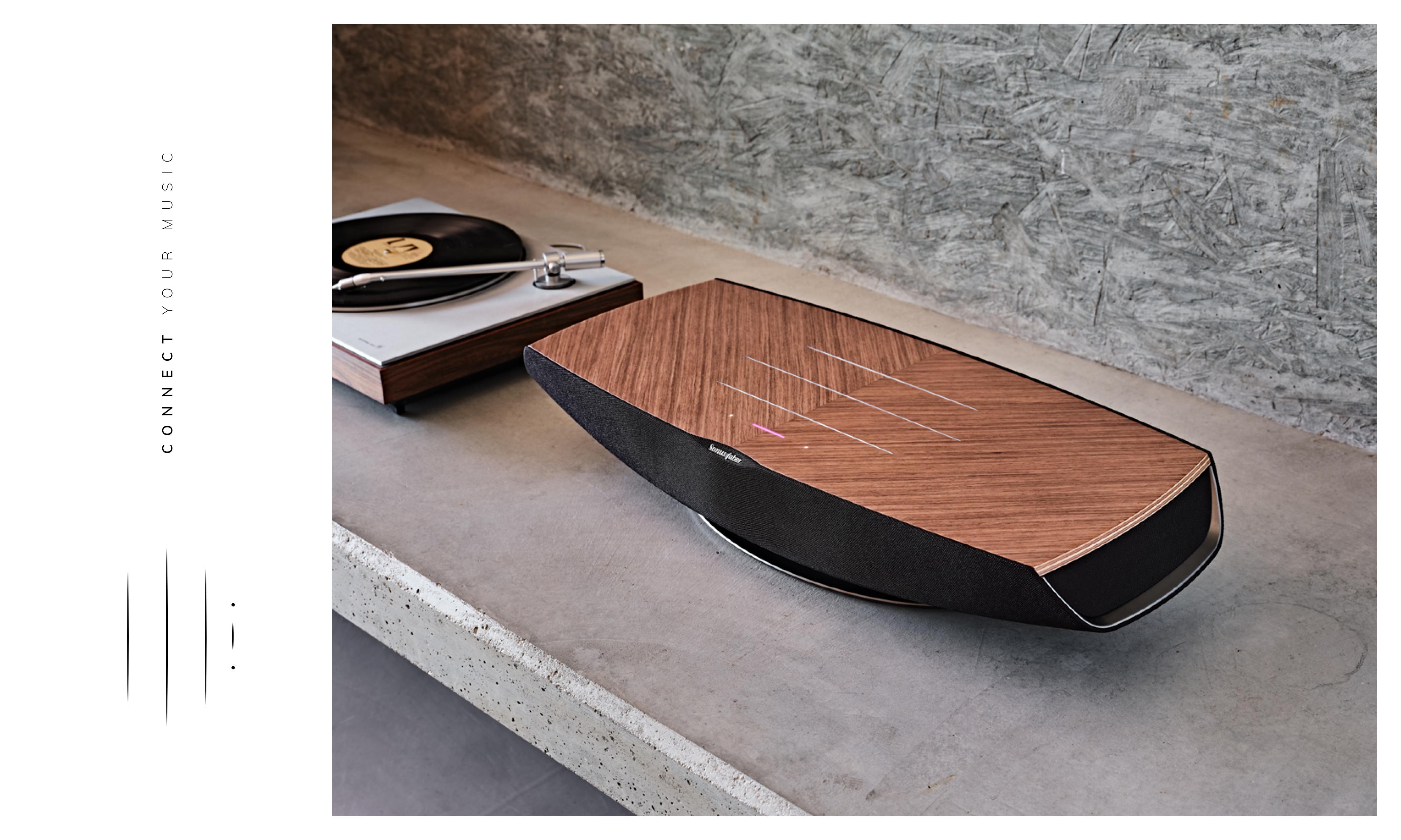
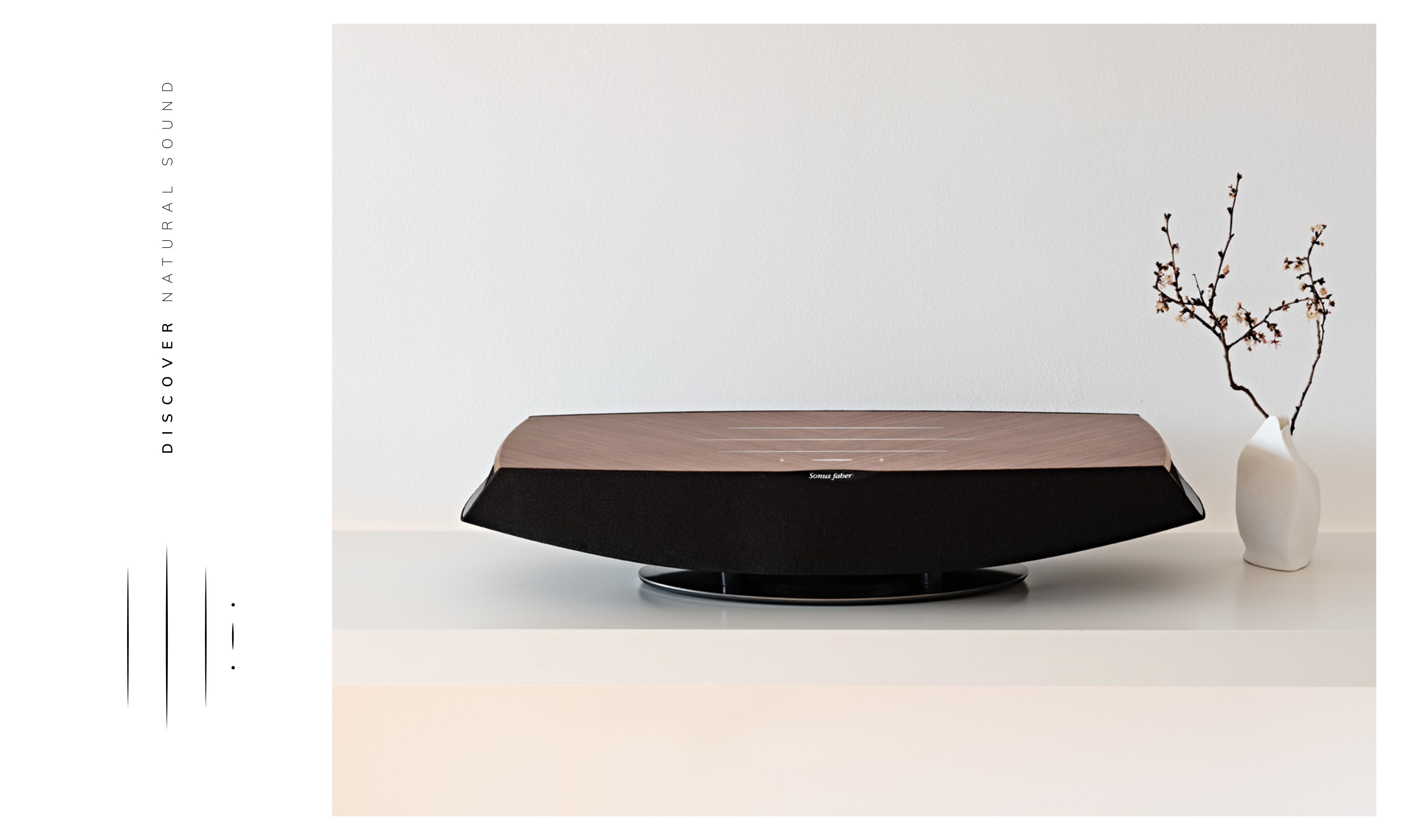
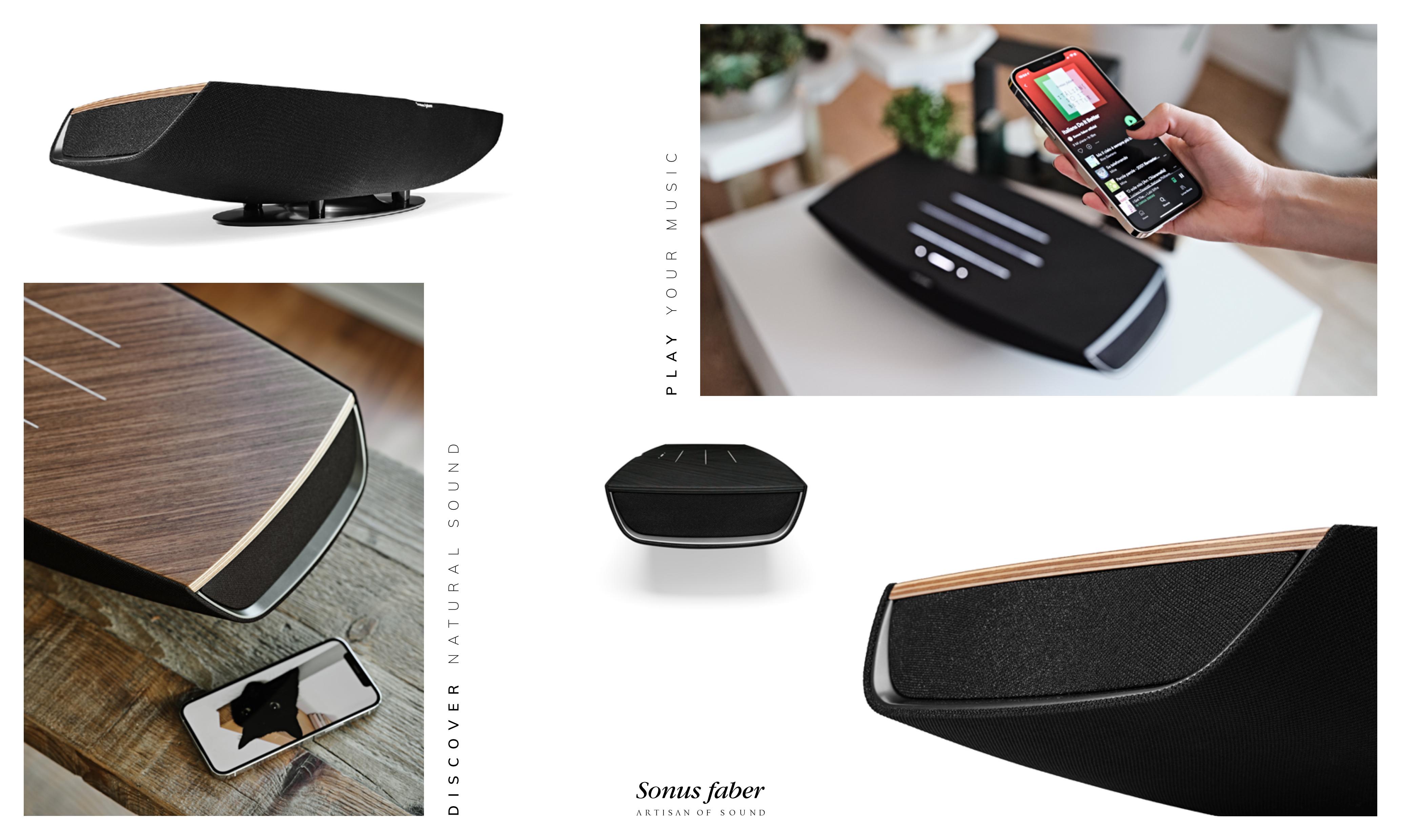
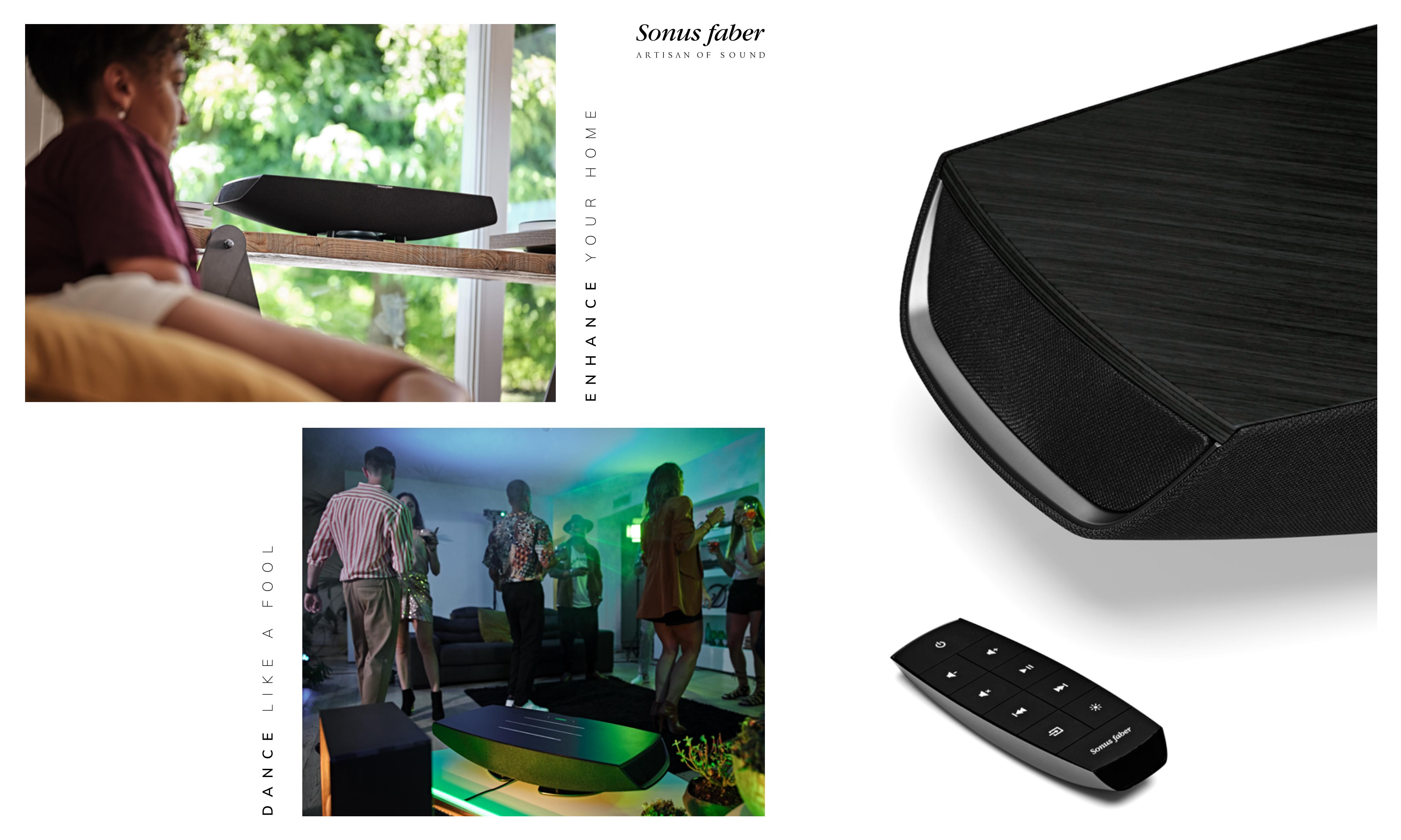
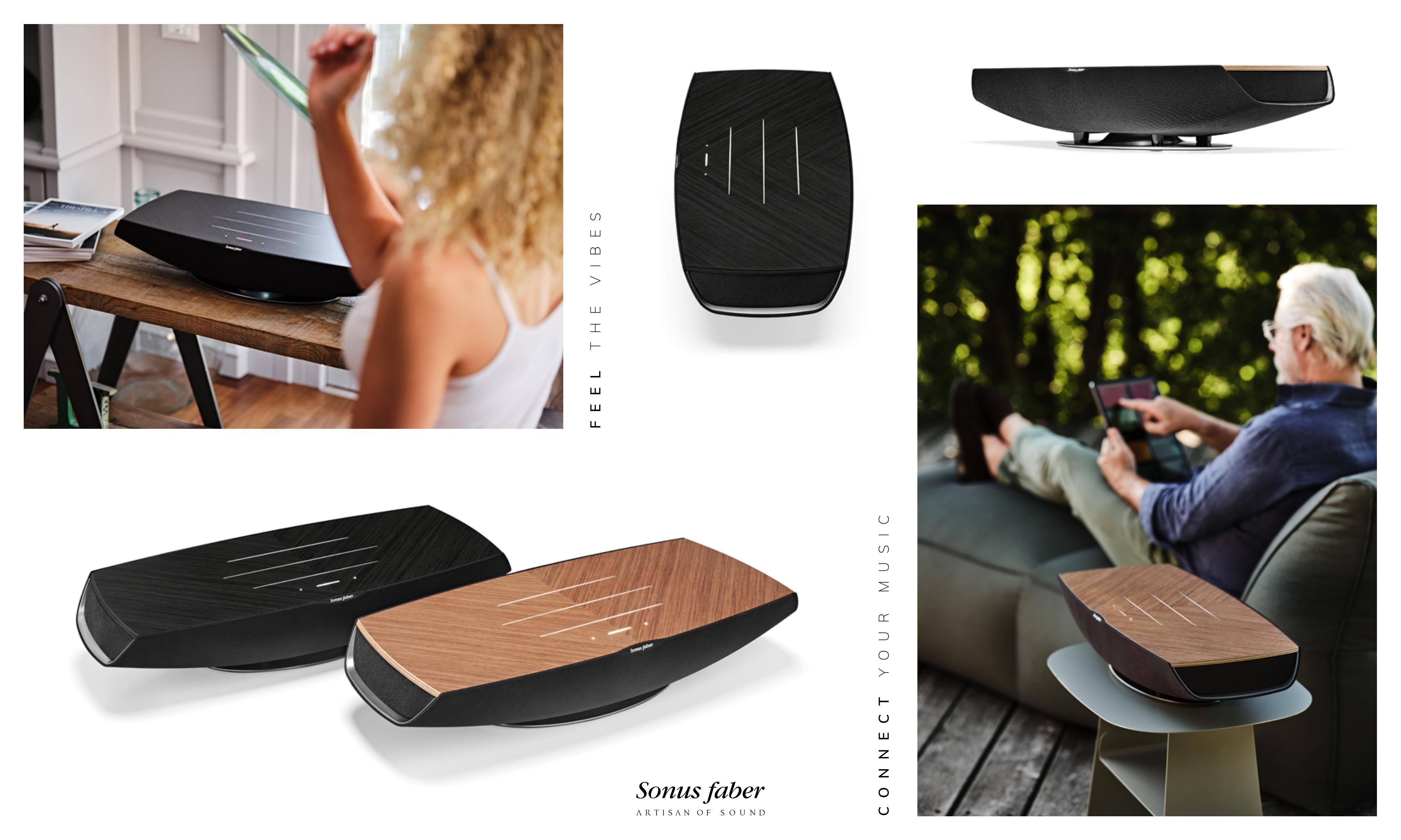
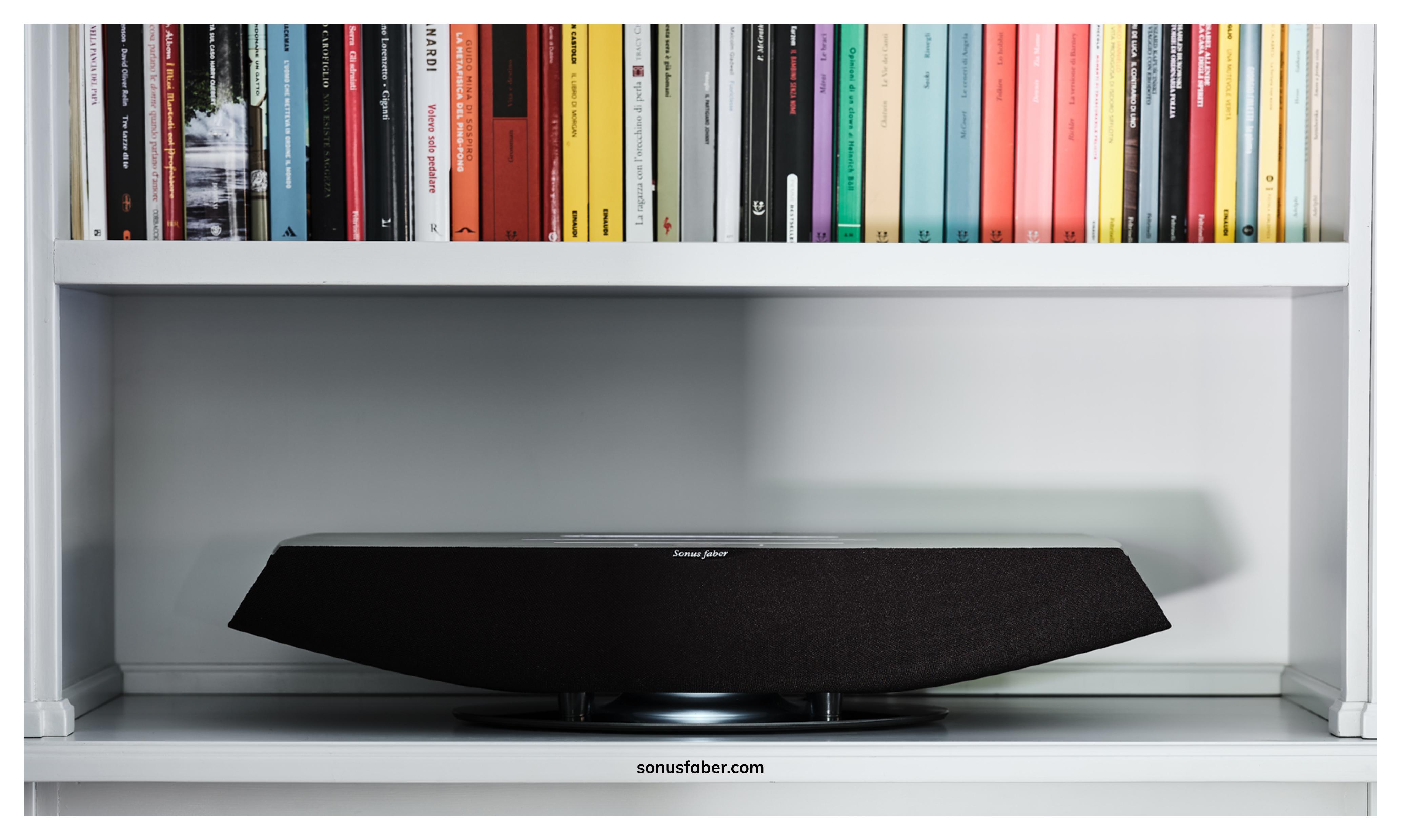
SONUS FABER INTRODUCES OMNIA, THE NEW ALL-IN-ONE WIRELESS SPEAKER SYSTEM
VICENZA, ITALY (February 22, 2022) – Sonus faber is thrilled to announce the premiere of Omnia, the brand’s new premium wireless speaker. Combining Sonus faber’s Italian heritage and design expertise, the Omnia wireless system enhances the listening experience with a suite of features that allow users to connect a variety of media with new, innovative technologies at an accessible product, seamlessly integrating Sonus faber’s signature natural sound into any modern space or lifestyle.
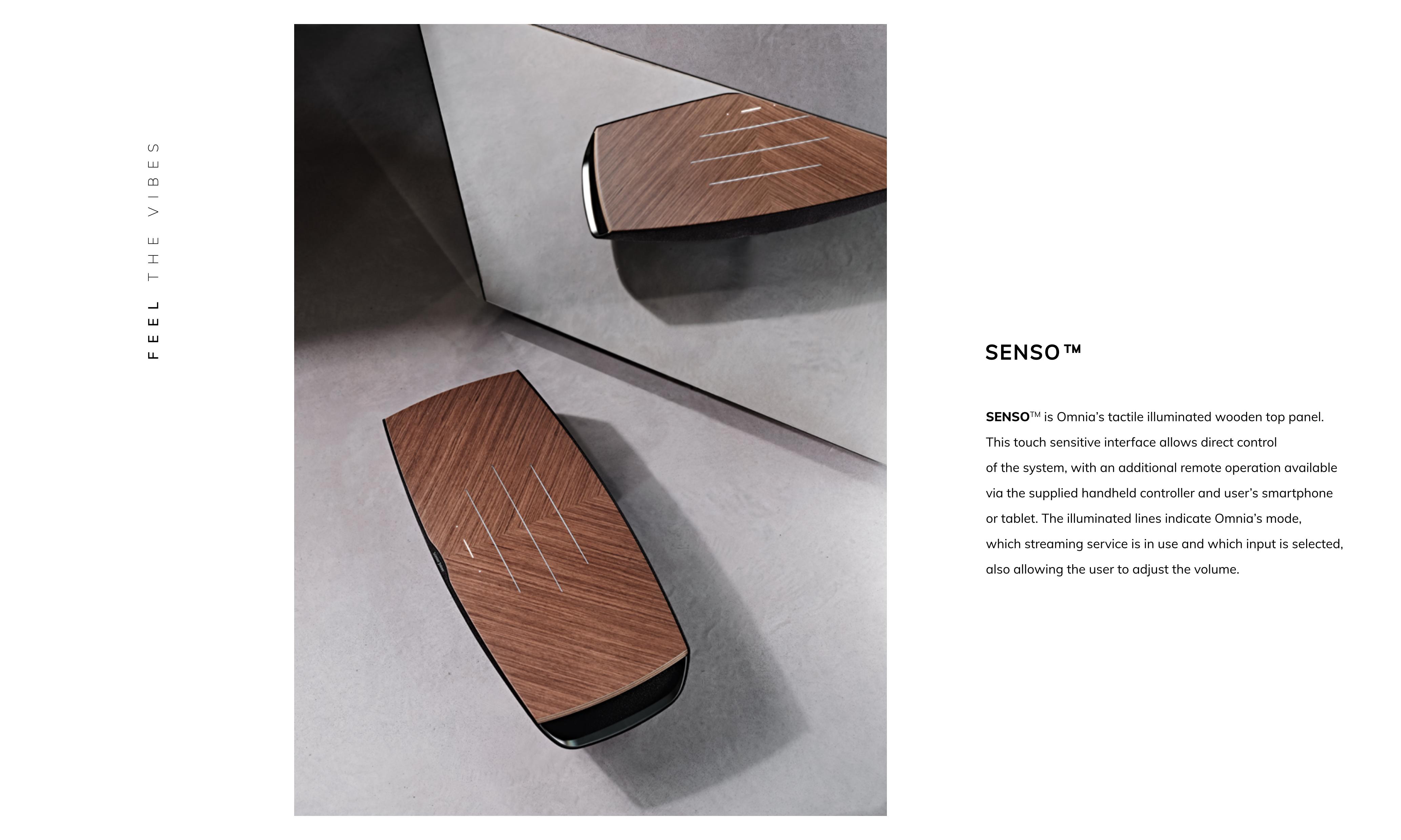
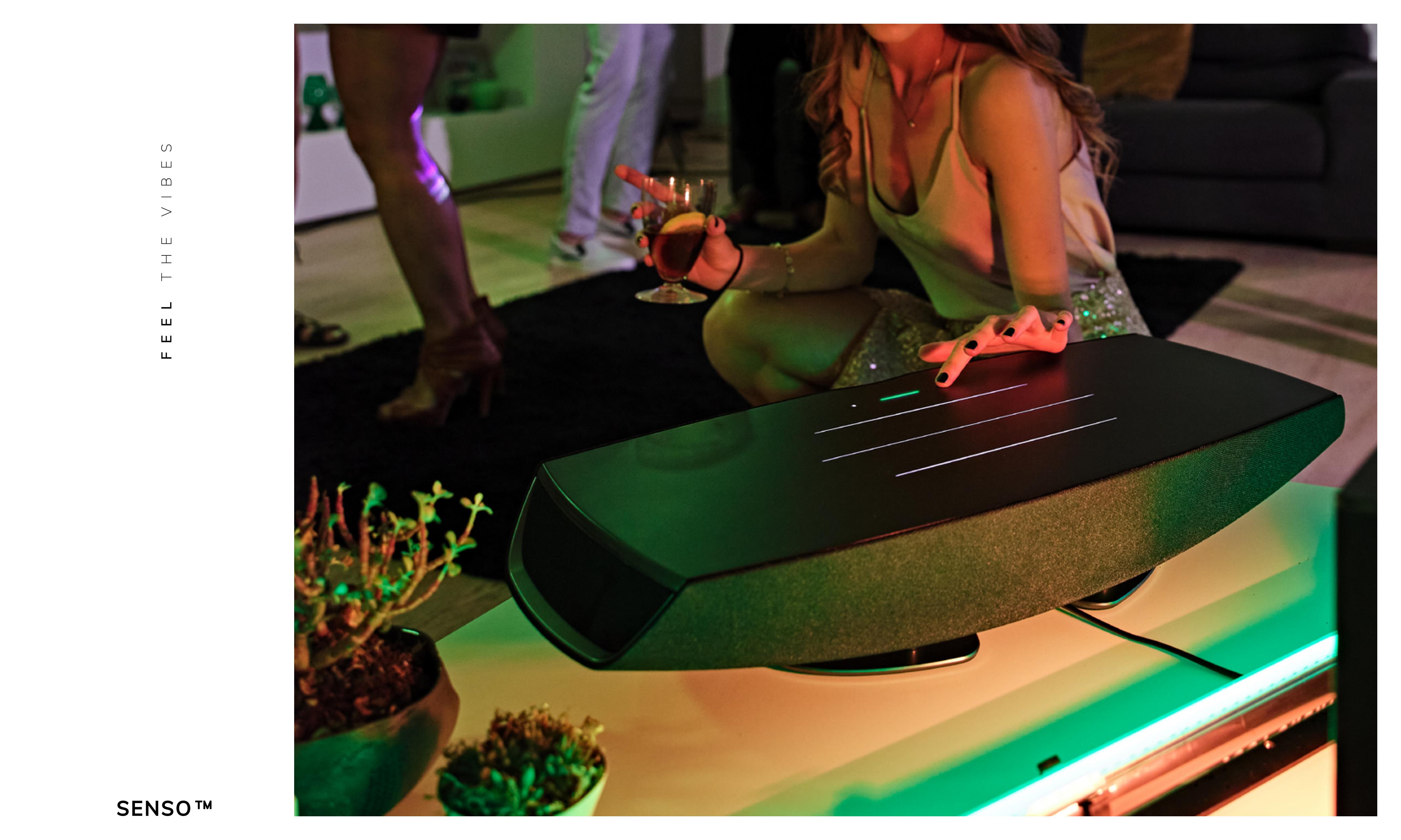
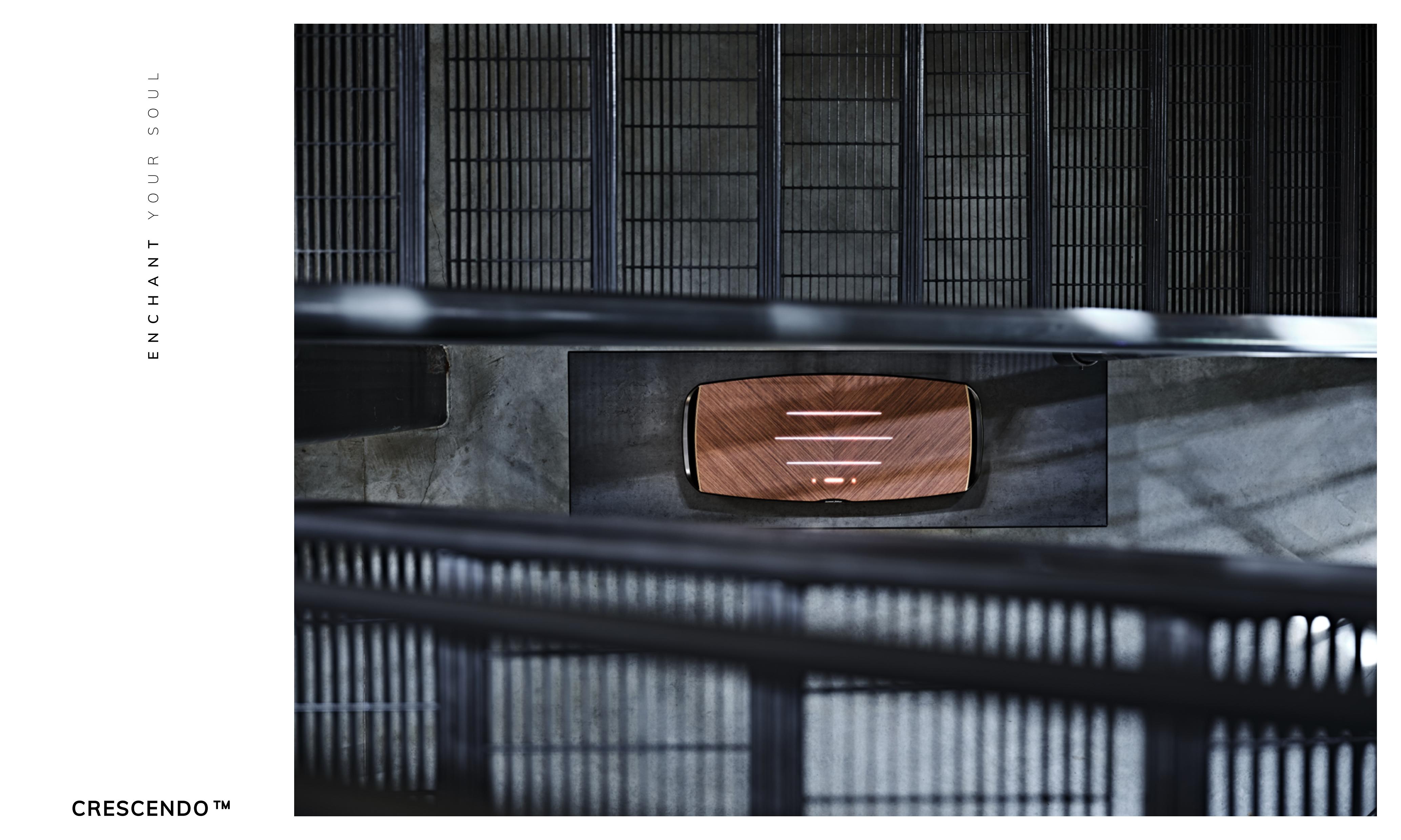
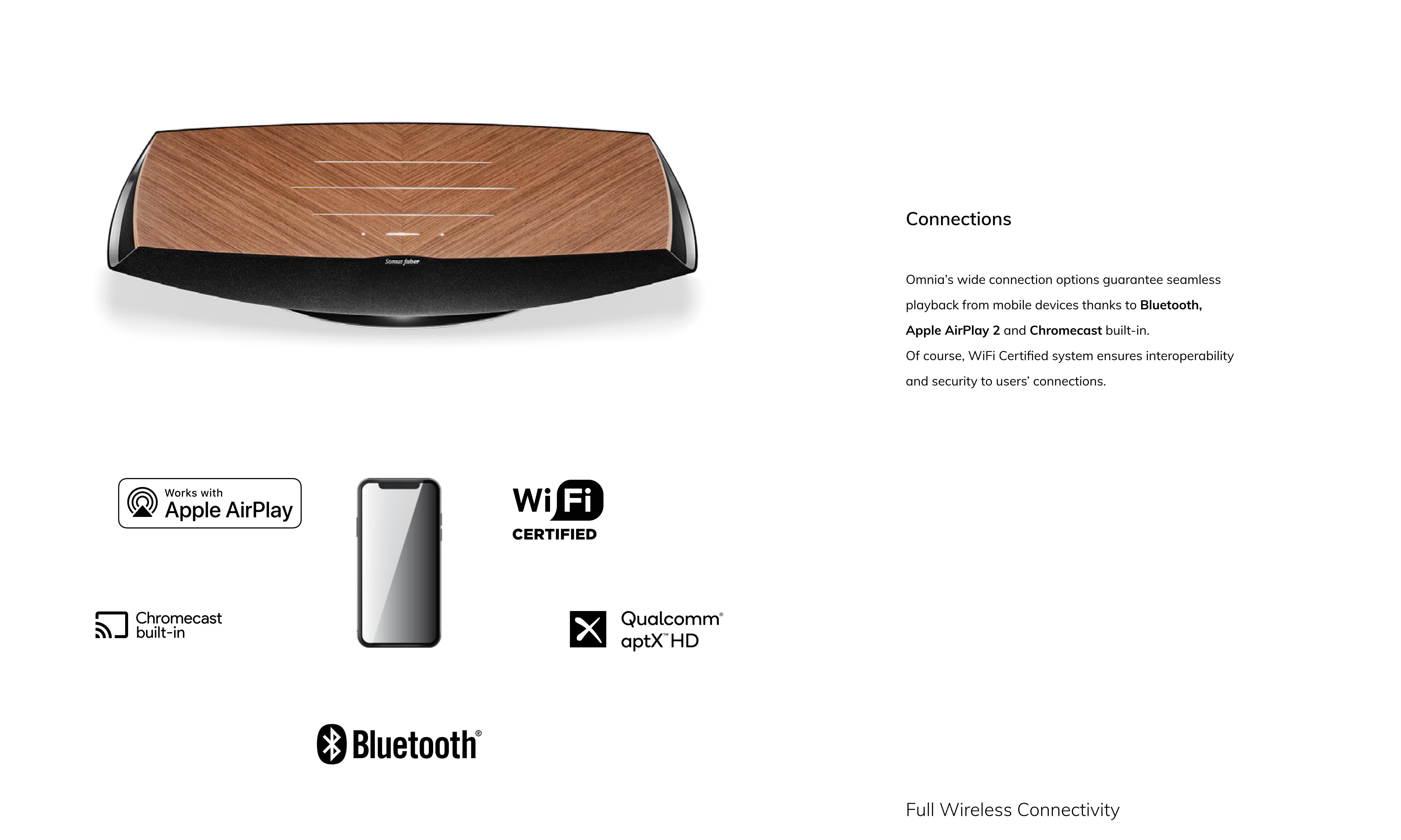
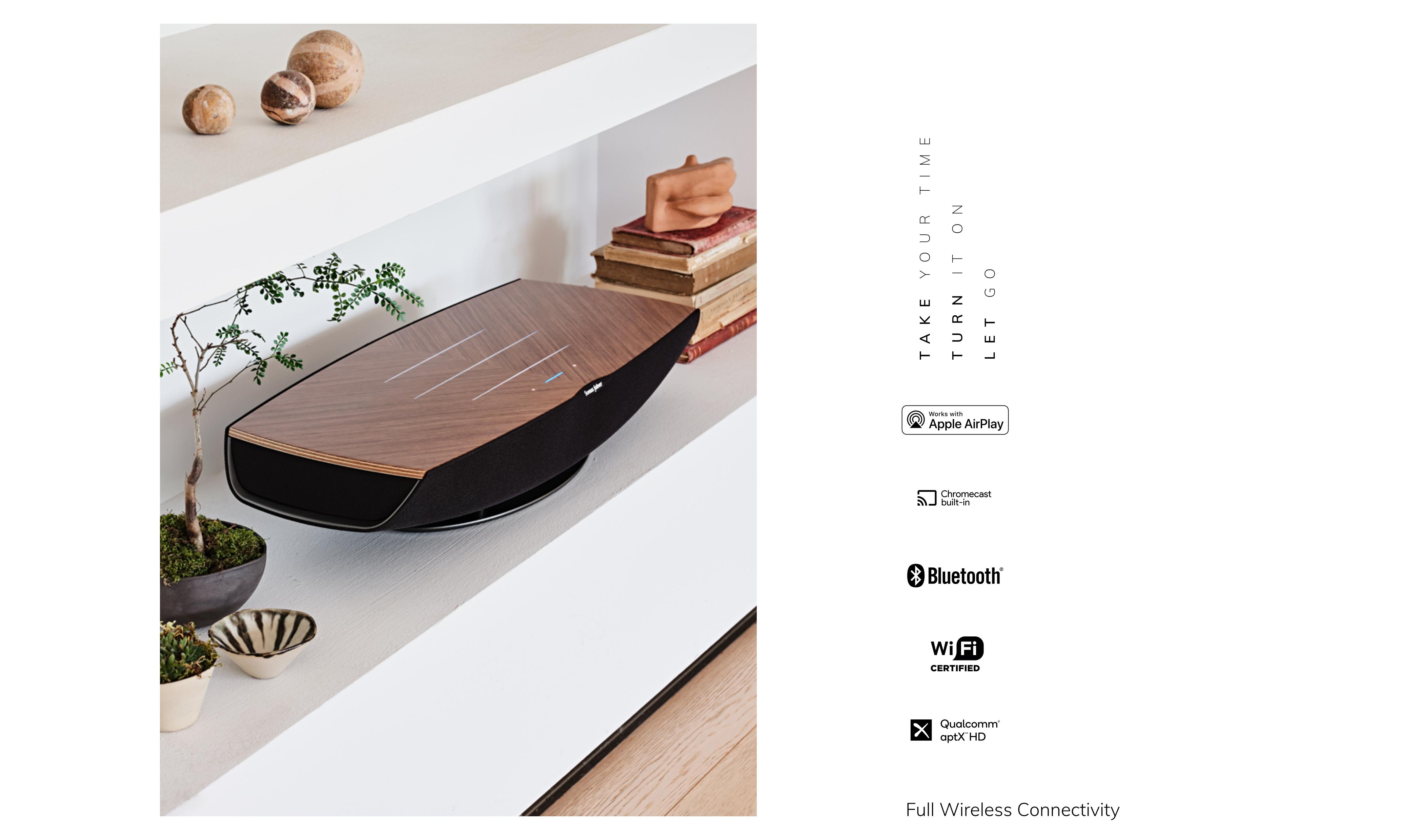
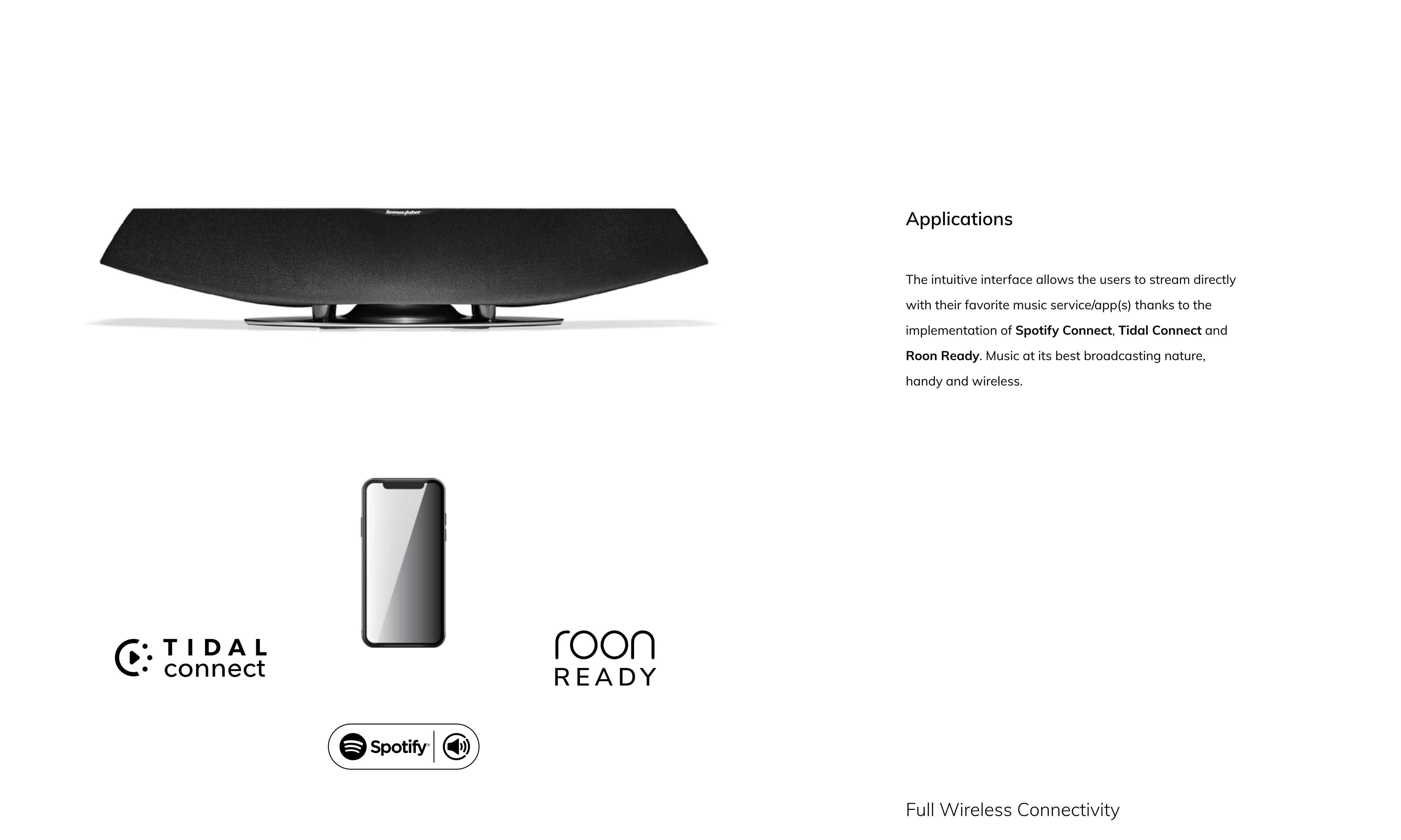
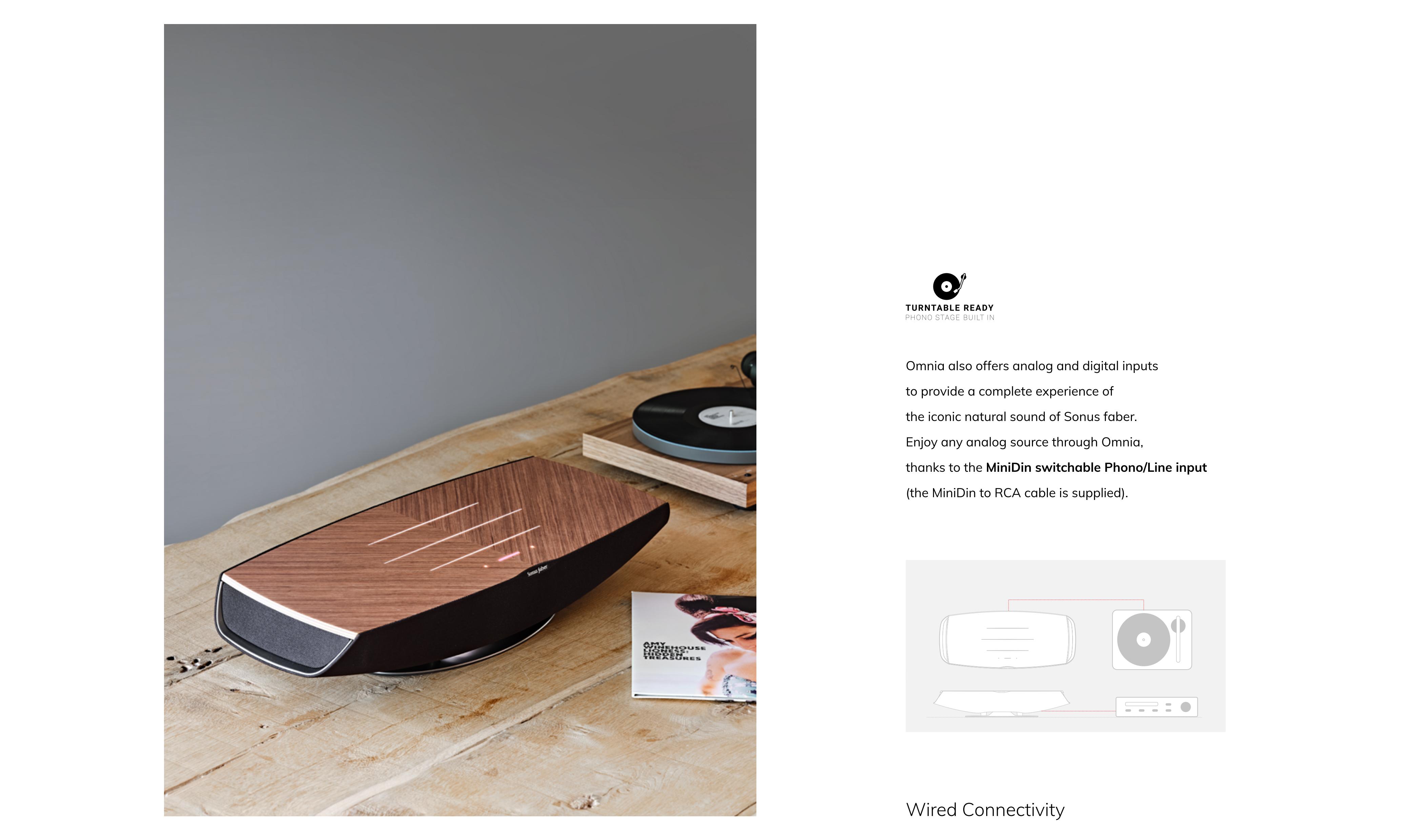
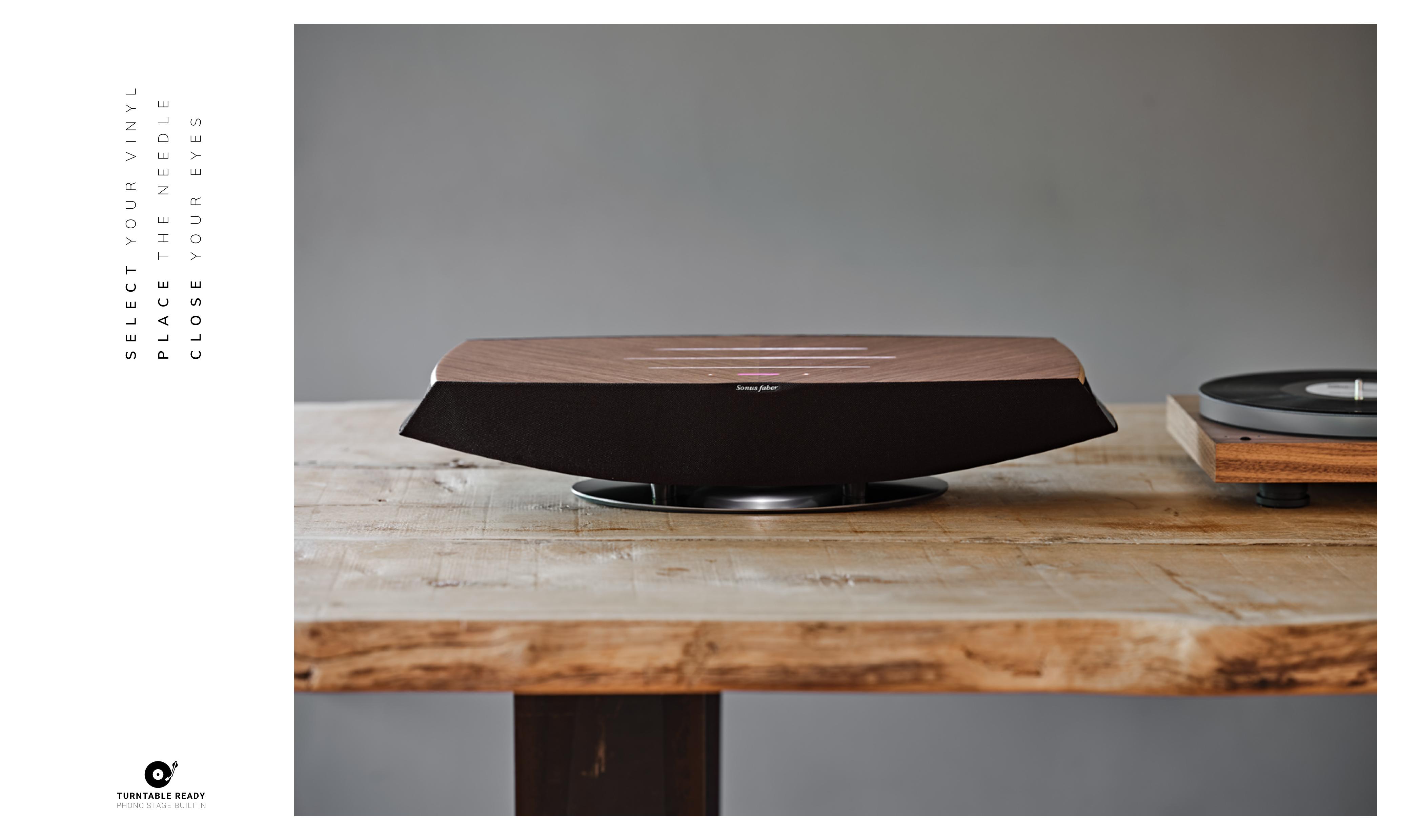
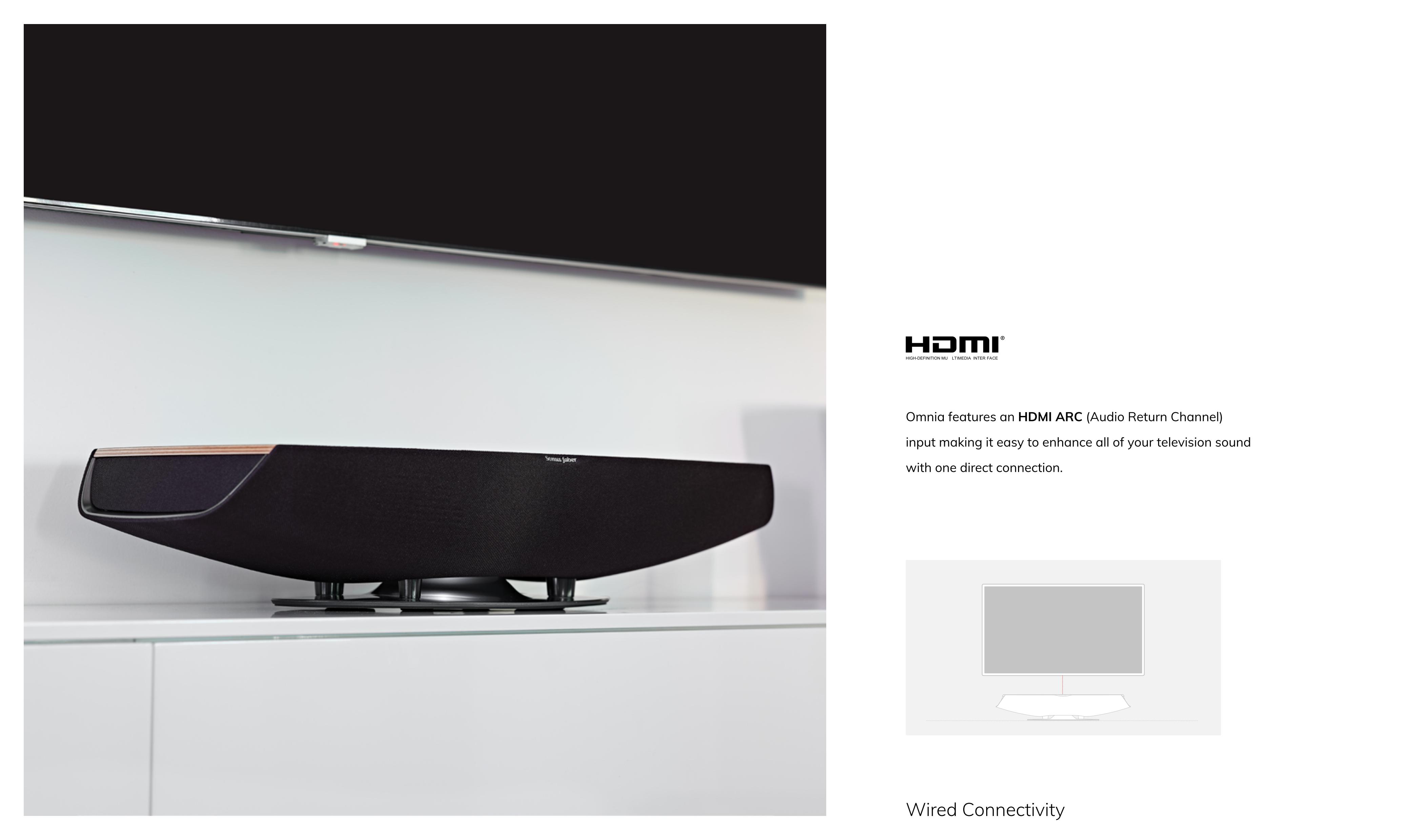
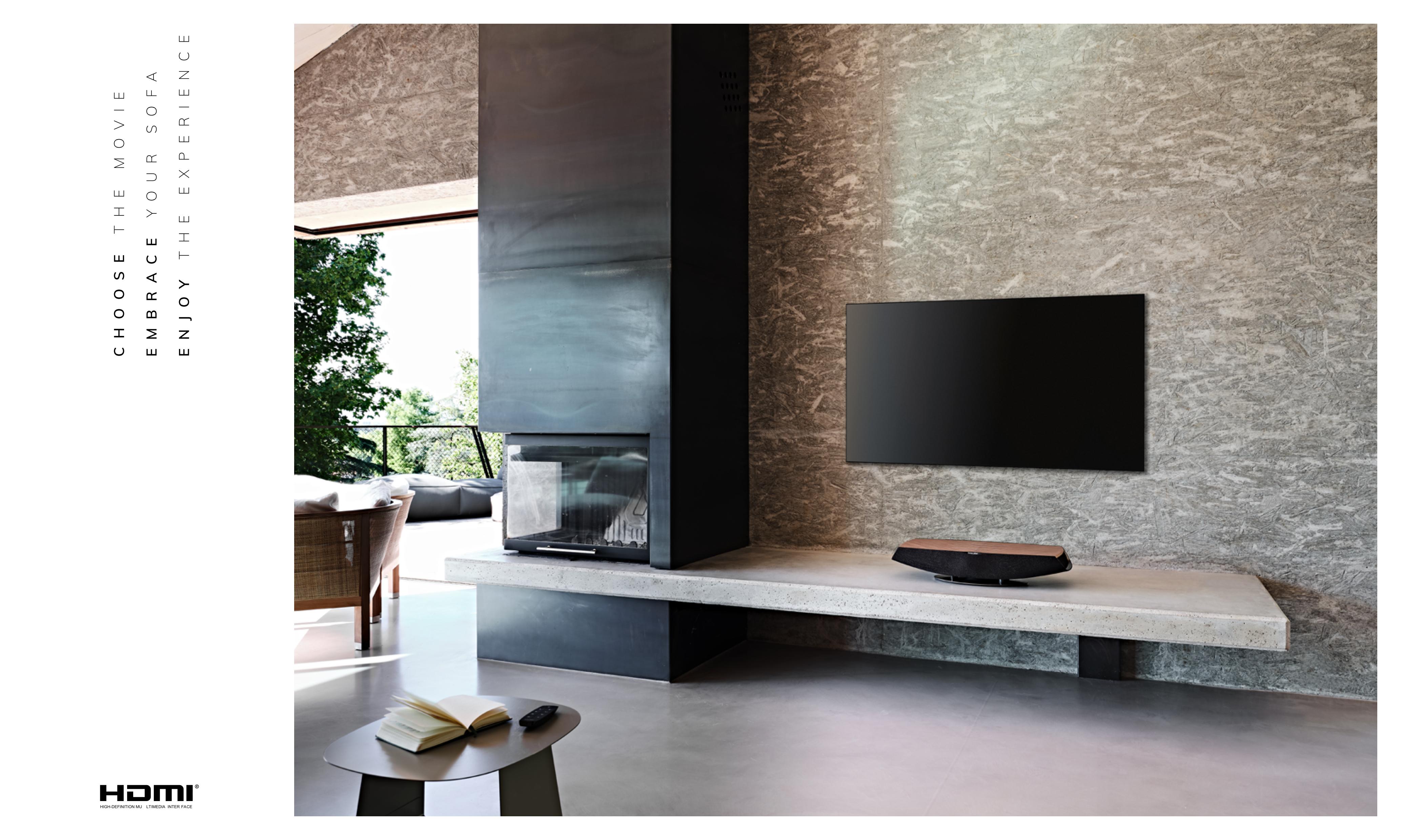
This system is equipped with two new trademarked technologies from Sonus faber, the touch sensitive SENSO TM interface permits users to directly control Omnia and easily connect to any digital or analog source, including their television, turntable, or mobile device. The illuminated lines on the top SENSO TM panel further indicate the speakers’ mode, input, and volume. The intuitive interface allows users to enjoy their favorite music via Omnia’s ability to support the latest streaming technology and trusted Turntable Ready (MM) technology, further offering seamless playback from mobile devices with integrated Bluetooth, Apple AirPlay 2, and Chromecast built in. An HDMI ARC input is also included to enhance television sound with one direct connection. The new CRESCENDO TM technology is an advanced signal processing system resulting in a greater sense of imensionality and immersivity, cleverly utilizing the two full range sides speakers.
“For me, Omnia was a complete journey exploring Sonus faber’s vast history, but made at two-times the speed,” said
Sonus faber’s Chief Design Officer, Livio Cucuzza. “With every project, my job is to tell the brand’s story – and with
Omnia, the mission was the same, the process was just faster and went more in depth. In its new, more accessible
category, Omnia will offer a taste of Sonus faber’s 40-year history to thousands of new customers, ambitious of
course, but also gratifying.”
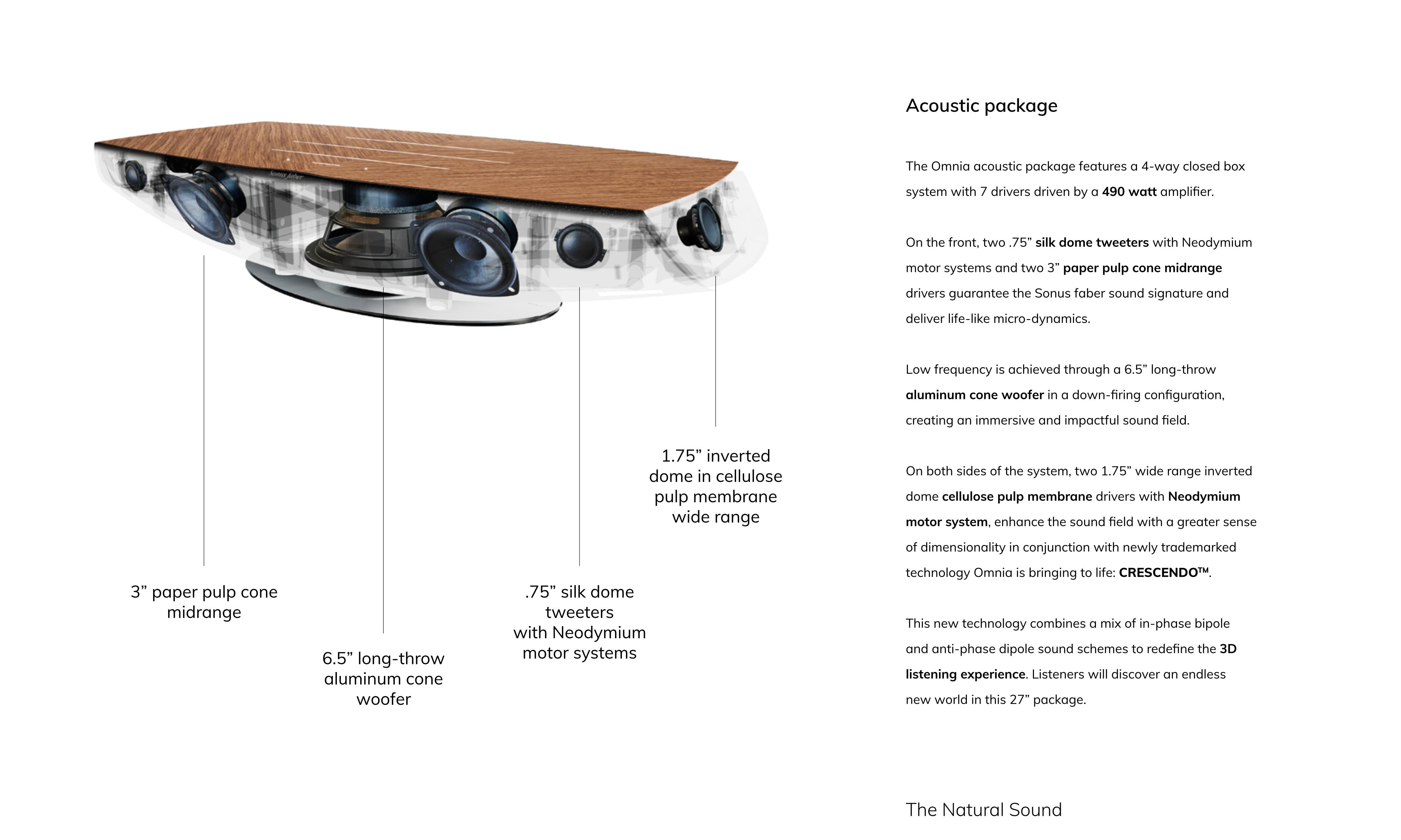
The Omnia system boasts a mesmerizing three-dimensional sound to immerse listeners in a unique, natural acoustic experience. The result is a crisp wavefront and wide soundstage that mimics that of a live performance, as with the tradition of Sonus faber’s iconic, award-winning ortfolio. Omnia’s 490-watt closed box system hosts 7 drivers: • (2) 0,75” silk dome tweeters with Neodymium slug structure magnet motor system • (2) 3” paper pulp cone midrange • (1) woofer, a 6,5” long throw woofer with aluminum cone down firing • (2) 1,75” full-range driver with a non-pressed cellulose pulp inverted dome activated with CRESCENDO TM *Full product specifications can be found below
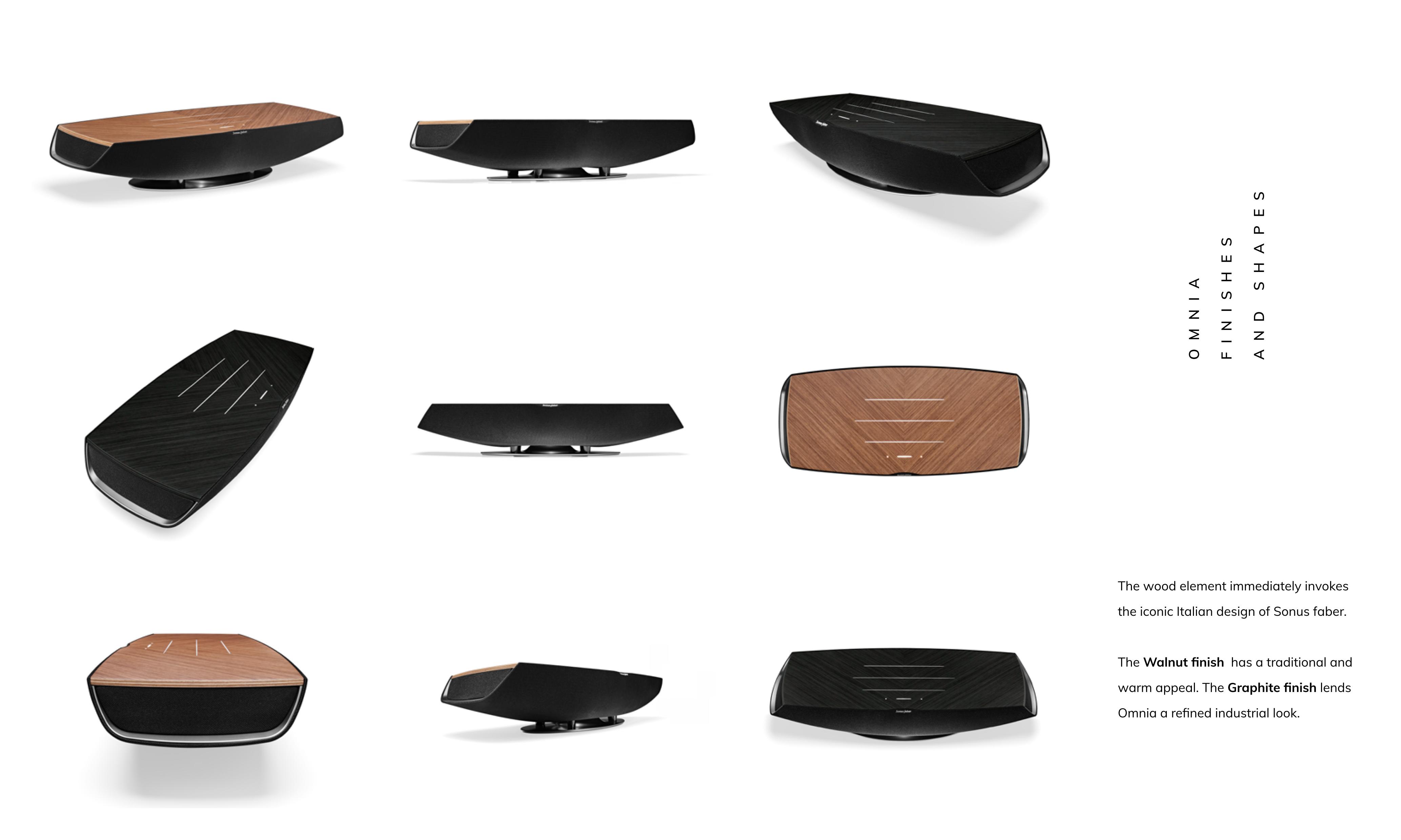
Beyond the acoustic offerings, the elevated quality Italian design and authentic wood surface will enhance any home
design. Omnia will be available through Authorized Sonus faber Dealers in the finish Walnut beginning March 2022
with Graphite available Summer 2022.
RETAIL PRICE: $1,999 / €1,799 MRSP
TECHNICAL SPECIFICATIONS System Stereo 4-way; DSP-optimized closed box system Speakers 2 x 0,75’’ Silk Dome Tweeter – Neodymium motor system 2 x 3’’ Paper pulp cone Midrange 2 x 1,75’’ Inverted dome cellulose pulp membrane extended range – Neodymium motor system 1 x 6,5’’ Aluminum cone Woofer Power Rating 490 W Mains Supply 100-120V, 220-240V, 50/60Hz Power Consumption Typical use: 18W Standby mode: 3.5W Deep sleep (No-network standby mode): 0.5W Maximum Sound Level 108dB SPL at 1 meter Frequency Response Bandwidth: 30Hz to 25kHz (@-6dB) Accuracy in frequency response: ± 2dB from 20Hz to 20kHz Audio Inputs HDMI ARC 2 channel Analog input: MM Phono/line-in Network connectivity Ethernet (10/100 Mbps) Wi-Fi dual band 2×2 802.11 b/g/n/ac (2.4GHz and 5.2GHz) Streaming Apple AirPlay 2 Chromecast Built-in Spotify® Connect TIDAL connect Roon Ready Bluetooth AptX HD, SRC Weight 7.6 Kg Dimensions (HxWxD) 130mm x 650mm x 280mm / 5,12’’ x 25,6’’ x 11’’
歪みの低減、リニアリティの向上など、様々な主要分野において測定値および主観的な改善を実現し、 Ring DACの世界最高峰の性能を新たなレベルへと押し上げ
Introducing the dCS Ring DAC™ APEX
In March 2022, we’re launching the dCS Ring DAC™ APEX. This new hardware – the result of several months of intensive research and development – allows us to deliver a range of sonic and measured improvements, and enhance the musical performance of two renowned dCS systems
TAGS: NEWS, TECHNOLOGY & INNOVATION
For over 30 years, we’ve strived to set the standard for digital playback, and deliver a truly state-of-the-art experience for all dCS owners. This requires constant innovation, and an absolute dedication to achieving the finest possible levels of sound reproduction.
Our engineers never stop exploring how we can enhance our products and technologies and, in turn, the musical performance our systems provide. Even after a product is released, we continue to invest in developing new features, and creating novel solutions that can aid us in our mission to bring people closer to their favourite artists and sounds.
Wherever possible, these innovations are made available to existing dCS owners, either in the form of free software updates, or physical upgrades that allow customers to receive the latest dCS hardware without having to purchase a whole new system.
In 2017, we released a major upgrade to the mapping algorithm and software at the core of the Ring DAC – the unique digital to analogue conversion system at the heart of all dCS DACs – and in 2020, we developed a novel headphone optimisation platform designed to enhance headphone listening for owners of our Bartók Headphone DAC.
We do this as we believe our customers should be able to participate in our latest discoveries, and benefit from new advancements as and when these are released. We know that purchasing a dCS product is an investment, and we strive to honour that investment through continual product development.
Next month, we’re launching a new version of the dCS Ring DAC for two renowned systems within the dCS product range: the Vivaldi and Rossini.
Following extensive research and development, we’ve made some major changes to the Ring DAC hardware. We’ve reconfigured the Ring DAC circuit board and developed an all-new analogue output stage.
This has allowed us to reduce distortion, improve linearity, and deliver both measured and subjective improvements in a range of key areas, taking the Ring DAC’s world-leading performance to a new level. It has also allowed us to further enhance the performance of the much-loved dCS Vivaldi DAC, Rossini DAC, and Rossini Player.
On March 4, we’ll release next generation APEX editions of the Rossini DAC, Vivaldi DAC, and Rossini Player. These will feature the new Ring DAC APEX hardware as standard. We’ll also be offering Ring DAC APEX upgrades to existing Rossini and Vivaldi owners.
We’re hugely excited to deliver this latest innovation. Through hard work, dedication and creative thinking, our engineering team have been able to once again raise the bar for audio performance, and the subjective feedback from our critical listening experts has been incredibly positive. We’re looking forward to sharing the results of our work with the audio community and, of course, our valued customers, as well as those who are new to dCS.
More information, including an in-depth look at the Ring DAC APEX, plus further details of our Vivaldi and Rossini APEX models, and our forthcoming upgrade programme, will be released through a series of virtual launch events taking place between now and March 4.
Our next virtual event will take place on February 24, with new information being released on the dCS Edit, the dCS Community forum, and via email and social media.
If you’d like to keep up to date with events and announcements, you can follow us on social via the links below, or sign up to the dCS newsletter here.
dCS Ring DAC™ APEXのご紹介
2022年3月、「dCS Ring DAC™ APEX」を発売します。この新しいハードウェアは、数カ月にわたる集中的な研究開発の成果であり、さまざまな音質や測定値の改善を実現し、定評ある2つのdCSシステムの音楽性能を向上させることができます
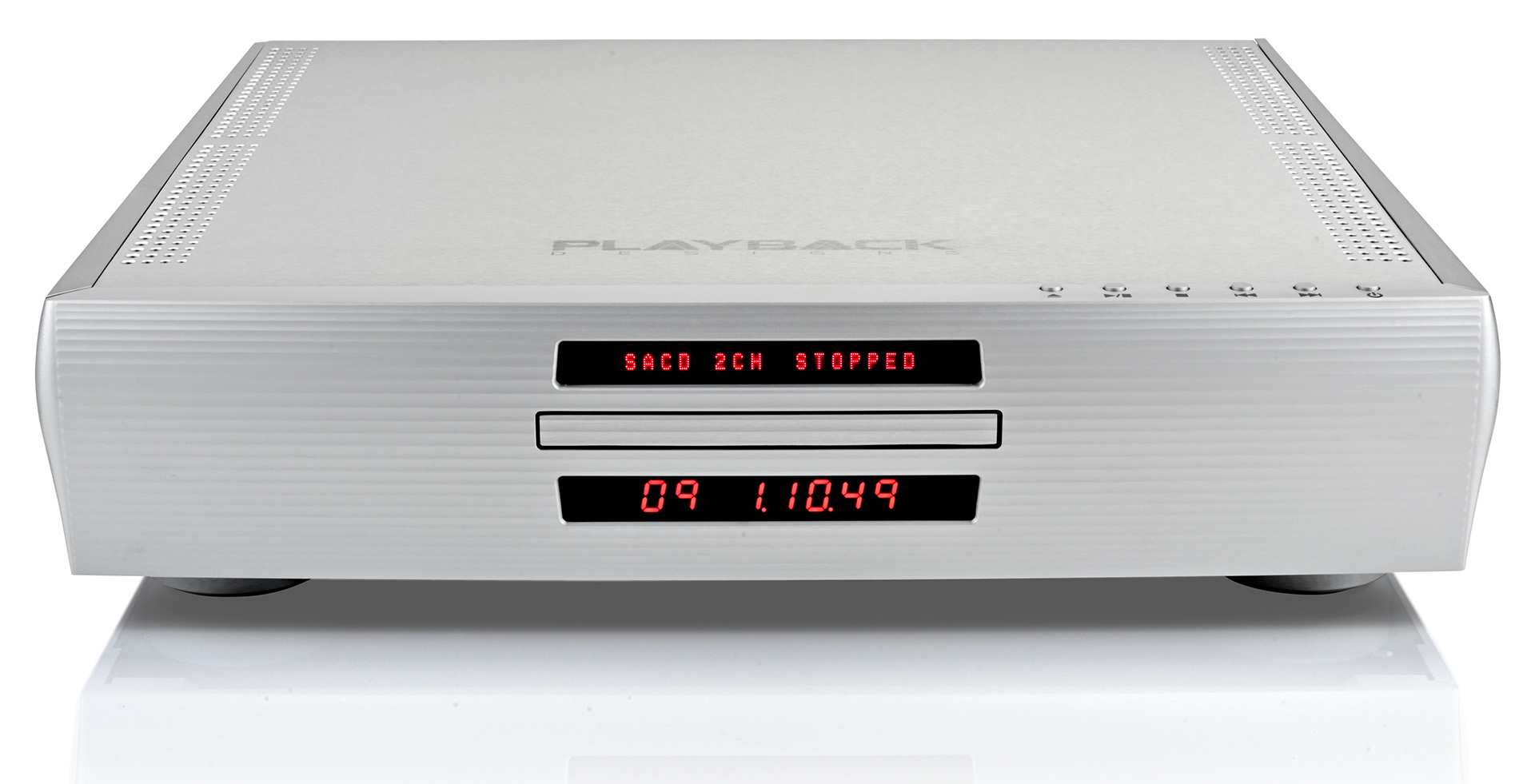
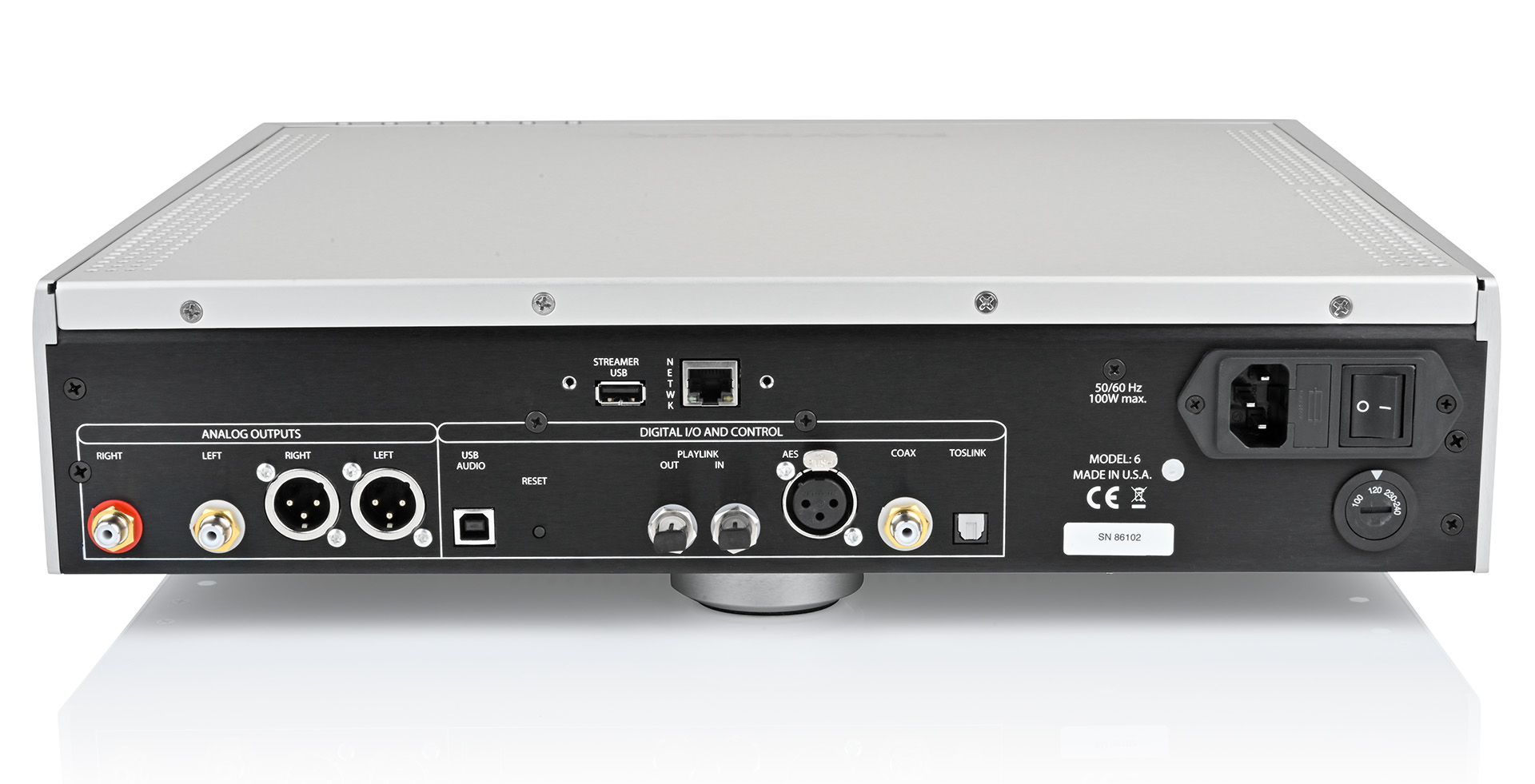
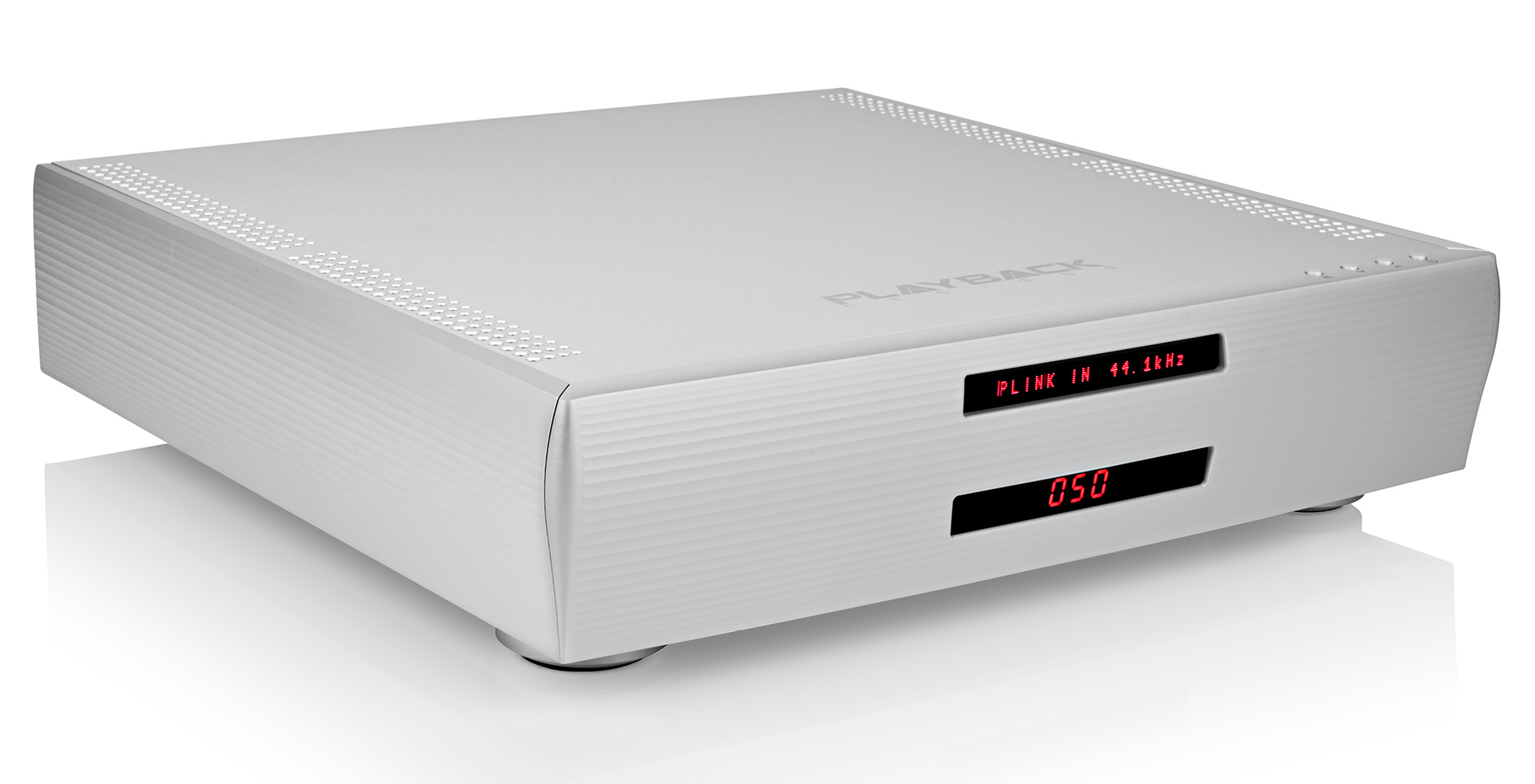
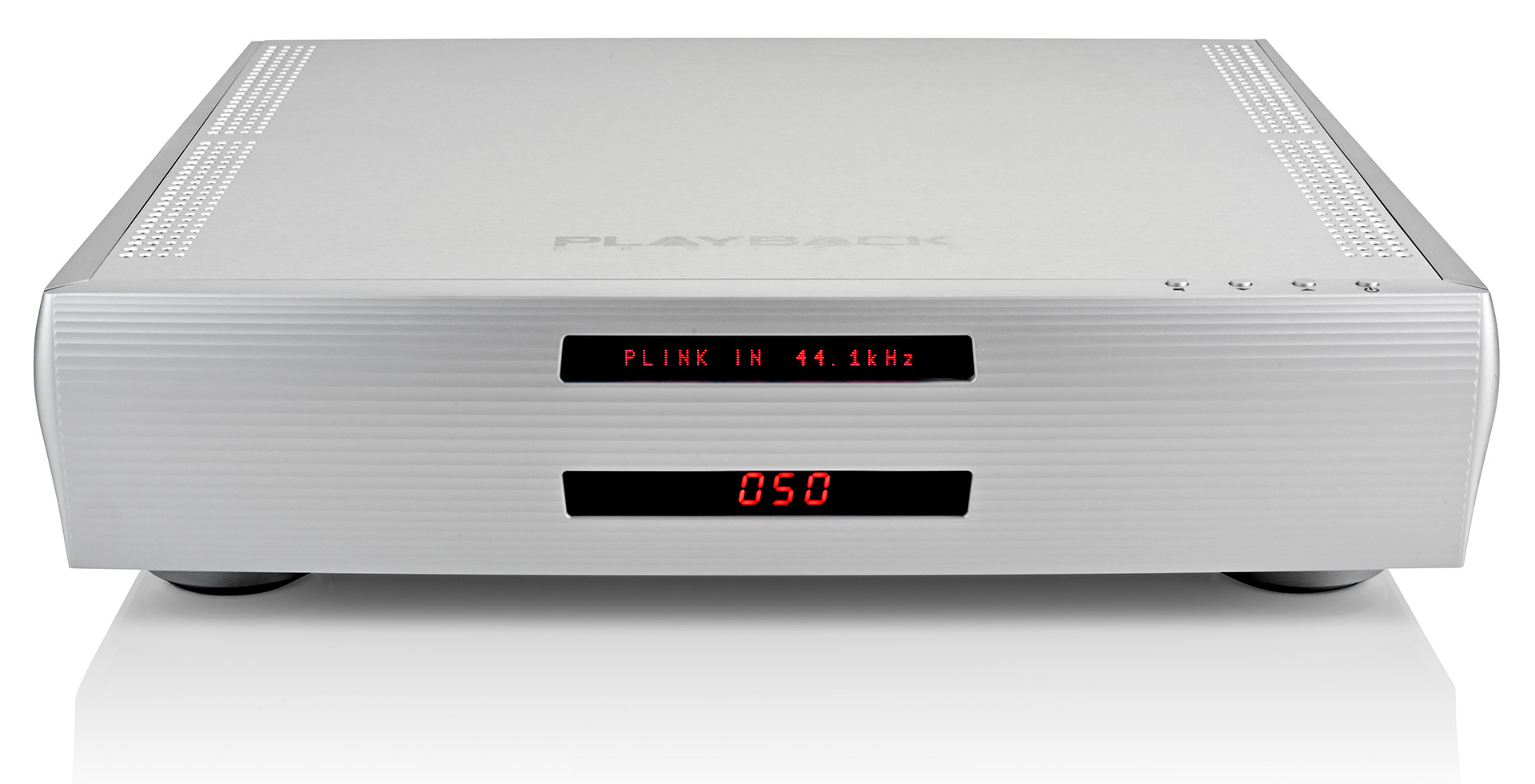
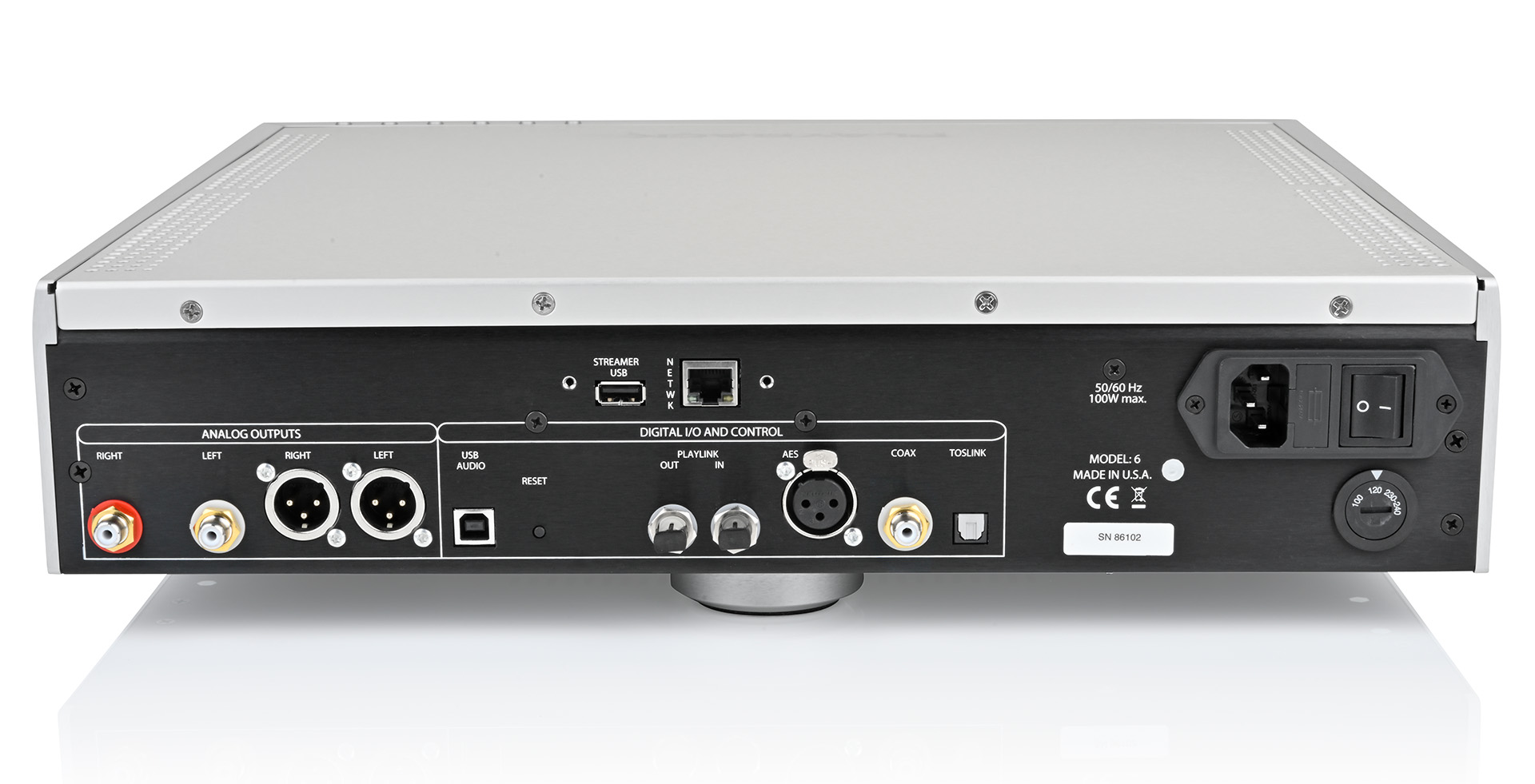
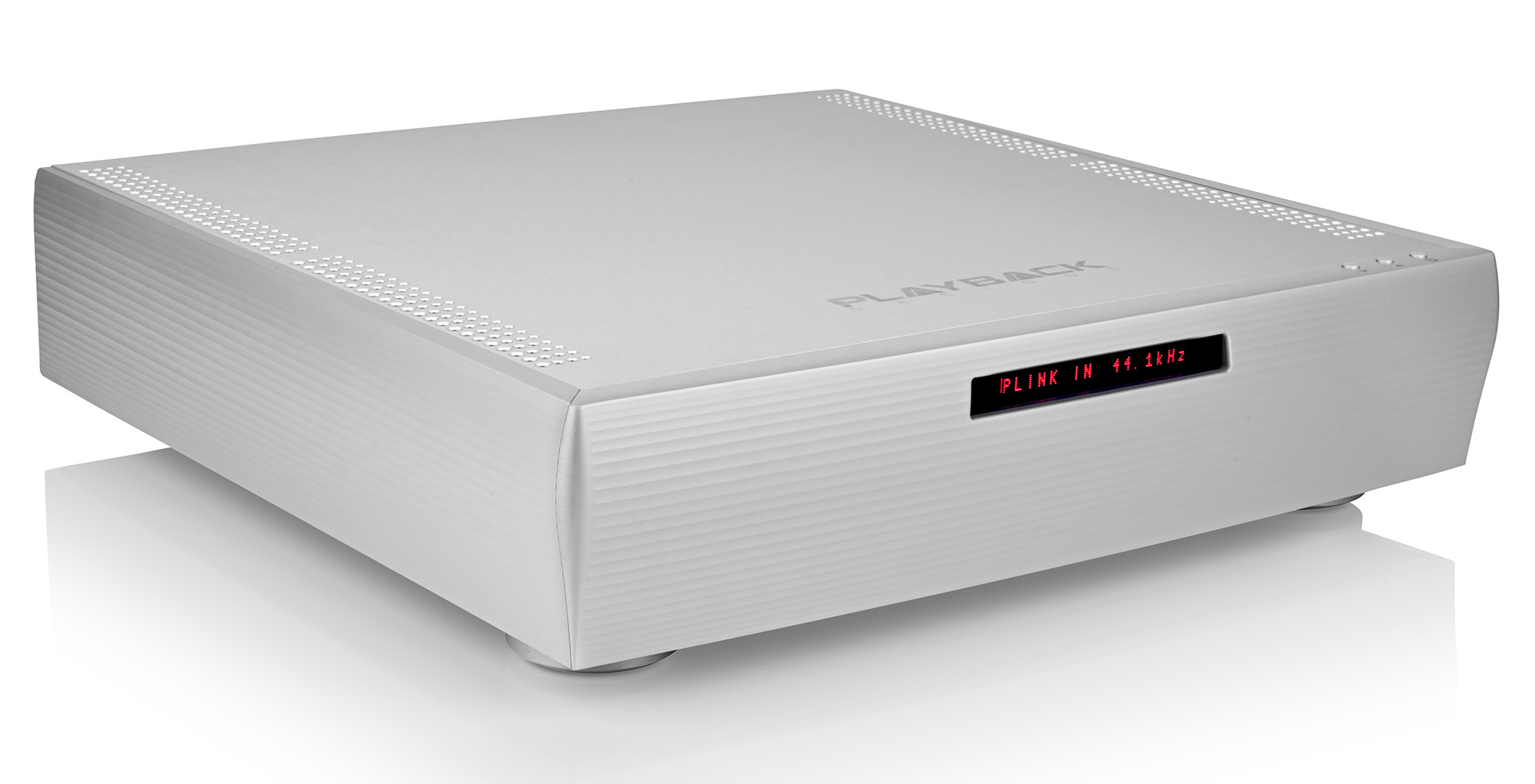
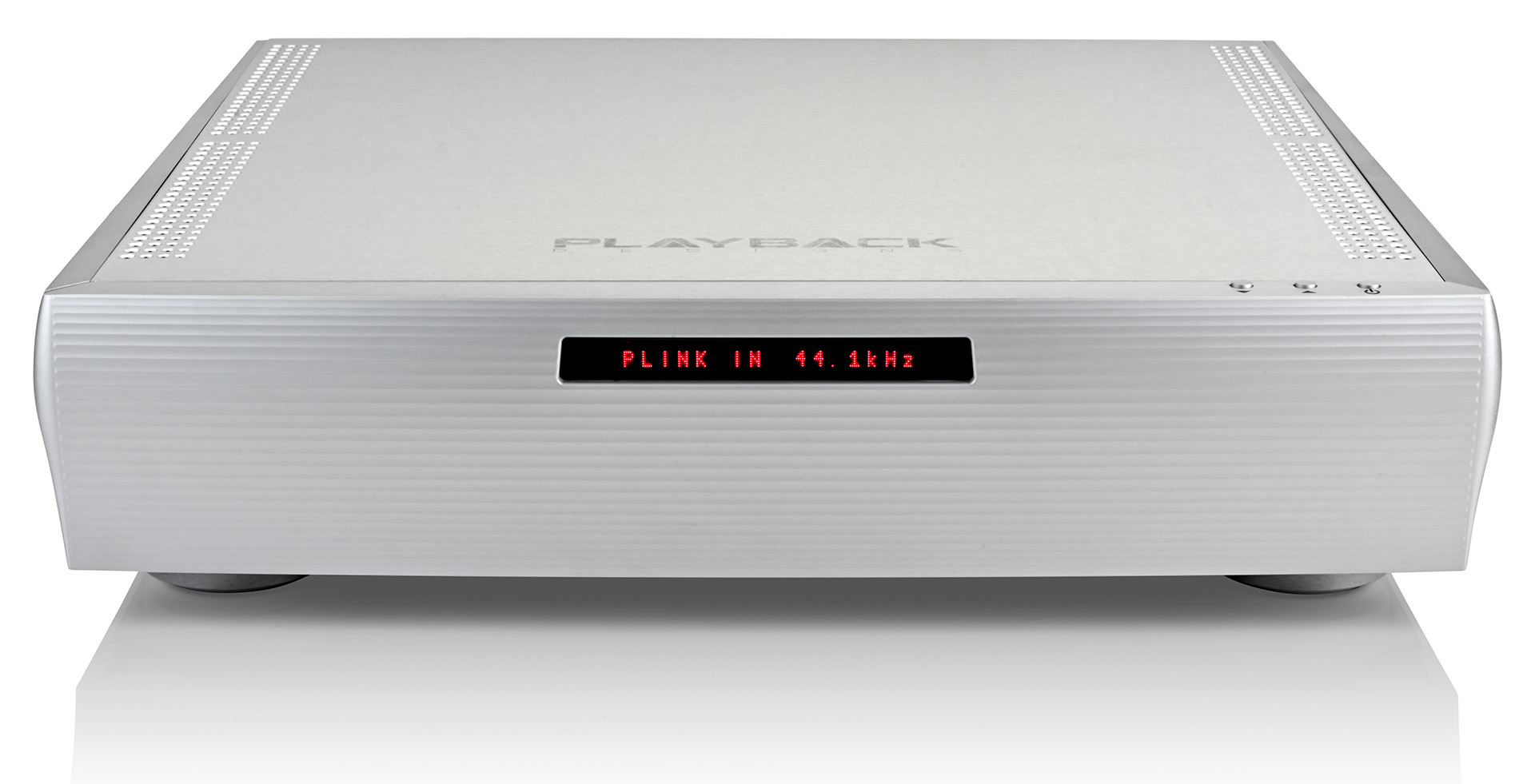
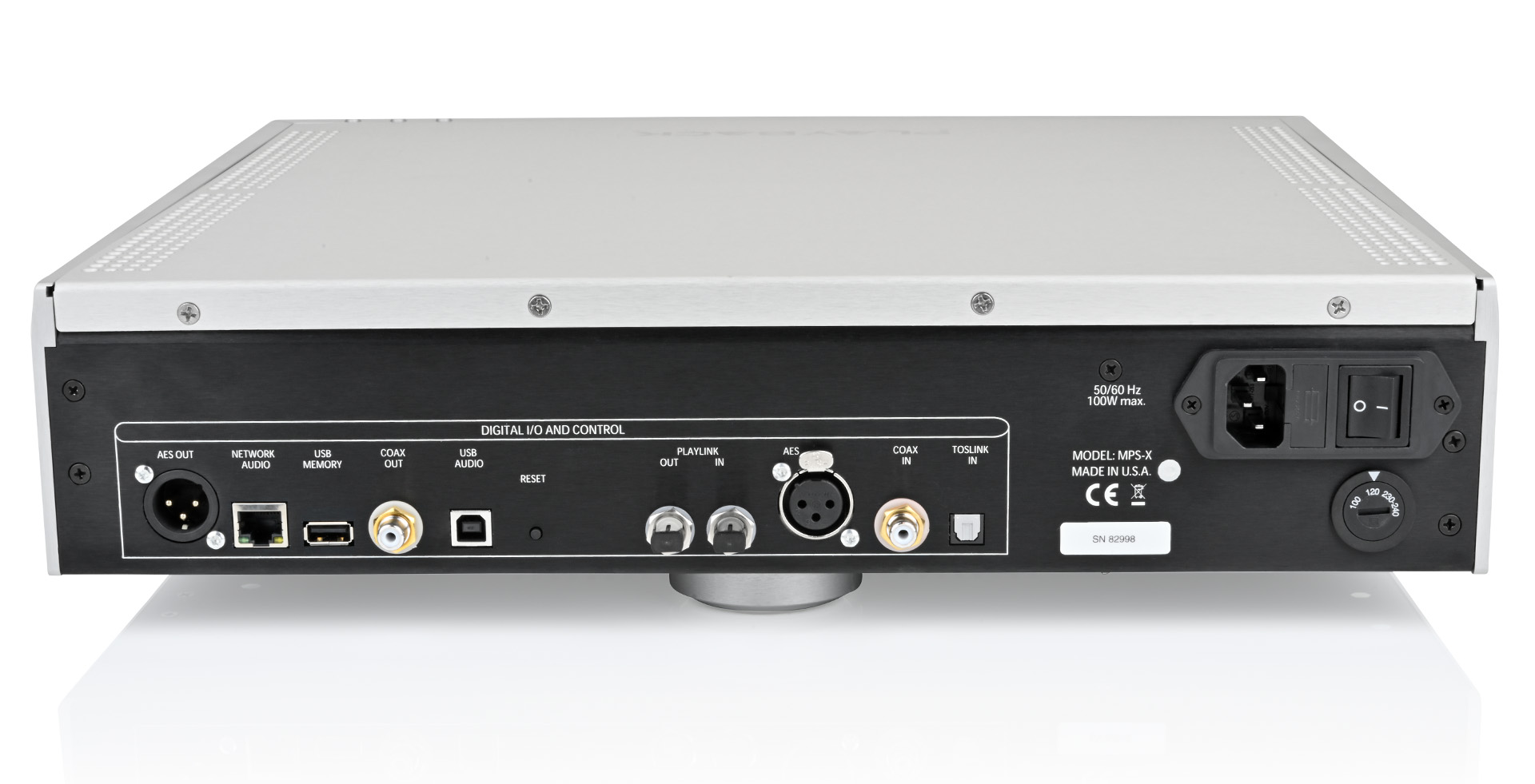
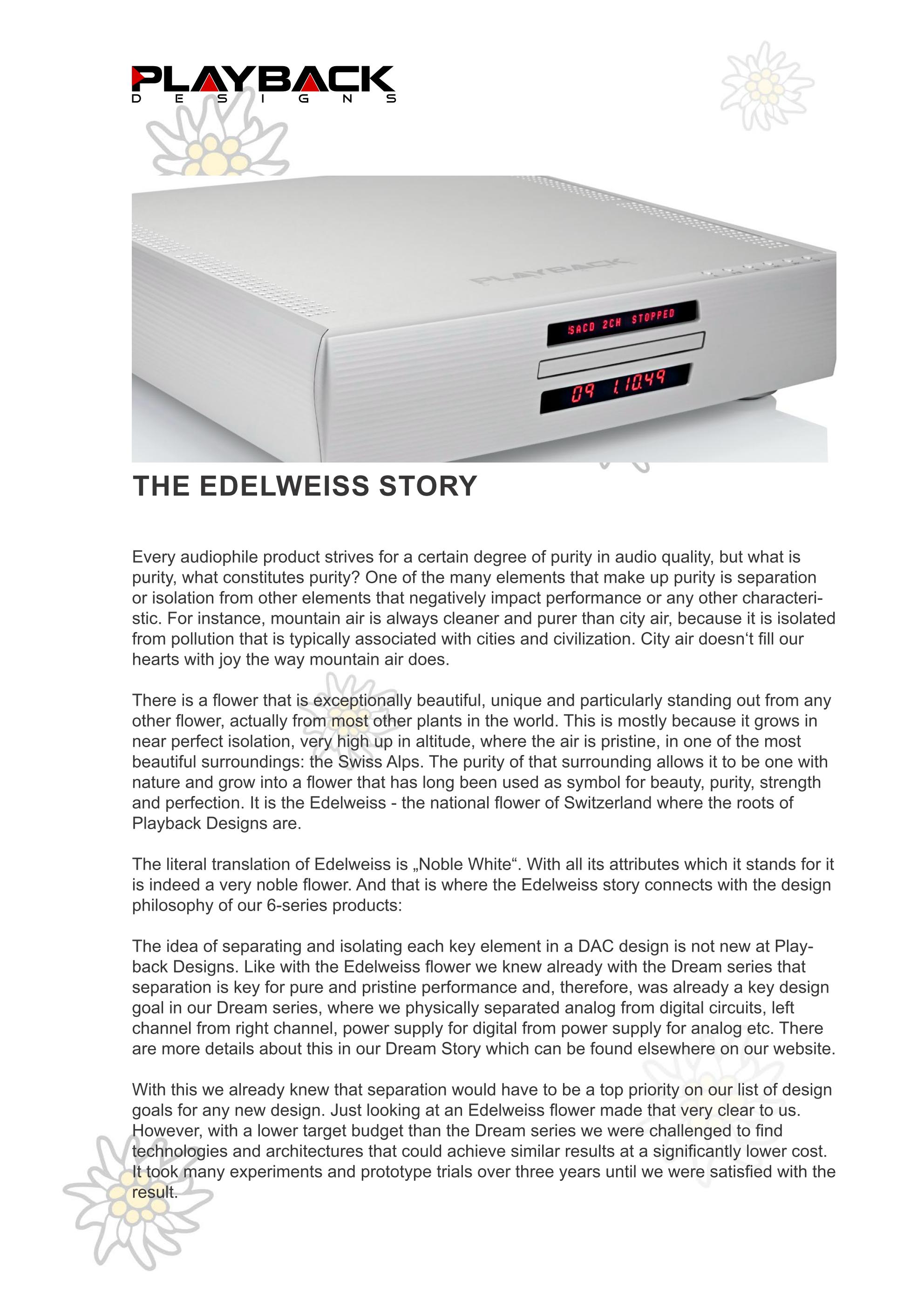
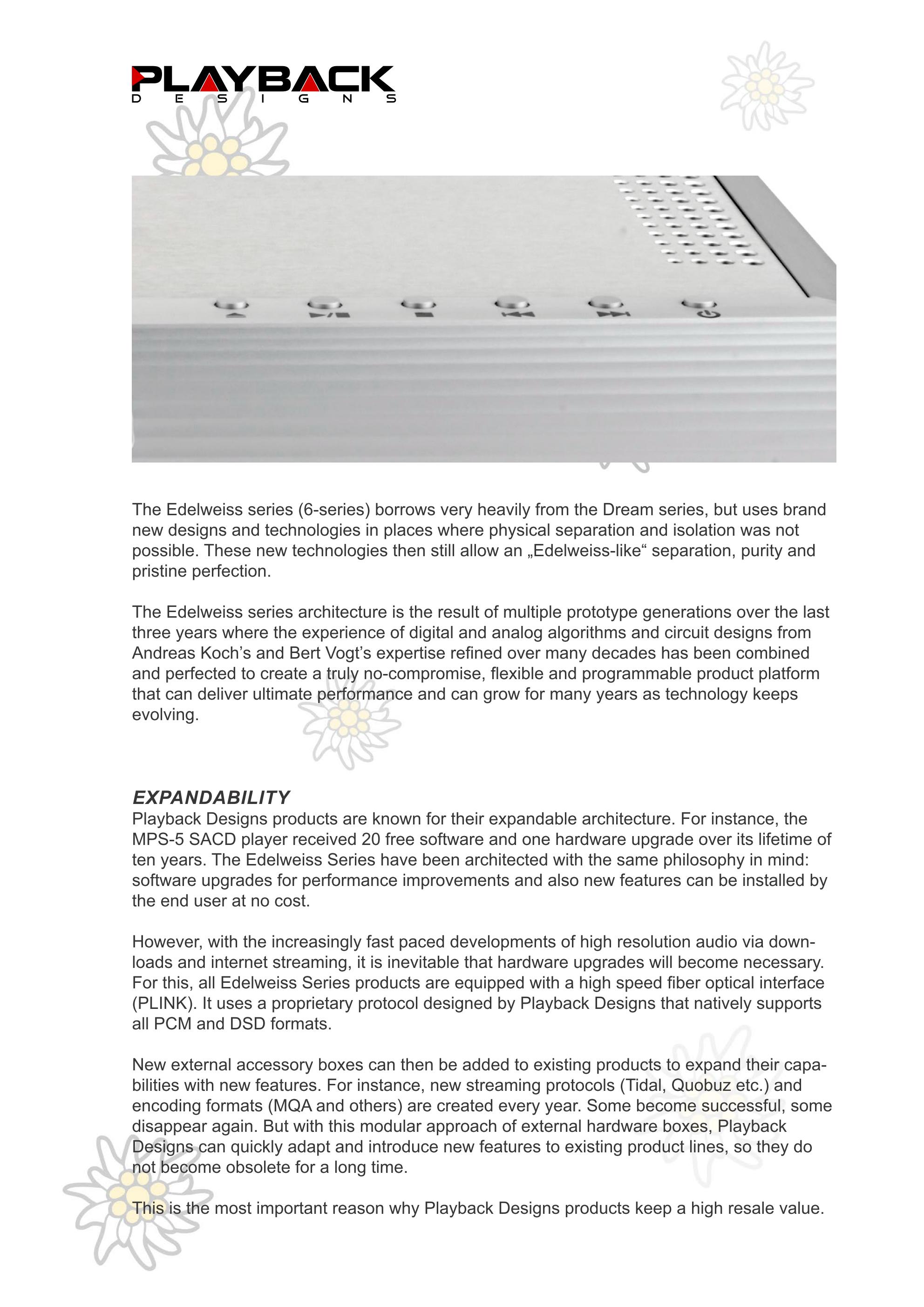
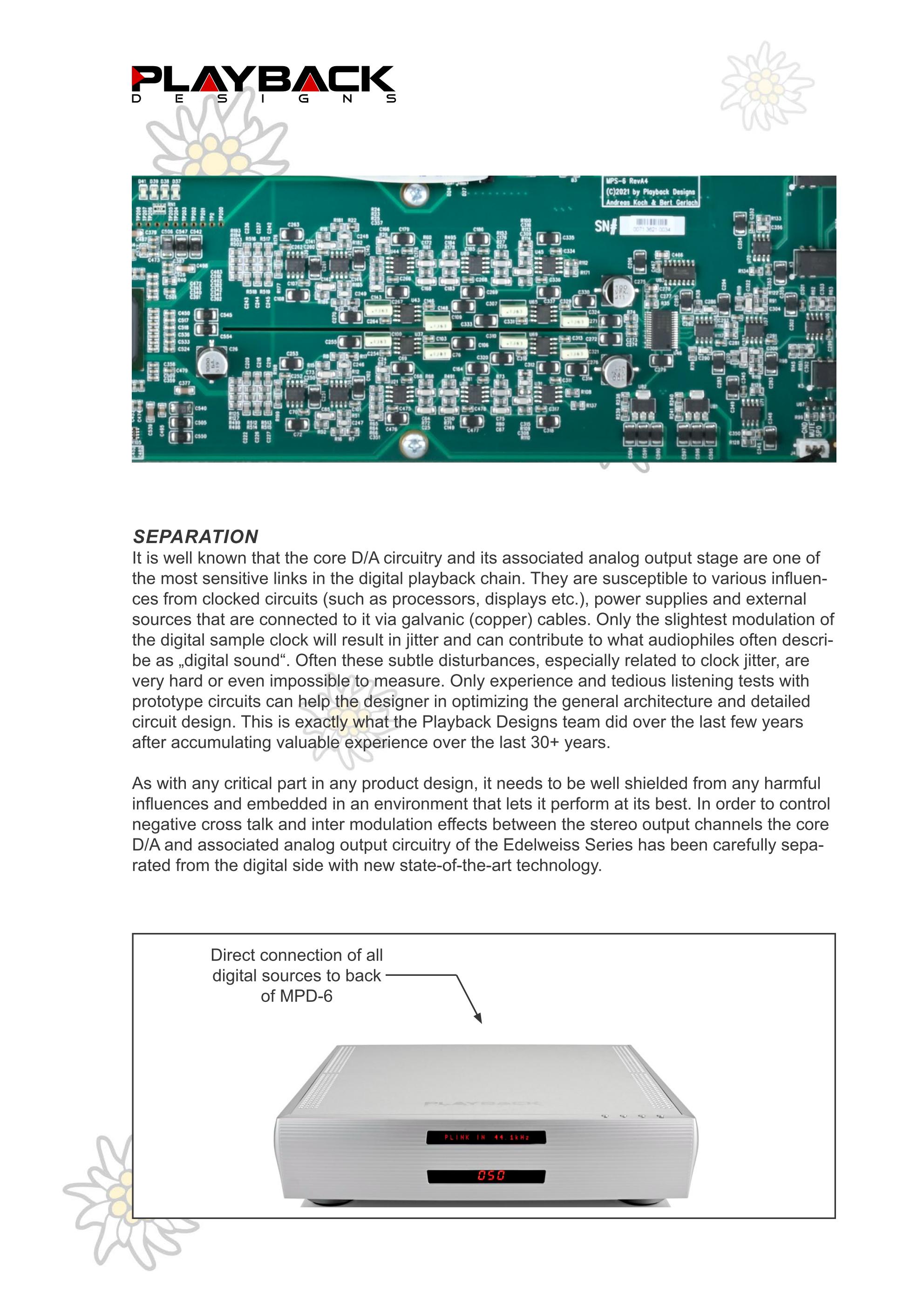
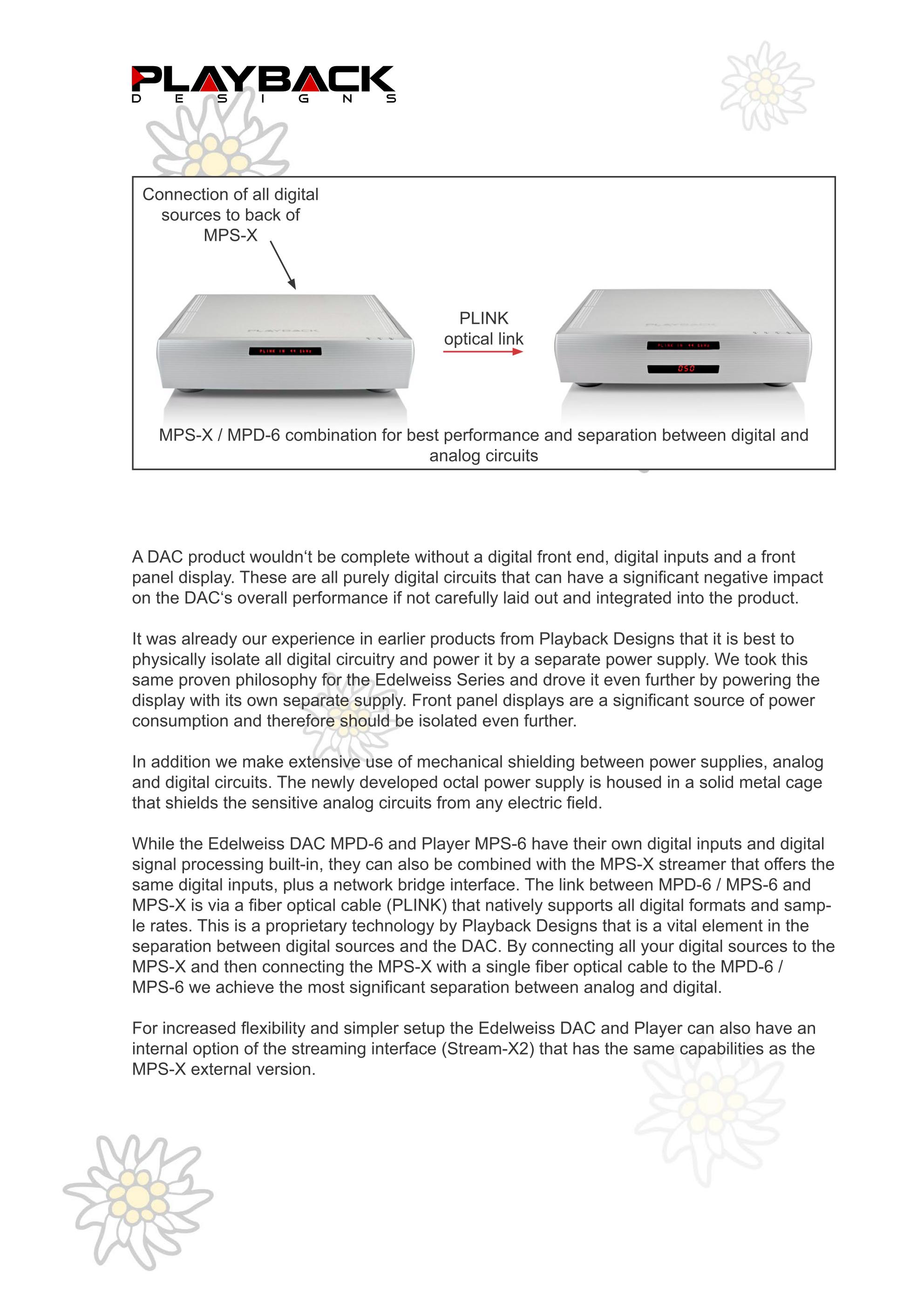
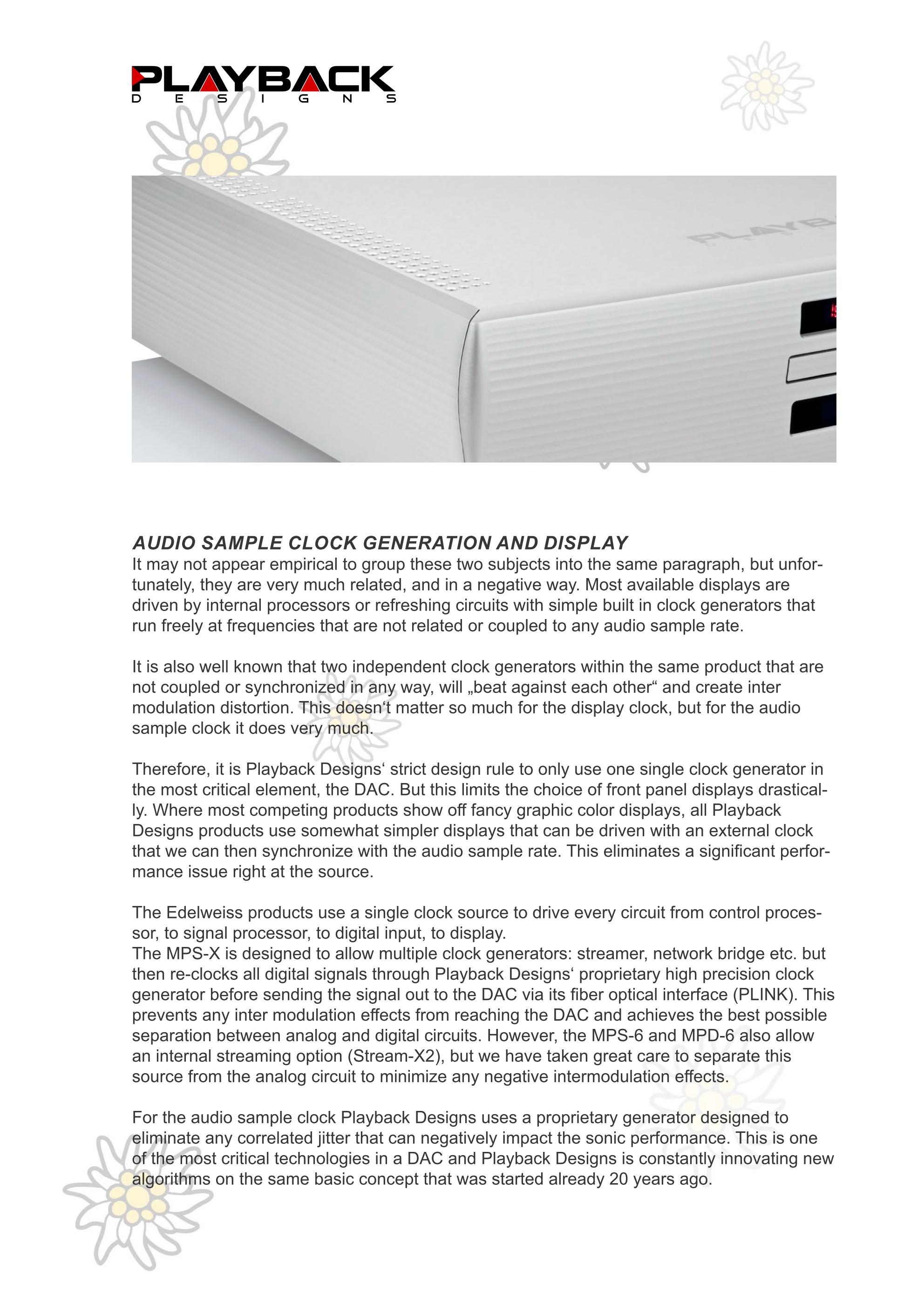
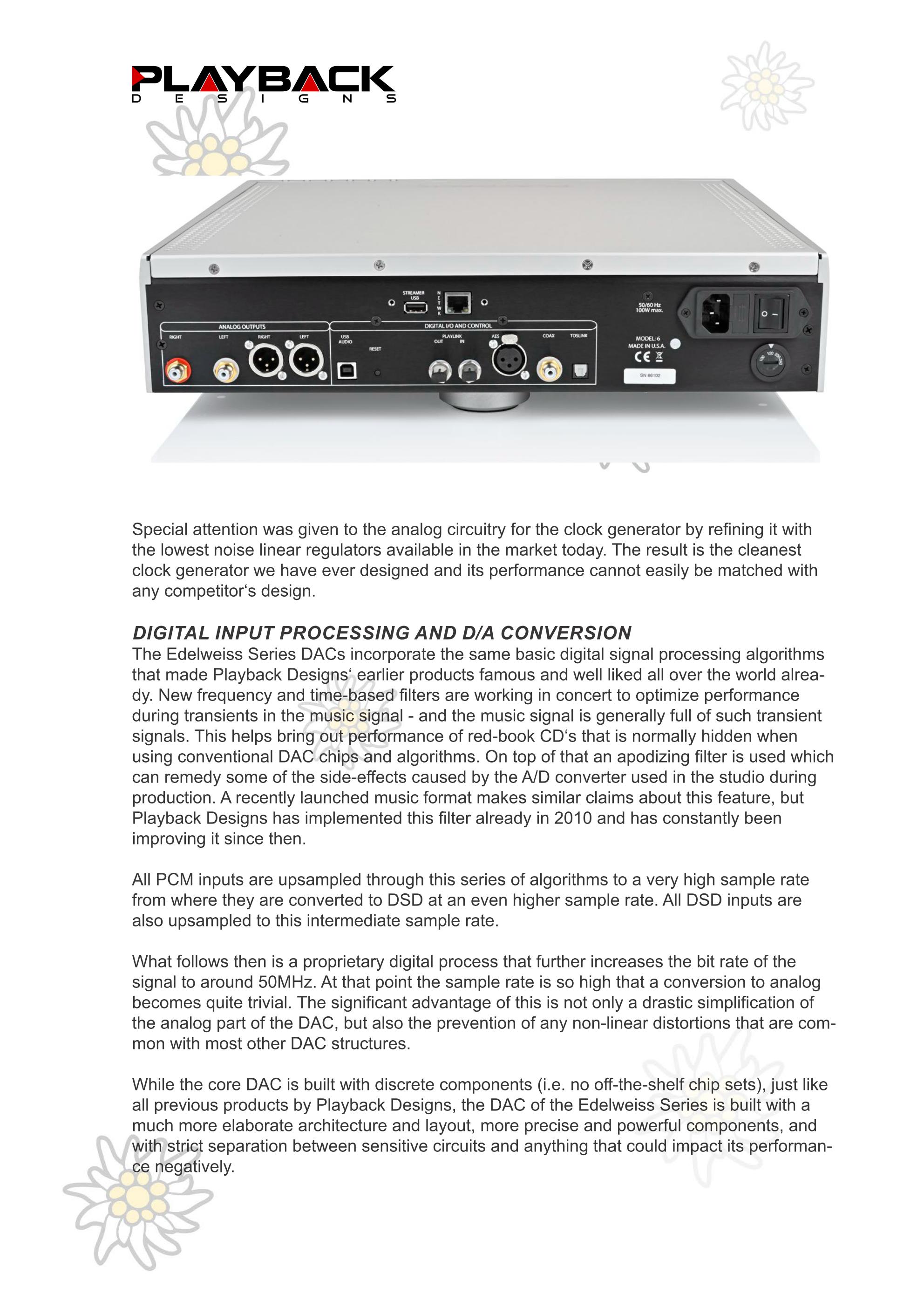
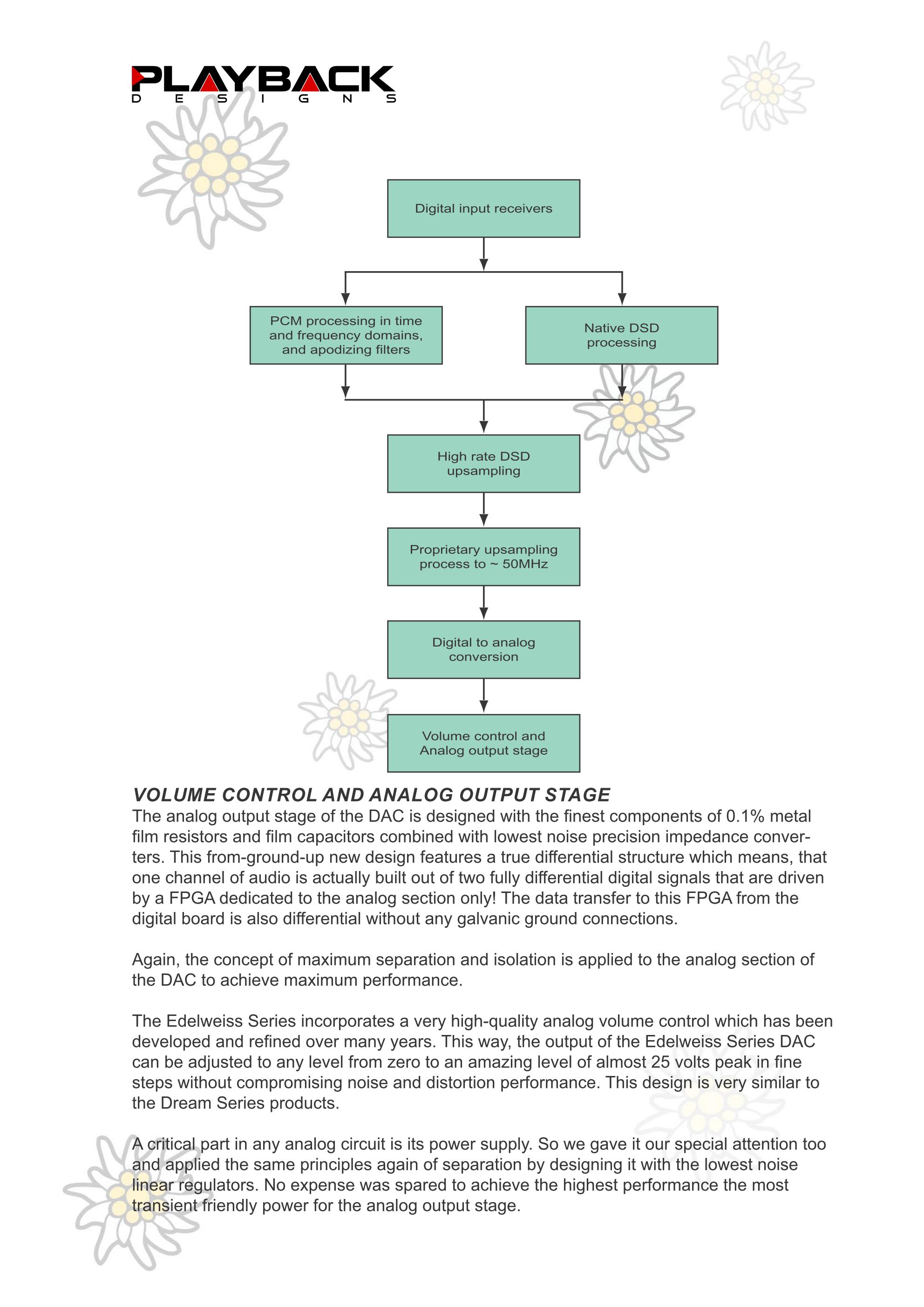
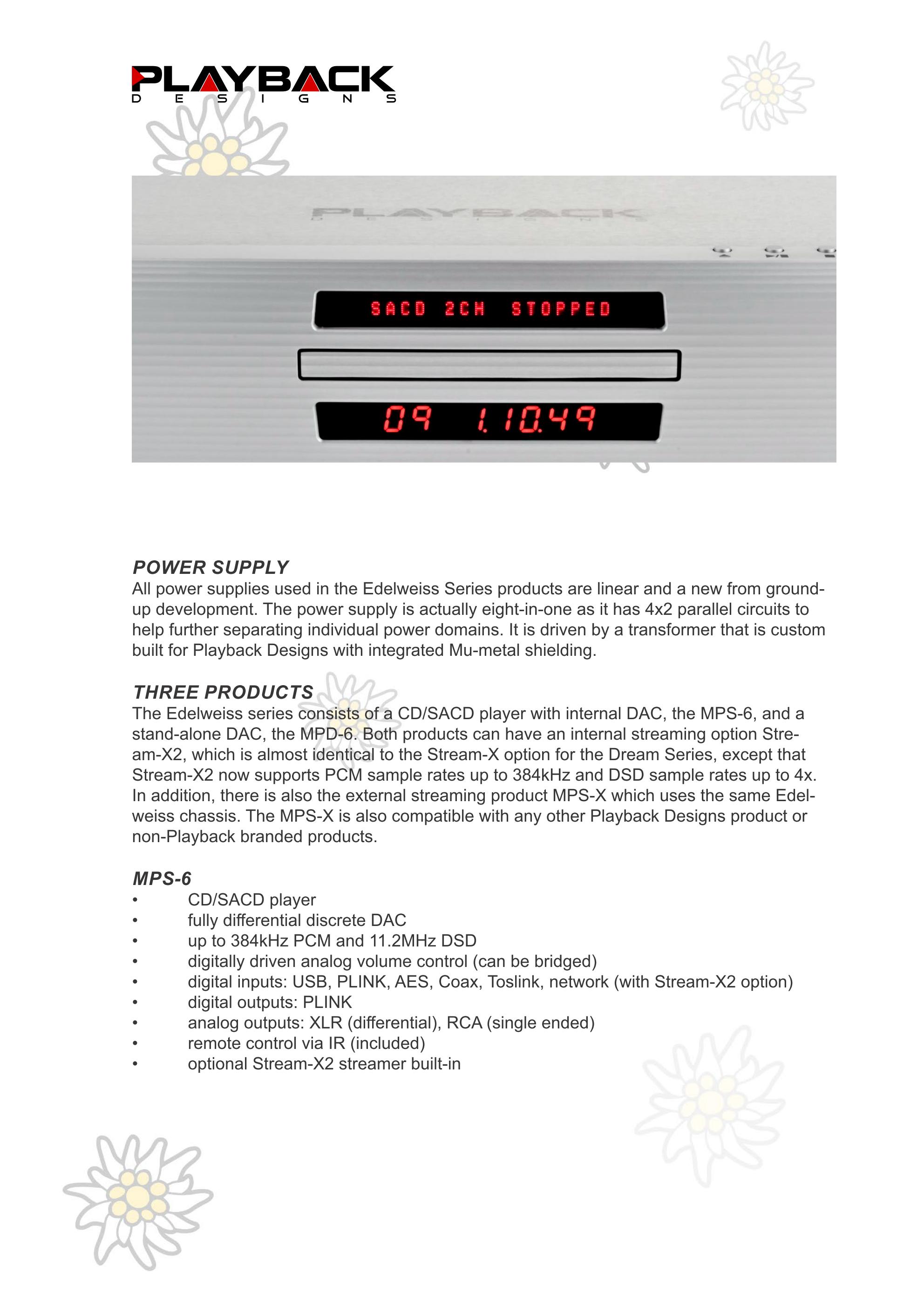
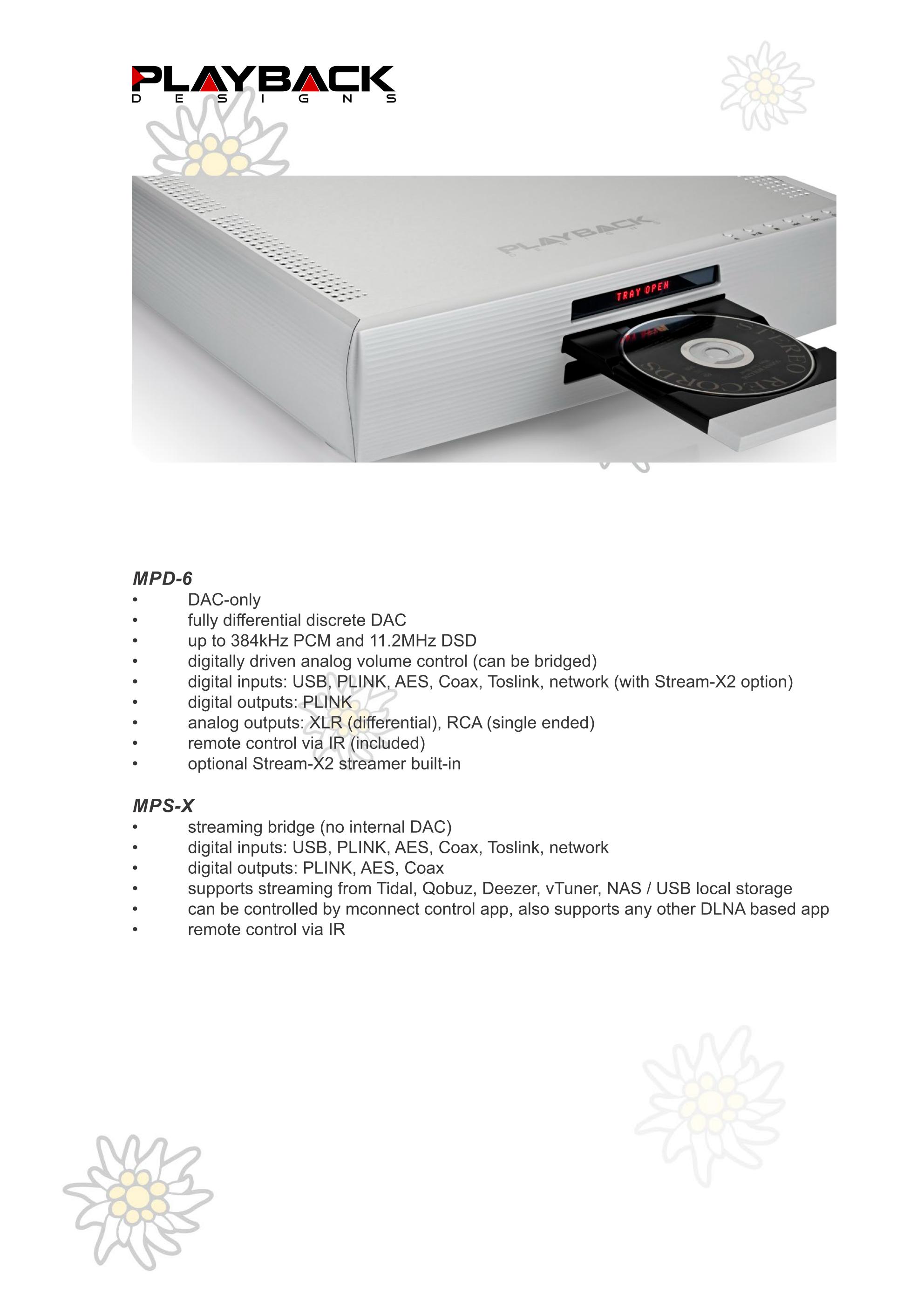
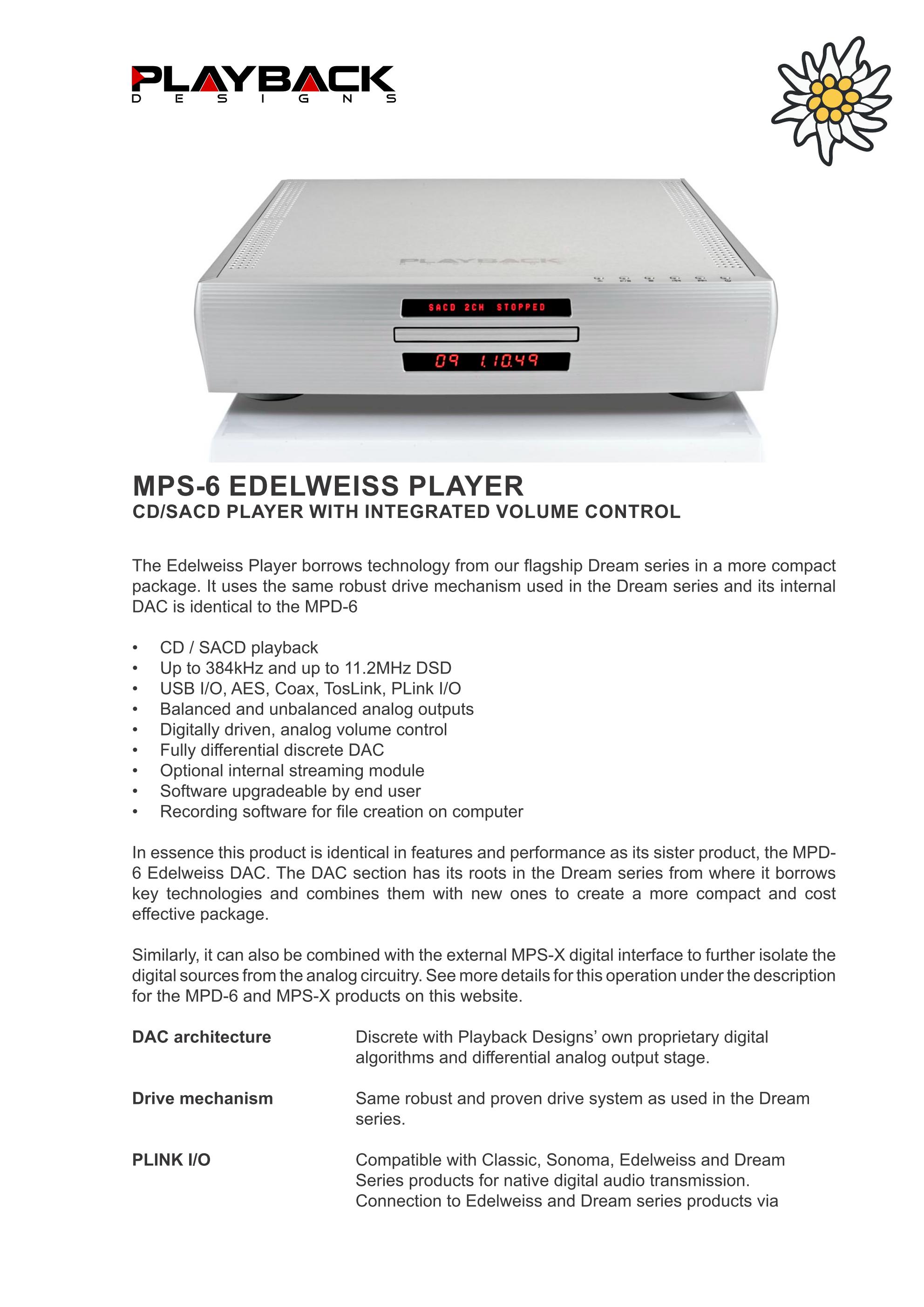
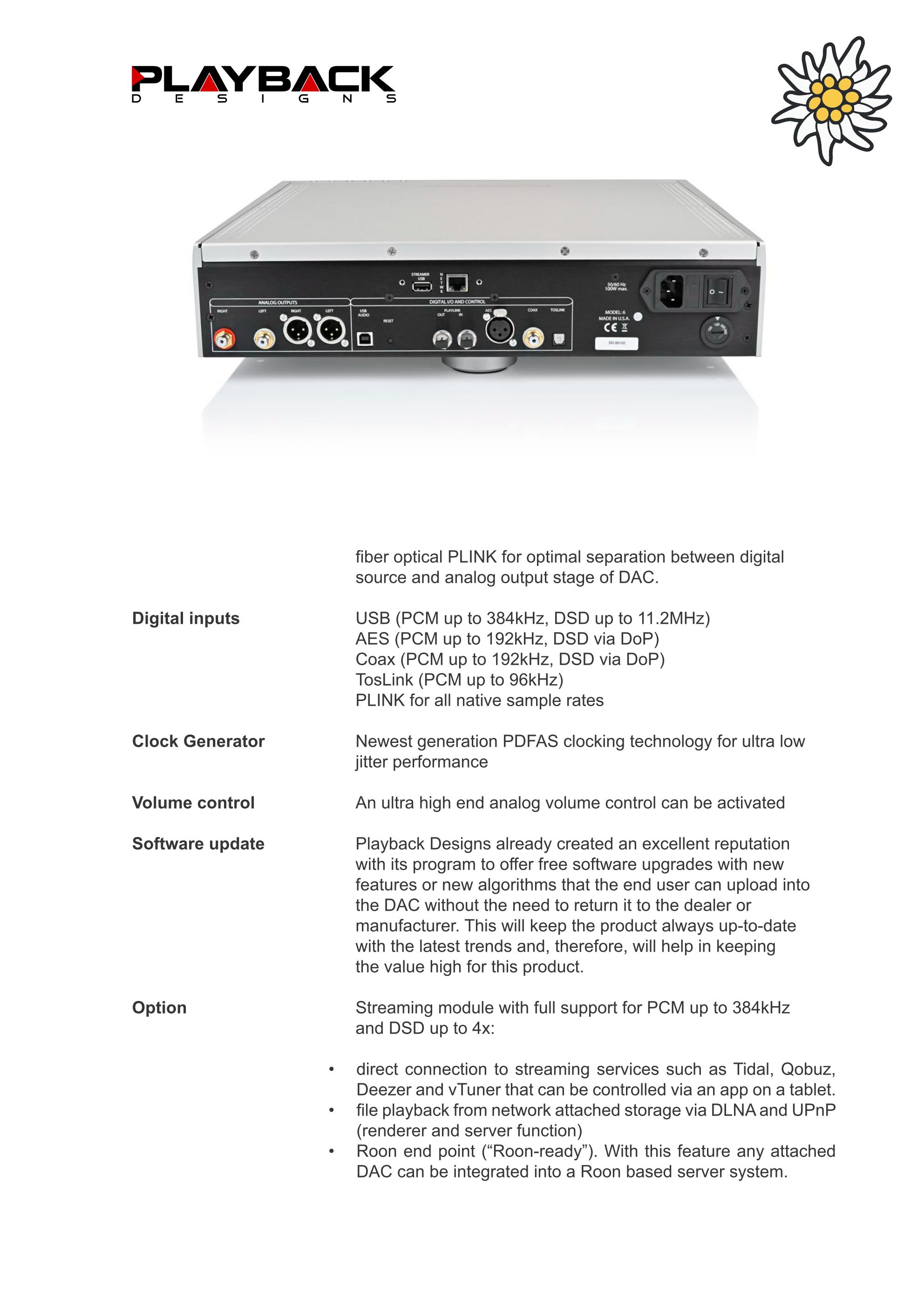
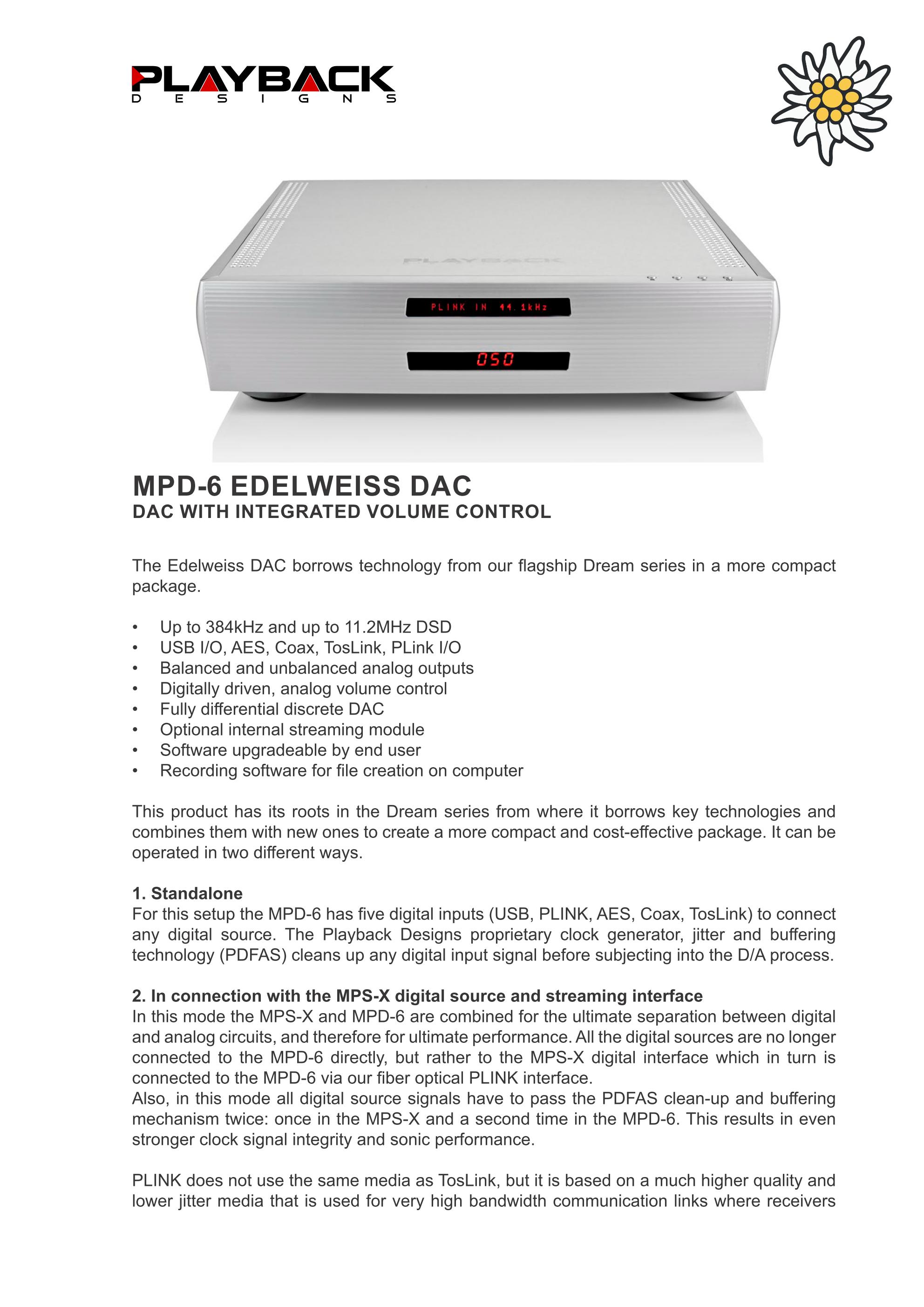
Playback Designs Edelweiss シリーズ MPS-6 EDELWEISS PLAYER CD/SACD PLAYER MPD-6 EDELWEISS DAC DAC WITH INTEGRATED VOLUME CONTROL MPS-X DIGITAL FRONT END / STREAMER