| First Vertere high-end dual-mono phono preamplifier Available in July £15500; €18998; $19995. |
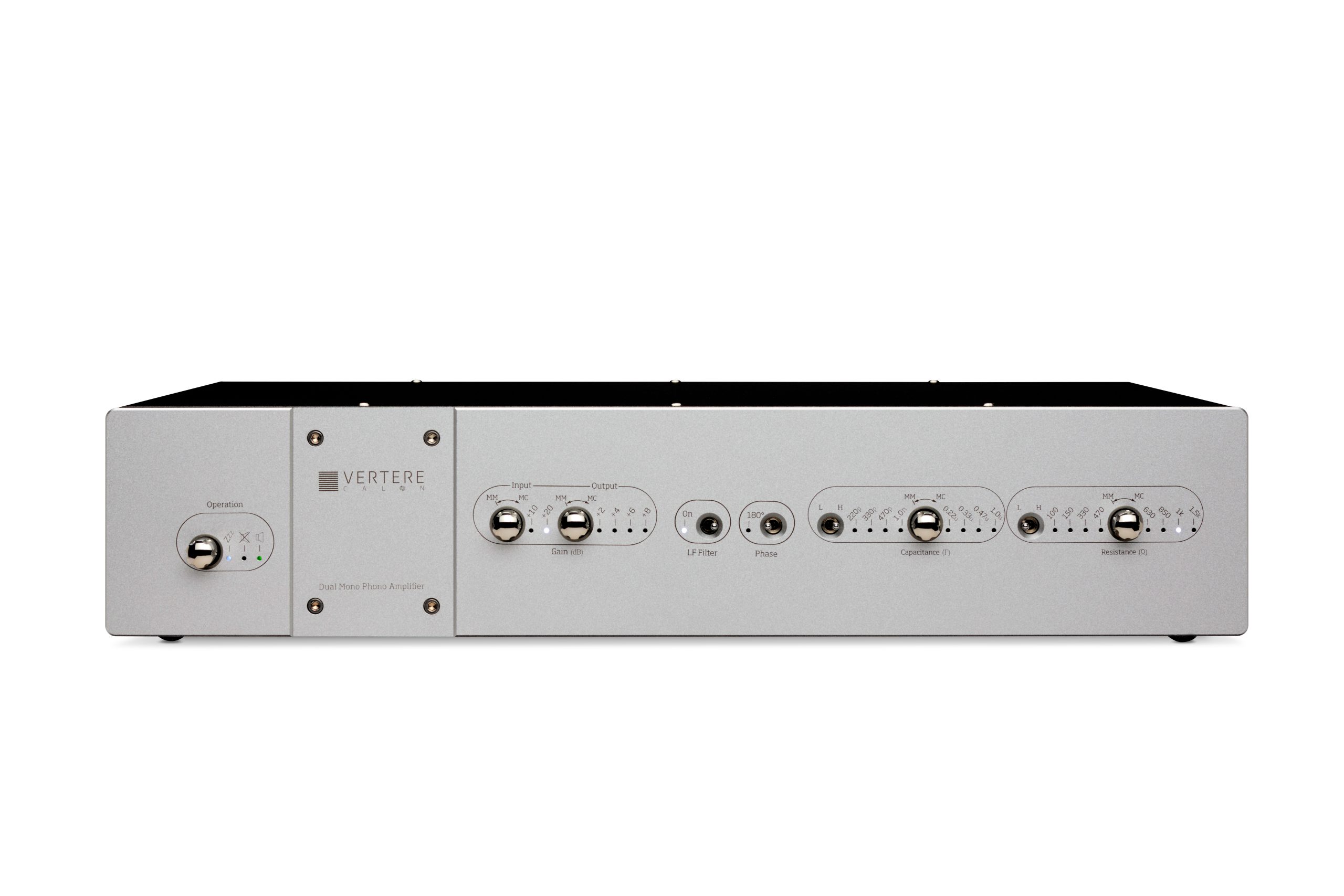
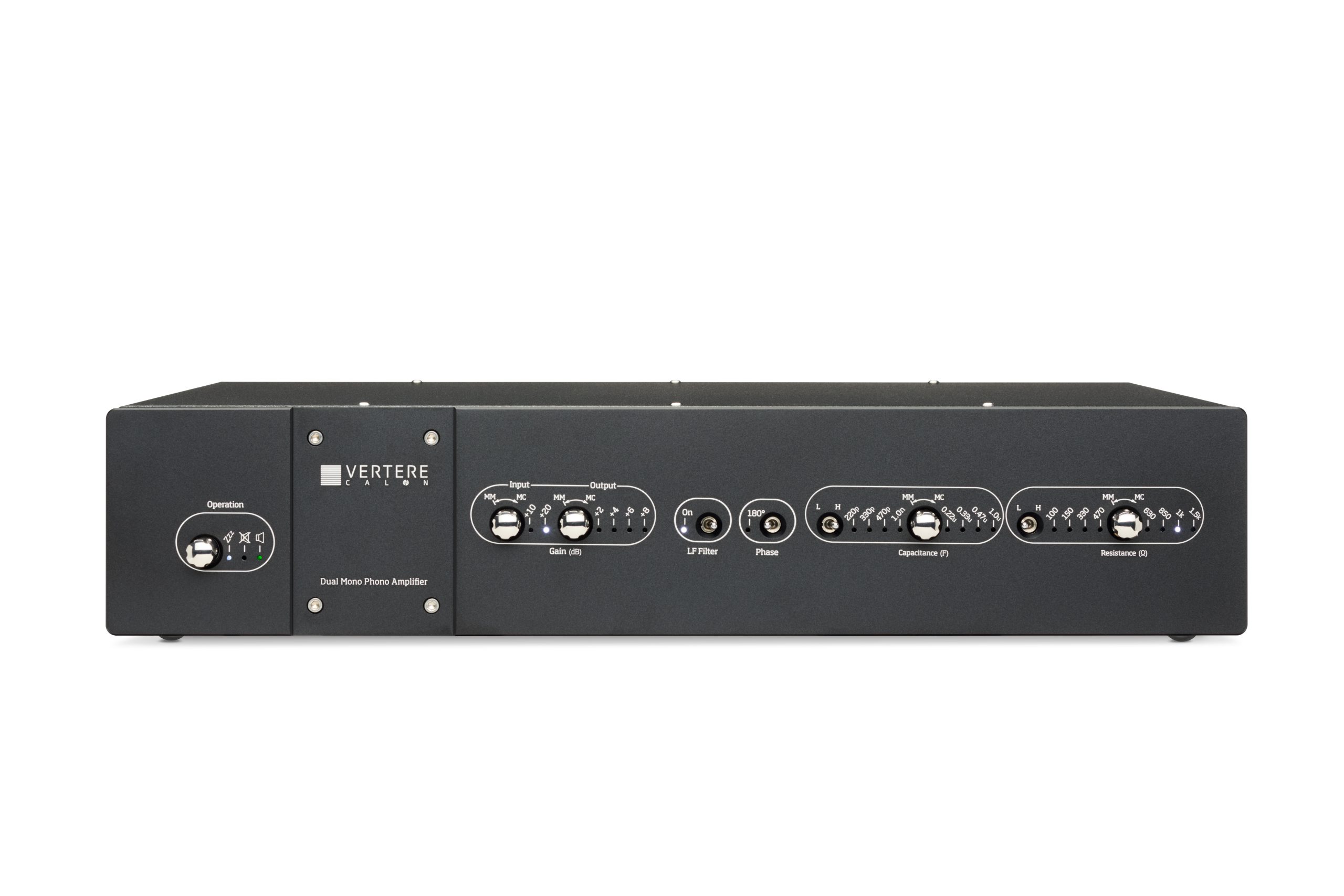
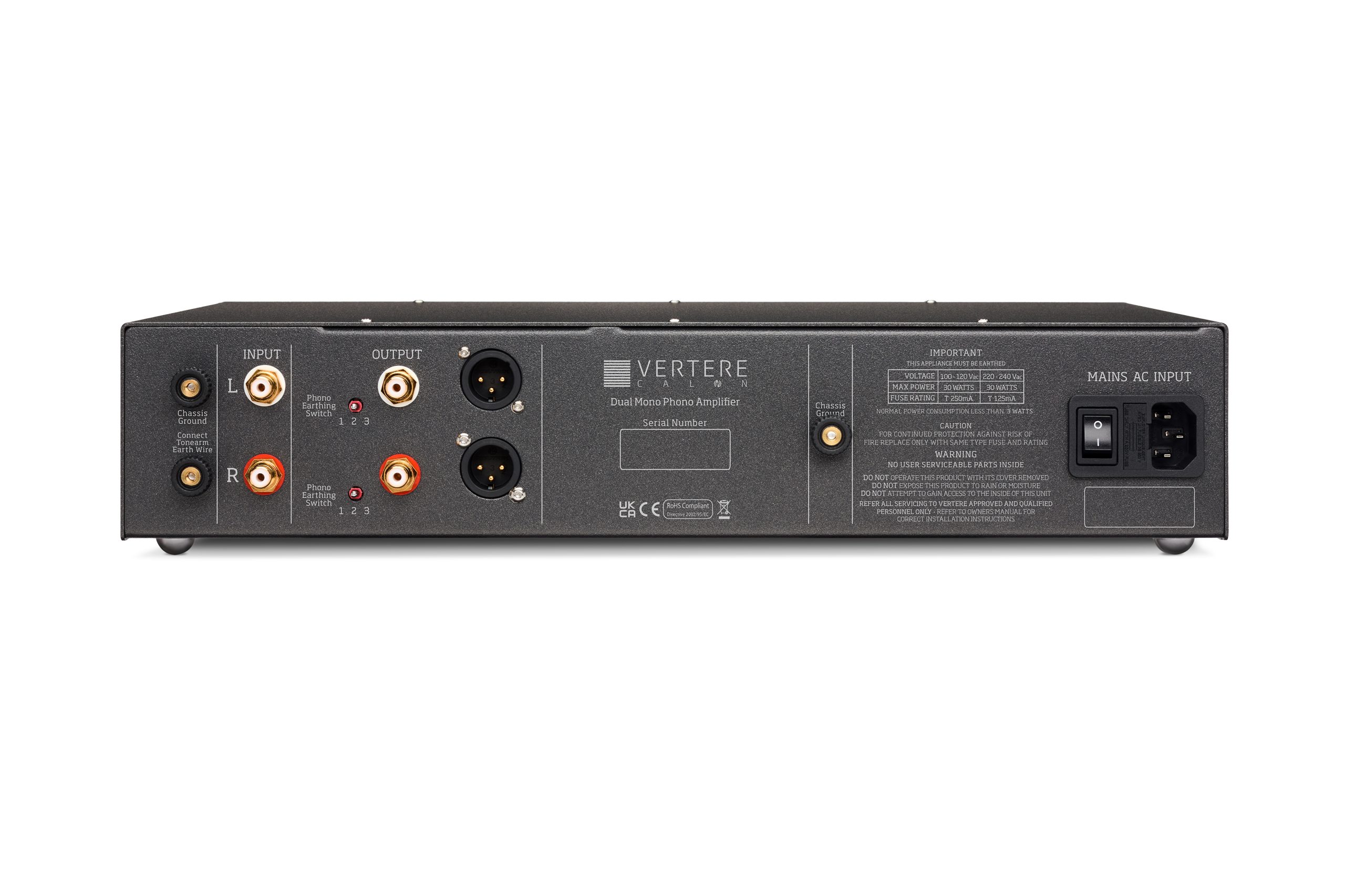
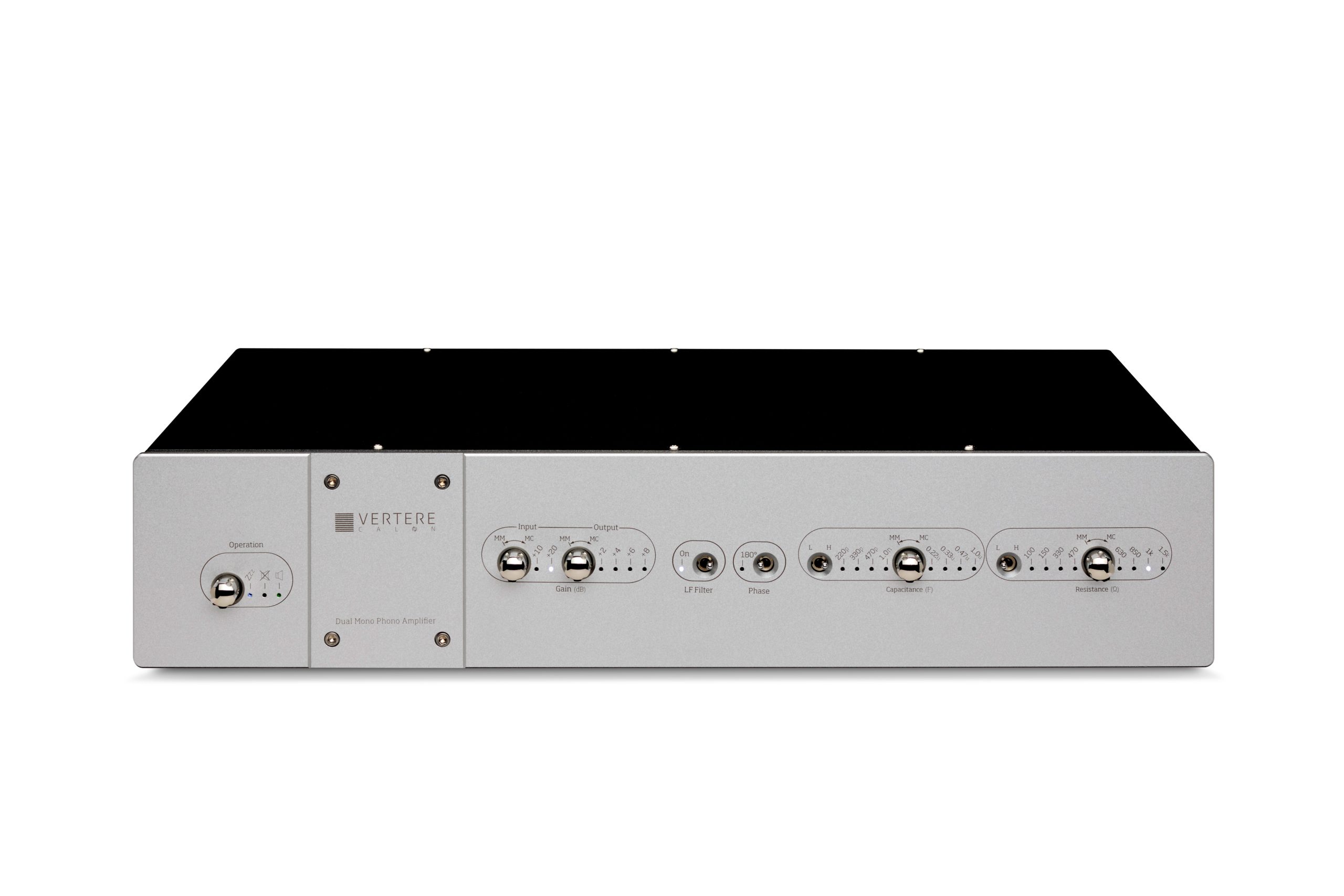
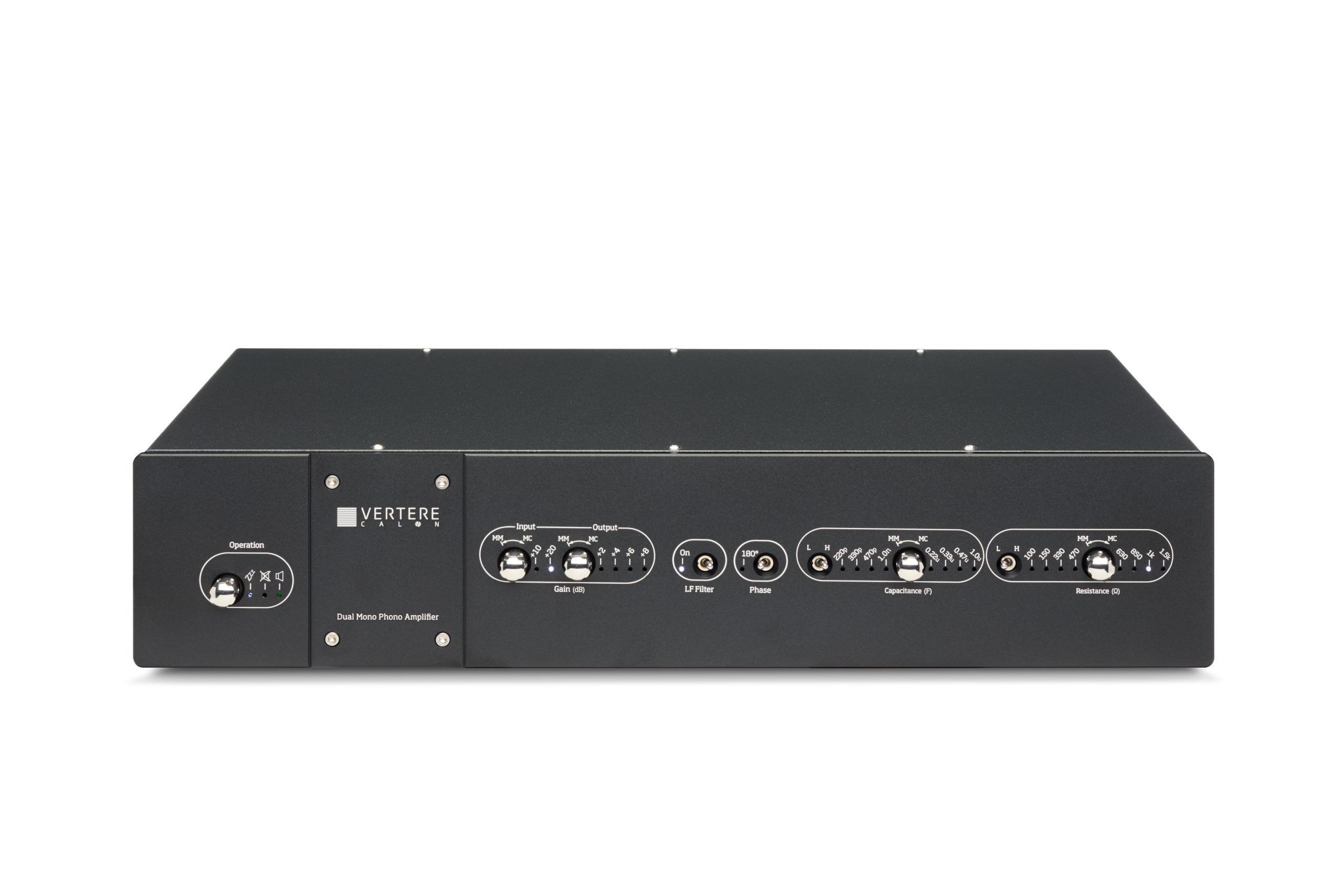
| Vertere Acoustics Munich Motorworld – Walter Rohrl Suite. 09 May 2024. Today, Touraj Moghaddam, founder and chief executive of Vertere, held a press conference to launch CALON, the first Vertere high-end dual-mono phono preamplifier. CALON will be available in July and sell for £15500; €18998; $19995. CALON is available in either silver or black. CALON has been designed to ensure that all the performance gains enabled by recent improvements in Vertere Record players, especially the new XtraX cartridge, SG-II PTA HB, and Reference tonearms, are not lost. Less-than-ideal circuits, circuit layouts, and power supplies can easily deliver a good sound but not a great one. CALON delivers a truly great sound with amazing transparency and dynamics from Vertere’s latest record players. A demonstration is strongly suggested. More than being excellent technically, CALON’s real benefit is its ability to deliver the goods while drawing the listener deeper into the emotion and power of the music. CALON is a product for the heart as much as the brain. The case is machined from non-magnetic (Austenitic) Stainless steel, which brings a high level of shielding without the ferromagnetic eddy current and field hysteresis problems iron or steel would bring. The knobs are super-polished stainless steel. Each part of the circuit has been created to maximise performance and be part of a high-end whole. The gain structure has been carefully calculated, designed, and implemented to deliver the best transparency, detail resolution, and dynamics from any cartridge. |
| The cartridge input first enters a gain stage with user-selectable gain (default, +10dB, +20dB). Then, it is subjected to an RIAA ‘filter’ where, in an ideal manner, the HF section is passive and the LF active. After this is another user-selectable gain stage (0dB, +2dB, +4dB, +6dB, +8db) leading to the output RCAs and the balanced output line driver stage. Both outputs are on (except when muted), but connecting and using one at a time is best. CALON includes a switchable subsonic filter to reduce the wasted energy and headroom caused by (subsonic) noise below normal audibility, which some turntable/arm/cartridges generate in excess. The circuit is linear phase and has a practically unmeasurable effect above 20Hz. In addition, the output of CALON can be 180° phase inverted for those rare records recorded/mastered with incorrect absolute phase. CALON is user-configurable for most Moving Magnet and Moving Coil Cartridges available. The front panel knobs allow the choice of nine input impedances and nine options of capacitance together with 15 choices of gain. For example, it will enable a somewhat peaky (with a rising HF response) Moving Coil cartridge to be tamed by adding capacitance rather than by reducing input impedance. Lowering the input impedance tends to ‘slug’ the sound, reducing musical performance and drama and lowering the brightness. Adding capacitance while keeping the input impedance higher allows the entire performance to shine. The power switch has three convenient options: Power off, Power on but output muted, and Power on output on. CALON gets the best from any high-quality record player, with maximum transfer of dynamic range and supreme detail resolution. Touraj commented, “We are still learning how much info is contained in the groove. CALON allows us to get closer to getting all of it.” Audio circuits The audio circuits with their respective power supplies are on two identical four-layer gold-plated circuit boards, which is an ideal dual mono configuration. Four layers allow ideal grounding and ground planes as shields within the board itself. It provides control of the ground and power impedances to optimise signal path and ground path flow. Populated with a choice of through hole and surface mount devices using whichever is optimum for the circuit requirement. The active devices are laser-precision-trimmed high-end integrated circuits that deliver virtually identical performance statically and dynamically under differing signal levels and temperatures. Circuit design is one thing, and circuit optimisation is another. Choice of components to achieve the required performance and neutrality is a skill that requires a massive resource of available components and almost infinite time, or it requires vast experience and skill. It’s easy to ‘throw’ loads of costly components at a circuit to get the necessary performance, but this usually means missing the target price point and not constantly hitting the target performance. Touraj has the experience and knowledge to understand the balance required between power supply and primary circuit and the choice of components wherein to deliver an accurate, musical and fun performance. Both audio PCBs are shielded separately by Austenitic Stainless Steel shields. These shields, combined with the use of high-quality components and special solder, guarantee consistent optimum performance for the long term. Control circuits The control circuit includes the logic and the many relays, which means CALON is easy to use, visual, quiet in operation and stable. Power supply There are two toroidal transformers, one supplying low-voltage AC to the L&R Audio Boards and one supplying low-voltage AC to the logic and relay board. AC is supplied to the circuits so rectification, storage, and regulation can be as close as possible to the required circuits. An iron shield ‘hides’ the transformers electromagnetically to maximise the overall signal-to-noise ratio. Balanced Phono – some thoughts There has been a trend among hi-fi enthusiasts in recent years to consider balanced connections as good and single-ended connections as less good. Examples are often quoted of recording studios where most audio connections are balanced. Cables in the professional world are usually very long, and noise pickup can be problematic. Balanced connections are far better at rejecting common mode noise, which is why they are ideal for long cables. Balanced connections are also hugely practical for microphones, which are often phantom-powered. There is practically no advantage to using balanced short interconnects (except if the designer has obsessed over the balanced circuits to the detriment of the single-ended ones). Making a traditional analogue preamplifier fully balanced from input to output is practically impossible, as balanced volume controls don’t exist. Even in the unlikely event of someone making one, the channel and plus / minus tracking required would be beyond the tolerances of a volume potentiometer. Balanced phono is even more complicated, as although a cartridge’s output is floating, it is not balanced about ground/earth. Yes, having a discrete plus and minus connection for L&R and a separate ground wire all the way back to the phono preamp is essential for optimal performance, but just putting XLRs on the cable doesn’t make it balanced. Technical Specifications Type MC/MM Phono Preamplifier Main phono circuit on two separate gold-plated PCBs Power Supply Two Linear, Internally Mains voltage switchable, transformers Gain Settings 45dB to 73dB In 15 Steps Input Impedance Settings Resistance 100R to 47k in 9 Steps Capacitance 100pF to 1.0uF – In 9 Steps Frequency Response 20Hz – 20kHz +/- 0.2dB Noise < -83dB – AWD THD+N 0.01% Finish Front Panel Options Silver or Black Dimensions 412 x 290 x 88mm W x D x H (Incl. Switches & Feet) Weight 7.0kg Background to the design Phono stage design is rather challenging, as the circuit must work with the minuscule cartridge signal, which is typically only a fraction of a millivolt. That tiny signal must be cleanly amplified a thousandfold and equalised to the exact RIAA curve to represent the original recorded music faithfully. Vertere’s CALON design achieves this, providing the complete enjoyment that is often missing even in high-quality vinyl playback systems. The dual-mono main circuit and the use of the highest-quality components maximise dynamic range and deliver supreme detail resolution. CALON’s accurate RIAA circuit uses only the tightest tolerance components, ensuring a refined, natural timbre that brings the music to life. Touraj explains the source of some of his background knowledge “Our collaboration with music industry engineers has given us invaluable insights into the art of cutting. This knowledge has enabled us to advance our record player design in many ways to extract the maximum from vinyl records. For example, with his remixes of the Beatles albums, Giles Martin – son of the late Sir George – used a Vertere MG-1 record player, including SG-1 tonearm and PHONO-1 preamplifier throughout, to check and approve the acetates and the test pressings. We’ve worked closely with the multi-award-winning mastering engineer Miles Showell since February 2017.Miles has been using his own extensively customised Neumann VMS 80 lathe, incorporating Vertere cables, to cut standard and half-speed masters for the likes of ABBA, Cream, The Police, and The Rolling Stones, as well as the 50th-anniversary release of The Beatles’ Sgt Pepper’s Lonely Hearts Club Band and The Beatles (otherwise known as ‘The White Album’). Working closely with Mileshas led to the first releases on our record label, Vertere Records. Releases: a three-track EP, two albumsby Scottish band Caezar, and the first album by Dutch singer/songwriter Elles Springs, which was specially tape-transferred and then half-speed mastered and cut by Miles for our label. By involving ourselves at every stage of the record-making process, we can ensure our players bring you as close as possible to what the artists and engineers wanted you to hear.” About Vertere Reducing engineering to its fundamentals will get you closer to the original recording. When aiming to reproduce the complexities of music, it’s all too easy to introduce even more significant complications in the engineering of audio equipment, putting in place one element to solve the problems until the whole design escalates into something fiendishly intricate – and unnecessarily expensive. That’s not the Vertere way: coming at the whole problem with decades of audio and mechanical engineering experience, plus close collaboration with the recording and mastering industry, we step back, take a long, hard look at the fundamentals, and look for simple, elegant solutions. That may sound like a simple ‘less is more’ philosophy, but we prefer to look at it this way: the best audio equipment shouldn’t add anything to or remove anything from the original recording. Instead, it should affect it as little as possible, bringing the listener closer to what the artist, producer and mastering engineer wanted you to hear. CALONは、最近のVertere Recordプレーヤーの改良、特に新しいXtraXカートリッジ、SG-II PTA HB、Referenceトーンアームによって可能になったすべての性能向上が失われないように設計されています。理想的でない回路、回路レイアウト、電源は、良い音を提供することはできても、素晴らしい音を提供することはできません。CALONは、Vertereの最新レコードプレーヤーから、驚くべき透明感とダイナミクスを備えた、真に素晴らしいサウンドをお届けします。デモンストレーションを強くお勧めします。技術的に優れていること以上に、CALONの本当の利点は、リスナーを音楽の感情や力強さに深く引き込みながら、商品を提供する能力です。CALONは、脳と同様に心のための製品なのだ。 ケースは非磁性(オーステナイト系)ステンレススチールから削り出しており、鉄やスチールがもたらすような強磁性渦電流やフィールドヒステリシスの問題もなく、高いシールド効果をもたらします。ノブは超研磨ステンレススチール。回路の各パーツは、パフォーマンスを最大化し、ハイエンドな全体の一部となるように作られています。ゲイン構造は慎重に計算され、設計され、どのカートリッジからも最高の透明感、ディテールの解像度、ダイナミクスが得られるように実装されています。 カートリッジ入力はまず、ユーザーが選択可能なゲイン・ステージに入ります(デフォルト、+10dB、+20dB)。次に、理想的な方法で、HFセクションがパッシブ、LFセクションがアクティブとなるRIAA「フィルター」にかけられます。この後、ユーザーが選択可能な別のゲインステージ(0dB、+2dB、+4dB、+6dB、+8db)が出力RCAとバランス出力ラインドライバーステージにつながります。両方の出力がオンになっていますが(ミュート時を除く)、一度に1つずつ接続して使用するのがベストです。CALONは、ターンテーブル/アーム/カートリッジによっては過剰に発生する、通常の可聴域を下回る(サブソニック)ノイズによる無駄なエネルギーとヘッドルームを削減するために、切り替え可能なサブソニック・フィルターを搭載しています。この回路は直線位相で、20Hz以上では実質的に測定不可能な効果を発揮します。さらに、CALONの出力は、絶対位相が正しくない状態で録音/マスタリングされた稀なレコードのために、位相を180°反転させることができます。CALONは、ほとんどのムービングマグネットおよびムービングコイル・カートリッジ用にユーザー設定可能です。フロントパネルのノブで、9種類の入力インピーダンスと9種類のキャパシタンス、そして15種類のゲインを選択できます。例えば、ややピーキーな(HFレスポンスが立ち上がる)ムービングコイル・カートリッジを、入力インピーダンスを下げるのではなく、キャパシタンスを追加することで手なずけることができます。入力インピーダンスを下げると、サウンドが “スラッグ “し、音楽的なパフォーマンスやドラマ性が低下し、明るさが低下する傾向があります。入力インピーダンスを高く保ちながらキャパシタンスを追加することで、パフォーマンス全体を輝かせることができます。電源スイッチには3つの便利なオプションがあります: 電源オフ、電源オン(出力はミュート)、電源オン(出力オン)。CALONは、あらゆる高音質レコード・プレーヤーから、ダイナミック・レンジと最高のディテール解像度を最大限に引き出す。Tourajは次のようにコメントしている。「私たちは、グルーブにどれだけの情報が含まれているかをまだ学んでいるところです。CALONは、そのすべてを得ることに近づけるのです” とコメントしている。 オーディオ回路 オーディオ回路とそれぞれの電源は、2枚の同じ4層金メッキ回路基板上にあり、理想的なデュアル・モノ構成となっている。4層基板は、基板自体のシールドとして理想的な接地とグランドプレーンを可能にします。グランドと電源のインピーダンスをコントロールし、信号経路とグランド経路の流れを最適化します。回路要件に最適なスルーホールおよび表面実装デバイスを選択できます。アクティブ・デバイスは、レーザー精度でトリミングされたハイエンド集積回路で、信号レベルや温度が異なる条件下でも、静的および動的な性能はほぼ同じです。回路設計と回路の最適化は別物である。要求される性能と中立性を達成するための部品の選択は、利用可能な部品の膨大なリソースとほぼ無限の時間を必要とする技術であり、あるいは膨大な経験と技術を必要とする。必要な性能を得るために高価な部品を回路に「投入」するのは簡単だが、これは通常、目標価格帯を逃し、目標性能を常に達成できないことを意味する。Tourajは、正確で音楽的で楽しいパフォーマンスを提供するために、電源と一次回路の間に必要なバランスと部品の選択を理解する経験と知識を持っています。両オーディオPCBは、オーステナイト系ステンレス鋼シールドによって別々にシールドされています。これらのシールドは、高品質の部品と特殊なはんだの使用と相まって、長期にわたり一貫した最適性能を保証します。 制御回路 制御回路にはロジックと多数のリレーが含まれており、CALONは使いやすく、視覚的で、動作音が静かで安定しています。 電源 2つのトロイダルトランスがあり、1つはL&Rオーディオボードに低電圧ACを供給し、もう1つはロジックとリレーボードに低電圧ACを供給します。整流、蓄電、レギュレーションを必要な回路にできるだけ近づけるため、ACは回路に供給される。鉄のシールドがトランスを電磁気的に「隠し」、全体のS/N比を最大にします。 バランス・フォノ – 考察 近年、Hi-Fi愛好家の間では、バランス接続を良しとし、シングルエンド接続はあまり良くないと考える傾向があります。ほとんどのオーディオ接続がバランス接続であるレコーディングスタジオの例がよく引用されます。プロの世界ではケーブルが非常に長く、ノイズのピックアップが問題になることがあります。バランス接続は、コモンモードノイズ の除去においてはるかに優れており、それゆえ長いケー ブルに理想的なのです。バランス接続はまた、多くの場合ファンタム電源を使用するマイクにとっても非常に実用的です。バランス・ショート・インターコネクトを使用するメリットは、実質的にありません(設計者がバランス回路にこだわり、シングルエンド回路を犠牲にした場合を除く)。伝統的なアナログ・プリアンプを入力から出力まで完全にバランス化することは、バランス・ボリューム・コントロールが存在しない以上、事実上不可能です。万が一誰かが作ったとしても、必要なチャンネルとプラス/マイナスのトラッキングは、ボリューム・ポテンショメーターの許容範囲を超えるだろう。バランス・フォノはさらに複雑で、カートリッジの出力はフローティングですが、アース/グランドについてはバランスしていません。たしかに、LとRに個別のプラスとマイナスを接続し、フォノプリアンプに至るまで個別のアース線を接続することは、最適なパフォーマンスを得るために不可欠ですが、ケーブルにXLRを付けるだけではバランスにはなりません。 |