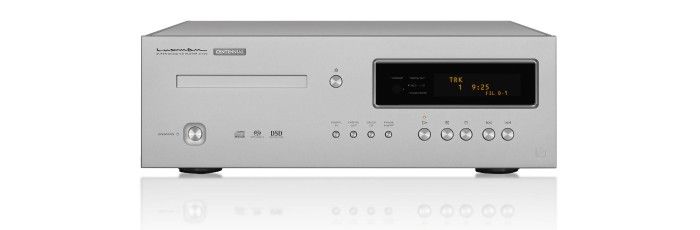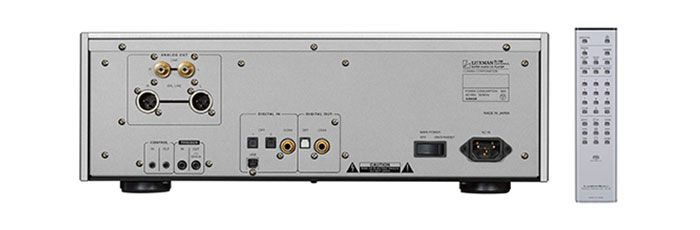
Luxman will release a new SACD/CD player, the D-100 CENTENNIAL, a model commemorating the company’s 100th anniversary, in November 2025.
The D-100 CENTENNIAL is the successor to the D-10X, released in 2020, and is a new flagship SACD/CD player that features major upgrades to its drive mechanism, digital circuitry, and analog circuitry to support the high audio performance and rich musicality expected of a top-of-the-line model.
The disc drive mechanism, which enables quiet and smooth tray opening and closing with a dustproof shutter, uses Luxman’s unique LxDTM-i1 technology, which integrates the transport and main chassis. The 8mm-thick aluminum side frame, 5mm-thick steel top plate, and newly added 8mm-thick aluminum base plate encase the delicate rotating mechanism, ensuring unwavering rigidity that rigidly blocks external vibrations. The D/A converter block is equipped with the latest top-end DAC from the “MUS-IC” series, the BD34302EKV, in a dual mono configuration. Developed as a higher-end chip than the ROHM BD34301EKV used in the D-10X, it incorporates various sound quality-enhancing logic. A newly adopted large crystal oscillator and ultra-low phase noise oscillation IC provide high-precision clock drive for even richer music playback performance. The analog circuitry finally features Luxman’s next-generation LIFES2 amplification feedback engine in a fully balanced configuration. Version 1.1, which features improved error detection accuracy, delivers natural, unrestrained, and dynamic musical expression.
The chassis follows the flagship face design, featuring a three-dimensional “waist” between the front panel, which is equipped with a new large, high-resolution OLED display, and the hood. The exquisite contrast created by combining different finishes and shapes emphasizes the component’s presence and the richness and delicacy of the sound. The D-100 CENTENNIAL offers an unprecedented listening experience, with an uncompromising investment and generous use of the latest technologies, befitting a top-end flagship model. It reproduces the music recorded on disc or file source with vivid detail, down to the atmosphere of the stage and the passion of the performers.